
 6 hours ago
3
6 hours ago
3

“The thing all women hate is to be thought dull,” says the title character of Sylvia Townsend Warner’s 1926 novel, Lolly Willowes, an early feminist classic about a middle-aged woman who moves to the countryside, sells her soul to the devil and becomes a witch.
Though their lives are so limited by society, Lolly observes, women “know they are dynamite … know in their hearts how dangerous, how incalculable, how extraordinary they are”.
Warner herself was anything but dull: a writer, translator, musicologist and political activist who wrote seven novels, extensive poetry and contributed more than 150 short stories to the New Yorker, more than any other female writer. She was also a communist who volunteered for the Red Cross during the Spanish civil war and an LGBTQ+ pioneer, living with the poet Valentine Ackland for decades in a quiet Dorset village, in a partnership they described as a marriage.
In the 1930s, Warner was described as “famous in two continents for numerous and brilliant contributions to literature”, but though many of her works remain in print, her name has faded from widespread recognition, even in the county where she lived.
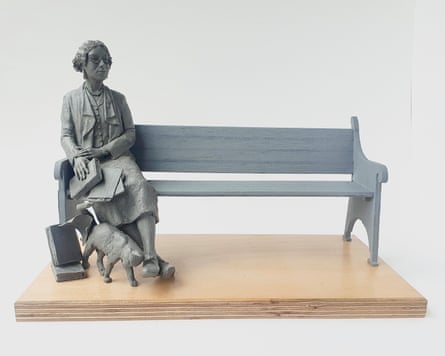
That is due to change this weekend, when a new statue of Warner will be revealed in Dorchester. The sculpture by Denise Dutton shows Warner sitting on a bench accompanied by a cat, in a nod to the creatures she loved and the witch’s companion in her best-known novel.
By placing the lifesize figure in the town’s main shopping area, “we are saying very clearly that women’s stories and queer women’s stories belong in our public spaces”, says Anya Pearson, who led the campaign to erect the statue. “Sylvia pushed boundaries, wrote without fear and lived authentically. This statue finally allows us to celebrate her as her authentic self, proudly and openly, in the town she called home.”
Pearson is a veteran of this kind of thing, having previously been the driving force behind a statue of the Victorian fossil hunter and palaeontologist Mary Anning in nearby Lyme Regis. After that statue was unveiled to great local enthusiasm in 2022, Pearson set her sights on her home town of Dorchester, where statues commemorate the writers Thomas Hardy and William Barnes – but until now, no non-royal women.
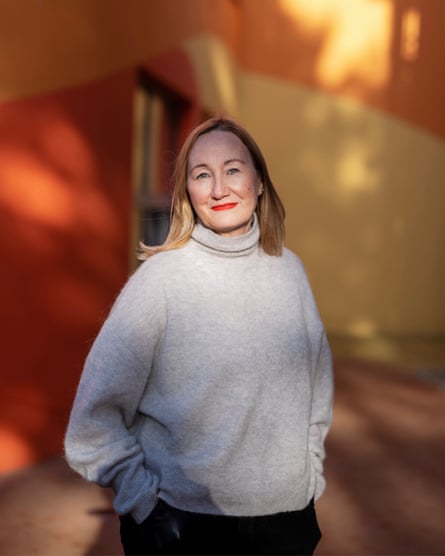
The campaign, which asked for nominations of overlooked women, received more than 50 names that were shortlisted then put to a vote. Warner “won by a landslide”, says Pearson, who works at Arts University Bournemouth. The £60,000 cost was raised through crowdsourcing and a number of significant international donations.
In a digital age, though, what is the value of a statue? “It’s about what towns choose to remember and to celebrate,” Pearson says. Statues may be easy to overlook, “but they are incredibly important because of the subliminal message they leave. And if they’re all of men and men of war, we are telling our kids that those are the only things that are worthy of remembrance. Battles, wars and the men that fought in them.
“For me, this is an antidote to that symbolic annihilation of women within our civic landscapes. It’s putting them back in the story,” she added.
Pearson’s successes with Anning and Warner have led to appeals for her help from other female statue campaigns, some of which have joined a loose grouping called Visible Women UK. Alongside statues to Virginia Woolf in Richmond, west London, and Aphra Behn in Canterbury, which are already in place, other groups are working on memorials to the suffragette Mary Clarke in Brighton, the campaigning factory worker Ada Nield Chew in Crewe and others elsewhere.
Sam Johnson became involved in a campaign to commemorate the match girls of east London after discovering by chance that her great-grandmother, Sarah Chapman, had been a leader of their influential 1888 strike in protest at poor pay and terrible working conditions.
Though the factory site – now a private residential development – has an English Heritage plaque, Johnson and Pearson are working together on the campaign’s ultimate goal of a statue in a nearby park.
“I’ve got this vision in my mind of three or four figures at ground height,” says Johnson. “I don’t want anything on a plinth because they’ve got to be personable and approachable. I like the idea of school kids going to visit them … as a reminder that, actually, this thing happened just down the road from where you live. And you can be that brave and courageous and wonderful as well.”



 English (US)