
 5 hours ago
3
5 hours ago
3

In the last nine years Tate has had some hits, but its misses have become embarrassing. Tate Modern’s Turbine Hall is currently occupied by a feeble installation that would be weak in an ordinary-sized art space, let alone this gigantic one. It’s become genuinely hard to understand what Tate’s priorities are when it chooses artists for the annual Turbine Hall commission. And the Turner prize is even more mystifying. Once the stage of shocking, provocative art that engaged – whether they were for or against – a massive public, it has retreated into wilful obscurity, its trips around the UK starting to seem part of a studied wholesomeness. What’s the point of staging it in Bradford when the shortlist just exports the enigmatic tastes of a metropolitan elite?
Is Maria Balshaw, who is quitting her post as director of Tate, solely responsible for this? No, but perhaps she is courageously taking the blame and allowing the institution to reinvent itself as it needs to, fast. The achievements Tate stresses in its announcement of her departure centre on how she has “diversified” the collection, exhibition and audiences. But in that noble quest, there has been a loss of artistic ambition, aesthetic thrills, raw horror and beauty. Sometimes we really do want art for art’s sake and Tate has lost sight of that.
This is appallingly evident in the collection displays, which critics don’t often write about but visitors have to endure. Tate Modern’s galleries have slid into insulting incoherence, and in the last few years treasures like its Rothkos, Picassos and surrealists have often been out of view. The rehang at Tate Britain did get critiqued in 2023, with justifiable harshness, for it puts politics before art, patronising everyone with loftily proclaimed yet naive readings of British history – such as criticising baroque artists for not being Ranters or Hogarth for being heteronormative. I can think those things for myself. Or perhaps better things.
There have been some great Tate shows too, yet they were often marred by silly side battles. I was astounded by the superb Cézanne blockbuster in 2022. It didn’t worry me that contemporary artists were invited to make irrelevant, politically charged interventions – but in truth, when you are trying to understand what Cézanne is up to in paintings that pixelate the sunburnt rocks of Provence into cubism and abstraction, it doesn’t help to also have to work out what makes one of these stony landscapes colonialist. It would have baffled Edward Said.
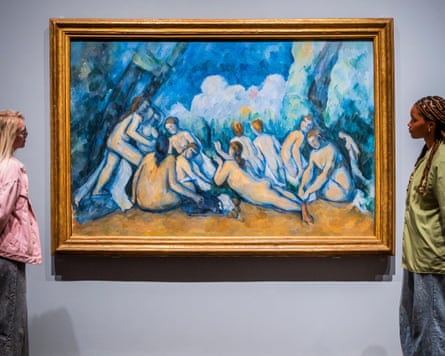
Yet since Cézanne and Rodin, the brilliant retrospectives of modern greats that used to grace Tate Modern – it began, back in the noughties, with the unforgettable Matisse Picasso – have thinned out. Tate brags about Leigh Bowery! as a highlight of Balshaw’s time but this was a wasted opportunity: the great, unmissable exhibition would have been one that reunited all Lucian Freud’s portraits of Bowery.
So the critic moans and gripes and – guess what? – the public agree. People have voted with their absence. Presumably it’s the poor attendances at Tate’s museums that are behind Balshaw’s departure. But she should not be made a scapegoat by an institution that simply ploughs on regardless. Tate has made arrogant, crass choices to put ideology ahead of art, worthiness ahead of aesthetic pleasure and bad politics over thoughtful radicalism. It needs to change its ways, not just its boss. Otherwise, given that Penelope Curtis left Tate Britain after criticism in 2020 while its current male head seems impermeable to an even worse performance, this will look like another misogynist removal of a powerful woman.






 English (US)