
 2 hours ago
2
2 hours ago
2

Another year, another raft of sporting cheating scandals for our annual anti‑Spoty awards. Where the BBC Sports Personality ceremony this week rewards the cream of athletic endeavour, the Guardian instead shines a light on the darkest corners of sporting skulduggery.
Qin Siyue and new Baduk rules
After the troubles last year with Xiangqi (AKA Chinese chess), in 2025 it was the turn of Weiqi (known in the west as Go), whose sedate world was rocked first by news that the 19-year-old Chinese prodigy Qin Siyue had been rumbled in the ninth round of the Chinese Team Championship – actually played last December, though for a couple of months Go managed to (ironically) stop the news emerging – for using AI and a hidden phone to plot her moves.
Then in January a diplomatic storm erupted over the final of the Baduk world championship (baduk being the Korean name for weiqi), in which Korea’s Byun Sang-il beat China’s Ke Jie thanks to the confusing and controversial mid-tournament introduction of new scoring rules.
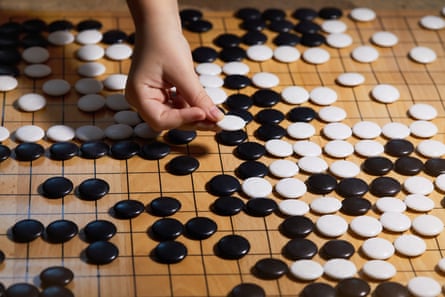
“This has been a huge psychological trauma for me,” Ke said. “I felt like I was trapped in endless darkness.” Ke added that in the moments that followed his being reported – for the crime of failing to place a stone on the lid of a bowl – “I heard a breaking sound. I don’t know if it was me who broke, or Go itself.”
Go is an obscure pastime in Britain but huge in China, which boasts 17 of the world’s top 20 and hundreds of full-time professionals, if one fewer than there was a year ago after Qin was stripped of her ranking and banned from all events organised by her national association for eight years.
Norwegian ski jump suits
In Norway skiing isn’t just a popular pastime, it’s the national sport, which is what propels the men’s large hill ski‑jumping event at the Nordic world championships in Trondheim into the stratosphere (off a giant ramp).
A scandal embroiled five Norwegian athletes, two of them Olympic gold medallists, and three team officials, all of them men who, like so many men over history, were worried about the stiffness of their groin area. This led to them using a reinforced thread to improve the crotches of their ski suits, with the aim of boosting its aerodynamics.
These modifications were secretly filmed, and their existence proven when the suits – exact circumstances uncertain – were literally torn open by suspicious organisers. “What we have done is manipulate or modify the jump suits in such a way that it violates the regulations,” the team coach Magnus Brevig admitted. “It was a deliberate act. Therefore, it is cheating. It was a joint decision. I should have stopped it. We regret it like dogs. I’m terribly sorry. We became blind in this World Cup bubble of ours and went way over the line.”

Not for the first time, perhaps: reacting to the scandal, the retired Norwegian jumper Daniel-André Tande said he had done it too. “I have cheated several times,” he said. The retired two‑time world record-holder Remen Evensen also piped up: “If wearing a suit that’s a little too big [is cheating] then yes, I’ve cheated,” he said. “The norm in sport has been that if you don’t get caught, you haven’t cheated.”
Meanwhile in vaguely related groin‑area improvement news: Juan Bernabe, trainer of the eagle mascot of the Italian football club Lazio, fired in January for posting boastful photographs of his anatomy online after undergoing penile prosthesis surgery. “I had surgery to increase my sexual performance because I am very active,” he explained.
Waxy pool balls
It is with a combination of excruciating awkwardness and a measure of quiet pride that we segue from the subject of penile enlargement to that of men waxing their balls. In July 128 of the world’s leading cue-wielders, from 40 countries, headed for the world pool championship in Jeddah, Saudi Arabia to compete for a historic $1m purse, and it all got a bit messy.
What we know is that some people cheated, that cheating isn’t allowed, and also that it hasn’t been punished, which all seems a little bit awkward. Waxgate, as it inevitably became known, started when Aloysius Yapp, the world No 3 who was eliminated disappointingly early by Jeffrey Ignacio of the Philippines, suggested on Instagram that his opponent had been using wax to change the behaviour of the cue ball (more likely a silicone lubricant, sprayed first on to a glove worn by the player and then smeared over the cue ball during play). Ignacio’s response? “Nobody should make excuses after they lose.”
Eklent Kaci, who almost lost an arm in a car accident in 2023 and made it all the way to the final in 2024, lost in the round of 32 against Patric Gonzales, also of the Philippines, and went a bit further. “I think the cue ball was waxed real bad,” he said. “I had too many over‑draw shots … missed lots of shots by a mile, out of position totally sometimes. It has happened many times in many tournaments, where lots of players have complained about it and no one has gotten punished.” He also complained about people “massaging that cue ball like it’s a just-born baby”. Gonzales’s response? “The accusation is bullshit.”
Various other players got involved, with claims, counter‑claims and denials rolling around like, well, overlubricated balls on fresh baize. Dennis Orcollo, another Fillipino professional, responded: “There’s no rules about wax, so that’s why they can use [it]. It’s not really fair blaming the players using it. You have to make rules. That’s my opinion. Whoever runs the tournament, you should implement rules. Like, you cannot wipe the cue ball. To be honest it’s a very [big] advantage.”
At which point the World Pool Association waded in, asserting that actually it already had rules. “It has come to [our] attention that certain athletes have been waxing balls during matches. It has also been suggested that some players believe there is no rule prohibiting this practice,” the association wrote. “The WPA would like to make it explicitly clear that the waxing of balls is considered a form of cheating and will be dealt with under the WPA’s rules governing unsportsmanlike conduct.”
It has subsequently proven this commitment across six months of intense and fully committed silence.
Stone-skimming scandal
More cheating, alas, and after the 2024 world conker championship was embroiled in accusations of malfeasance, this year it was the world stone skimming championship. Quick conker reminder: David Jakins, AKA King Conker, was cleared of using a metal replica nut, painted to look almost identical to a real one, in the conker comp last year. To ensure fair play in this year’s event, organisers have made competitors pass through airport-style security scanners and equipping the “ringmaster” with “a big magnet on a stick”.
Perhaps similar measures will be introduced on Easdale Island, home of the world stone skimming championship, after Kyle Mathews, the event’s “toss master”, said organisers had identified several suspicious throwers after hearing “rumours and murmurings of nefarious deeds”. They found some had indulged in “a little bit of stone doctoring” – either to produce projectiles that were “suspiciously circular”, or ones with notches inserted to aid grip.
“I contacted the individuals, who admitted their transgressions and I had to disqualify them. To give them their credit, they deeply apologised for bringing the sport into disrepute and accepted disqualification and we accept that’s the end of the matter,” he said. Indeed, Mathews located this miserable cloud’s silver lining: “It only shows how keen people are to win this trophy. In many ways, it’s flattering.”
China’s curling team
That wasn’t the only stone-based cheating incident this year: the China team caused consternation at the world curling championship, held in the wonderfully named Saskatchewan town of Moose Jaw, after being caught on camera apparently “burning a rock” – deliberately touching it with a broom to change its path – during a knockout win against Norway, having also allegedly been seen “kicking a stone” on their way to beating Germany, all of it particularly troubling given that the China women’s team had been accused of “dumping all over rocks” during their world championship in Korea in March.
Anyway, Norway complained, China insisted they were innocent, there is no VAR in curling, and the game continued with no further repercussions except to the sport’s now-tarnished reputation for honourable practice. The former Canadian curler George Karrys produced an epic, no‑holds‑barred opinion piece about it: “This is beyond terrible. This is a nightmare,” he wrote. “This is, hands down, the worst thing I ever seen or heard of in my 42 years in this sport.” China lost against Switzerland in the semi-finals, and were thrashed by Canada in the bronze medal game.
So, to summarise, this is all terribly depressing. And after conkers and stone skimming, can any oddball British competitive event claim to be entirely above‑board? Well, over to tiddlywinks: “Players can bring their own squidger but we have suspicions some competitors break the 51mm maximum width rule, giving them better control of the winks,” Andrew Garrard, secretary of the English Tiddlywinks Association, said before the national pairs championship in November. “We are checking players’ squidger sizes. Our umpires will be watching closely.”
Bite-size misdemeanours
Unnoticed commentary gaffe of the year: the New Zealand former World Cup winner Ruby Tui, providing analysis for the BBC on the women’s Rugby World Cup, who reacted to Axelle Berthoumieu’s bite on Aoife Wafer during the quarter-final between France and Ireland by asserting that World Rugby, the sport’s governing body, would “definitely have an appetite” to flex its punitive muscles.

To be clear, it’s Berthoumieu rather than Tui who earns the anti‑Spoty nomination, because biting is really not the done thing, as her subsequent 12-match ban – reduced to nine on appeal – proves.
Related controversies this year: in unnecessary rugby violence news, the South African lock Eben Etzebeth also got a 12-match ban, for gouging the eye of Wales’s Alex Mann. “I owe everyone an explanation,” he said. “I made a mistake and I’m willing to serve a suspension which I deserve. I don’t want young kids to think that it’s OK to eye gouge someone, because it’s not, but unfortunately mistakes happen and I made a big one.”
Though don’t make the mistake of seeing this as an admission of deliberate harm: “It was never intentional. I would never do something like this on purpose.”
Meanwhile in biting sportspeople news, serial offender Luis Suárez was back in the headlines, though this time he did his saliva-exchanging from a distance and was banned for three matches in September for spitting at the Seattle Sounders security director Gene Ramirez after his Inter Miami side lost the League Cup final. “It was a moment of much tension and frustration. Just after the game things happened that shouldn’t have happened,” he explained.









 English (US)