
 3 hours ago
2
3 hours ago
2

When the Hollywood star Timothée Chalamet and the media personality and businesswoman Kylie Jenner appeared at the LA premiere of his new film, Marty Supreme, this week, they appeared to have been Tangoed.
Dressed head to toe in matching bright orange outfits made by the LA-based brand Chrome Hearts, they drew strong reactions online. “I have now confirmed there is such a thing as too much orange,” said one on Reddit.
According to J’Nae Phillips, a trend forecaster and the creator of the Fashion Tingz newsletter, it “feels like a very deliberate exercise in curated visibility. Modern couples’ dressing isn’t just about looking coordinated; it’s a semiotic performance.”
For the fashion psychologist Dr Dion Terrelonge, “when a couple dress the same they may be consciously or subconsciously signalling the strength of their bond and togetherness … The question is, why a couple might feel the need to signal the status of their relationship to those outside of it.”
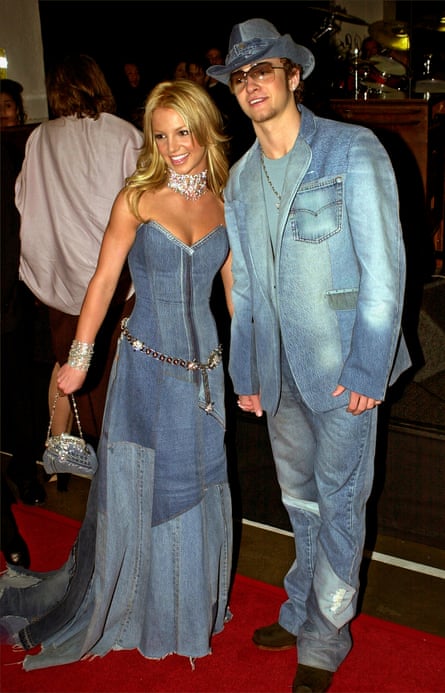
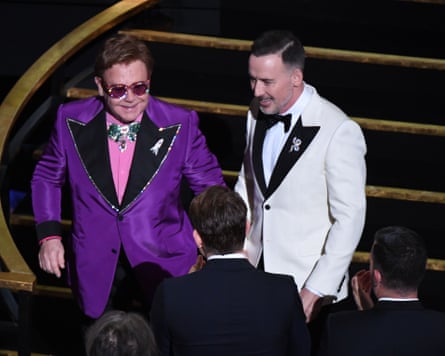
His and hers matching outfits are not a new thing. Zoë Kravitz and Harry Styles have recently been spotted wearing similar beige-on-taupe outfits. Arguably, though, couples dressing is most fun when it does go for gold, or purple: David and Victoria Beckham’s matching purple at their wedding is seared on the nation’s retinas. Britney Spears and Justin Timberlake famously did it via a wrangle of denim. Then there’s the bold tailoring of Elton John and David Furnish, Rihanna and A$AP Rocky, the suit-loving Gilbert & George.
Looking further back, Sonny and Cher enjoyed matching their bell bottoms, fringing and fur. John Lennon and Yoko Ono’s fruitful creative partnership and aligned values at times found expression via military garb or head-to-toe white.
“When couples engaged in joint ventures dress the same they are to some extent saying that not only are they internally connected and one, but that they are joint in their output also,” said Terrelonge.
Phillips cited other historical examples of couples dressing alike. “During Hollywood’s golden age, iconic duos like Fred Astaire and Ginger Rogers or Elizabeth Taylor and Richard Burton used coordinated attire to … project an ideal of glamour and cohesion, effectively presenting themselves as a single public ‘brand’.”
Couple dressing is not just for showbiz. In Hemingway’s posthumously published, half-finished novel The Garden of Eden, a couple’s style merges into a shared uniform of fisherman shirts and espadrilles. Hair is shorn to match; their aesthetics mirror one another as they toy with gender roles. F Scott Fitzgerald and his wife, Zelda, were also photographed in matching outfits.
“Across these eras, couples dressing consistently occupies the space between intimacy and performance, functioning as both a personal expression and a public narrative,” said Phillips.
For celebrity couples dressing alike today, Phillips thinks the “impulses have shifted: in the early 2000s, the focus was on conspicuous cohesion … to assert power, status and public visibility”. Today’s approach, she says, “is conceptually driven and often social media conscious”. Branding is also a key driver.
The UKCP relationship therapist Marianne Johnson makes a distinction between celebrity and non-celebrity couples dressing alike. “As a celebrity couple you might share a love of being in the spotlight … It’s creative and bonding for the couple.” Whereas “on a non-celebrity front, I think couples often seem to influence each other’s style”.
When non-celebrity couples dress alike on purpose it tends to generate attention – cringes or “awws”, at least in the west. But it is a common occurrence in some non-western cultures. In South Korea, for instance, it is called the kou-peul look, with couples dressing similarly to demonstrate their love or foster closeness.
“Psychologically speaking, matching or echoing one another’s clothing can signal a sense of unity and be a non-verbal way of saying: we share a world together,” said Johnson. “We naturally mirror the people we feel close to, and clothing is one of the more visible ways mirroring can show up.”
But even for non-celebrities, Phillips pointed out, “it often functions as personal branding, an image of the couple that they want the world to internalise”.
She said it was “not all calculated marketing. There’s still an intimate dimension: the joy of synchronicity, playful coordination, or expressing relational identity visually. Branding and genuine expression coexist.”
Whether you see this particular couple dressing in orange as a sweet expression of togetherness or a cynical marketing ploy might be nuanced. But there is a brilliant simplicity to one user’s take on X: “Both look like oranges.”








 English (US)