
 3 hours ago
4
3 hours ago
4

Fourteen months after Robert F Kennedy Jr was sworn in as US health secretary, the country’s prime public health agency over which he presides is in a state of disarray.
Eighty per cent of the top director positions at the Centers for Disease Control and Prevention (CDC) stand vacant, with no permanent leader to drive policies affecting the health of millions of Americans. No one is in place to coordinate the agency’s day-to-day work fighting infectious disease, combatting heart conditions or screening for cancer.
Current and former senior CDC officials have told the Guardian that productivity has slowed to a crawl in some areas as a result of bureaucratic delays and backlogs in paperwork. The agency is flying blind after breaks in data collection in critical areas such as infant and maternal mortality.
Daniel Jernigan, the former director of the CDC’s national center for emerging and zoonotic infectious diseases, was one of several leaders who resigned in August in protest at Kennedy’s politicized approach to public health. He told the Guardian that a leadership vacuum at the top of the CDC, with many senior positions including his own former job standing vacant, was putting the health security of American people in danger.
Were a health crisis such as another pandemic to emerge, he said, “I fear the experience, leadership, and need for decisive action just won’t be there.”
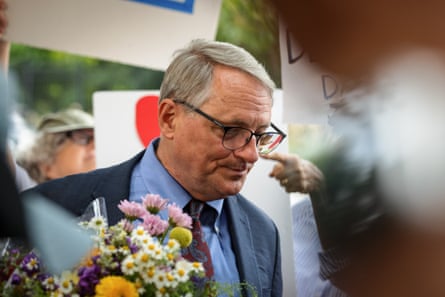
On Thursday Trump moved to fill in some of the most glaring holes in the tattered agency by nominating the former deputy surgeon general in his first presidency, Erica Schwartz, as CDC director. Her appointment is dependent on confirmation by the Senate.
Trump also announced placements for two top deputy director positions, including that of chief medical officer. The new officials, should they take up the posts, will have to contend with an agency in the throes of profound trauma.
Since Donald Trump appointed Kennedy as health secretary last year, almost one in five CDC employees, at least 2,400, have been fired or have quit. An additional 300 staff members remain stripped of their duties on full pay, more than a year after they were placed on administrative leave.
The wave of dismissals has left remaining CDC staff destabilized and uncertain, amplified by Kennedy’s assault on scientific procedures informed by his longstanding vaccine skepticism. Under Kennedy’s watch, the number of diseases recommended for routine vaccinations within the childhood vaccine schedule has been sharply reduced (a judge has temporarily blocked the move); half a billion dollars have been slashed from development of mRNA vaccine technology as used in the Covid vaccine; and the CDC is investigating whether vaccines cause autism despite numerous studies debunking the theory.
Now the raft of vacant posts among the CDC’s highest officials is exacerbating the disruption. Problems start at the pinnacle of the agency, with the position of director currently having been unfilled for the past eight months.
The only CDC director to have been confirmed by the US Senate under Trump, Susan Monarez, was fired by Kennedy in August after less than a month in the job. She said he had tried to force her to “rubber-stamp” his vaccine-skeptic decisions.
Dr Jay Bhattacharya, the head of the National Institutes of Health, has been doubling up as CDC acting director but last month hit a term limit for temporary postholders. The agency’s website still names him as chief official, but says he is “performing the delegable duties of the CDC director” – a tacit recognition that he no longer holds any official title within the agency.
Bhattacharya came to prominence within Trump circles as a strong critic of Covid responses during the pandemic, including lockdowns and mask mandates. He is closely aligned to Kennedy, though he is less rigidly opposed to vaccines.
By leading two such gargantuan health operations as the NIH and CDC, Bhattacharya has raised anxieties that he is spread too thin, compounded by the number of top positions immediately beneath him that remain unfilled.
Ahead of Trump’s announcement of two new leaders on Thursday, the two most senior CDC positions charged with coordinating the agency’s daily functions – chief medical officer and principal deputy director – had also stood vacant.
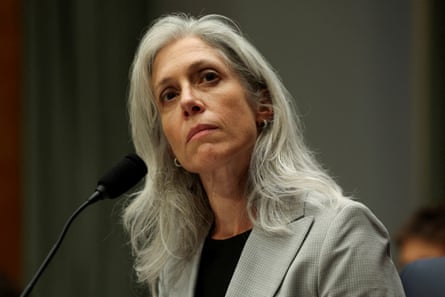
Dr Debra Houry held the post of the CDC’s chief medical officer until she resigned in August along with Jernigan and other top administrators. In devastating testimony to Congress, she explained that she had quit because Kennedy had “repeatedly censored CDC science and politicized our processes”.
Houry told the Guardian that by failing to fill her former position and other top posts, Kennedy had eroded the CDC’s ability to safeguard Americans’ health. “He is dismantling public health in our country,” she said.
As chief medical officer, Houry was tasked with supervising most of the directors of the CDC’s nine national centers which are charged with critical functions such as battling infectious and chronic diseases. “There’s nobody looking across the whole agency any more, leaving everybody in their silo,” Houry said.
Houry also had the final say over the agency’s flagship publication, Morbidity, Mortality and Weekly Report (MMWR), commonly known as the “voice of CDC”. MMWR has been roiled by recent turnovers of editorial staff, and with no chief medical officer to oversee its production is in danger of losing scientific credibility.
“You need someone with a science – not political – background to review these things, to look at the output of the whole agency through a scientific lens. There isn’t anybody that does that now,” Houry said.
According to the CDC Data Project, an independent monitoring group, directors of 20 out of 25 CDC centers have resigned or been forced from their jobs since Kennedy became health secretary. “So many CDC centers are operating without stable leadership, it leaves them to basically make up the rules as they go along,” said Yolanda Jacobs, president of AFGE Local 2883, the union representing 2,400 CDC employees at the agency’s Atlanta, Georgia, headquarters.
The CDC’s national center for chronic disease prevention receives the largest budget of any center, $1.4bn annually, with about 80% of that being passed on to state and local health providers. The center manages healthcare systems that affect millions of Americans, including those for diabetes, heart conditions and cancer screening, as well as the campaign to curb smoking.
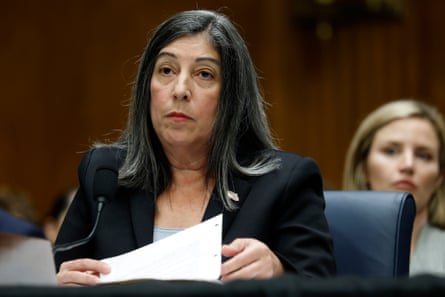
Under the Trump administration, the center has lost about a third of its 1,000 staff and several of its top divisions are currently leaderless. Karen Hacker was director of the national center for chronic disease prevention until she was put on administrative leave in April.
She quit in July. “I do not do well being paid to do no work,” she told the Guardian.
Since she left, there have been three acting directors of the center and no permanent replacement. From her perch now outside the CDC, Hacker has watched as vital public health work has been hit by cuts, firings and chaos.
She pointed to a pregnancy monitoring system that had been developed by the CDC to reduce infant illness and death – an urgent need given that the US has one of the worst infant mortality rates among developed countries. Known as Prams, the project draws on data provided by the states as a way of increasing visibility on determinants of infant mortality and morbidity such as prenatal care, breastfeeding, and opioid addiction.
The Trump administration objected to Prams as part of its attack on DEI and what it calls “gender ideology”. The project’s website now carries a disclaimer imposed by Kennedy’s political appointments that says: “This page does not reflect reality and therefore the administration and this department reject it.”
Hacker said that Prams was the “premier data-set that helps us look at issues related to pregnancy in the US. When you undermine it, you are essentially flying blind – you no longer know what’s happening on the ground.”
The fight against infectious diseases has become especially fraught under Kennedy. This is the space where some of the agency’s most critical work is done to protect Americans against diseases such as measles and influenza; it is also where the health secretary has focused his animus against vaccines.
As Houry pointed out in her congressional testimony, the Trump administration’s record on infectious disease is already concerning. A total of 270 children died of influenza-related conditions during the 2024-25 season – the highest number of pediatric deaths in a non-pandemic year since records began more than 20 years ago.
Measles cases, Houry told senators, were running at a 30-year high.
Jennifer Shuford, who Trump named as the new chief medical officer on Thursday, has had experience of dealing with measles as she led Texas’s response to its outbreak last year as the state’s health commissioner. She faces an uphill struggle in her new role as two of the three main national centers within the CDC grappling with infectious disease – that for immunization and respiratory diseases, and the national center for emerging and zoonotic infectious diseases – currently are rudderless with their director positions standing vacant.
The third national center, for HIV, viral hepatitis, STD, and TB prevention, has an acting director but no permanent leader.
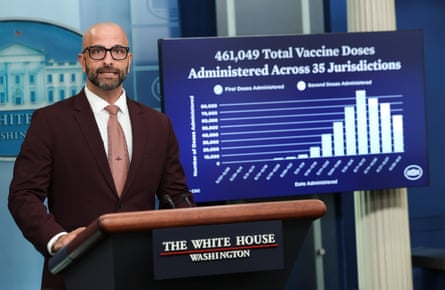
Dr Demetre Daskalakis resigned last August as director of the CDC’s national center for immunization and respiratory diseases, a role in which he was effectively the agency’s vaccine chief. He warned that holes in leadership at his old center posed a threat to the future health of Americans.
“The two infectious disease centers are responsible for some of the highest consequence pathogens,” he said. “If there were a new Ebola outbreak that comes to the US, it is here that the work would be activated, and with no leadership who is now going to make the decisions that will impact Americans’ lives?”
Daskalakis said the problem was compounded by the chaos that has descended over the ACIP (advisory committee on immunization practices). The 17-person panel advises the CDC on what vaccines to recommend to the public.
Kennedy fired the entire panel in June, replacing it with a hand-picked team in line with his vaccine skepticism. A judge has now temporarily blocked that selection as unqualified and unlawful, leaving the ACIP – and with it US vaccine policy – in limbo.
Daskalakis said that important decisions affecting large numbers of Americans including children, such as what to do with the latest versions of Covid and flu shots, were on hold. “This is not sustainable,” Daskalakis said.
“New vaccines are going through FDA approval, and now there’s no ACIP to review them and no executive able to deliver on them.”
Emily Hilliard, the press secretary of the Department of Health and Human Services (HHS), which incorporates the CDC, gave a statement to the Guardian in response to detailed questions about top-level vacancies in the agency. She said: “Under Secretary Kennedy and Dr Bhattacharya’s leadership, the CDC has been returned to its core mission of fighting infectious disease and strengthening outbreak response in coordination with state and local partners.”
She added that “HHS looks forward to the judge’s decision on ACIP being overturned, just like his other attempts to keep the Trump administration from governing.”
Kennedy has been open for years about his disdain for the federal public health system that he now controls. Early in his tenure as health secretary he denounced his own department as a “sprawling bureaucracy” that was in a state of what he described as “pandemonium”.
Kennedy accused the HHS of lacking “any unified sense of mission”. But current and former staffers at the CDC say the opposite is true – the leadership vacuum at the top of the agency that has festered under Kennedy’s watch is destroying the clarity of mission the agency once had.
“By leaving these top positions unfilled, Kennedy is diluting the typical checks and balances that a health secretary would have,” said Abby Tighe, a former health adviser in the CDC’s division of overdose prevention who co-founded an advocacy network, the National Public Health Coalition, after she was fired by the Trump administration.
She added: “Kennedy feels empowered to do whatever he likes, surrounded by his political appointees who are sycophants. The result is unregulated power.”
For thousands of CDC staffers who continue to work within the agency, the future looks bleak. “Staff are completely demoralised by the lack of leadership and vision, and work is more or less at a standstill,” said a CDC employee with decades of experience in infectious diseases who spoke to the Guardian anonymously for fear of retribution.
The employee said that productivity within their area had slowed because even minor decisions could no longer be taken by their line manager as the position was vacant. Instead, approvals as trivial as permission to travel to a field office had to be passed all the way up the chain to the health secretary’s office.
“This is not fictitious,” the employee said. “A CDC staff member cannot travel within their state of assignment without a travel request going all the way up to the secretary’s office.”
As a result, travel requests frequently take months to be processed, if at all.
“There’s nothing more demoralizing than not being able to do our work,” the employee said. “That’s why we choose to be here, to make the public’s health better, but everything has ground to a halt.”






 English (US)