
 7 hours ago
9
7 hours ago
9

26 minutes ago
Nick Triggle,Health correspondentand Jim Reed,Health reporter

 EPA
EPA
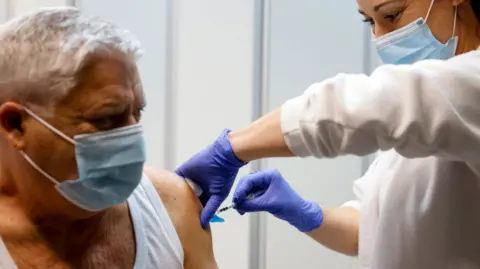
The rollout of Covid vaccines – the largest immunisation programme in UK history - was an "extraordinary feat" which saved hundreds of thousands of lives, the Covid inquiry says.
But in what is a largely positive report – the fourth published by the inquiry – there are warnings about vaccine hesitancy, misinformation and support for those how have been harmed by the jabs.
Here's a look at the key findings from the 274-page report.
Vaccines showcased 'best of UK health and science'
The Covid vaccination programme was unprecedented. Never before had vaccines been developed so quickly or rolled out so rapidly.
What would normally takes years in research and clinical trials, was done in months. And safety and regulation, the inquiry said, was not compromised.
Once available, around 130 million doses were given in the space of a year, as more than nine in 10 people aged over 12 were immunised.
The authorities innovated too to try to boost uptake. Pop-up clinics were run in community centres and faith settings as the NHS and government partnered with local community leaders to tackle hesitancy.
Overall, it was an achievement which the inquiry said "showcased many of the best attributes of the UK's health and scientific systems".
Did government go too far on vaccines?
Misinformation spread online about vaccines during the pandemic both damaged uptake of the Covid jab and has subsequently affected confidence more generally in childhood vaccines that have nothing to do with Covid, says the inquiry.
High levels of distrust in authority in certain communities, including ethnic minority groups and people living in deprived areas, was and is also a factor.
Both issues need addressing, it says, but the inquiry also raises interesting questions over the government's attempts to force some people to get the jab.
In June 2021, the government announced care workers in England had to be vaccinated if they were to work in care homes.
Within months ministers said they would extend that to all health and care staff. But they scrapped that policy before it was introduced and revoked the mandate on care homes staff amid mounting evidence the jab's ability to stop infections and therefore curtail spread of the virus was limited – instead its major benefit was protecting those vaccinated against serious illness.
Vaccine mandates are likely to have contributed to alienation and increased hesitancy, the inquiry suggests.
More must be done to rebuild trust in all vaccines, the inquiry concludes.
How a simple steroid drug saved lives
Much of the focus of this report is on vaccines, but it should not be forgotten that the UK played a huge roll in identifying what treatments worked best for those who were ill with Covid.
The way dexamethasone - a cheap steroid drug already available - was deployed in the first few months of the pandemic provides the perfect example.
Thanks to UK researchers it was quickly identified that the drug was effective at reducing an immune system over-reaction in Covid patients that led to fatal lung damage.
It started being used in hospitals in June 2020 within hours of the trial results being confirmed and shared with the rest of the world.
By March 2021, it is estimated to have saved 22,000 lives in the UK and a million across the world.
Inquiry chair Baroness Hallett says it was the single-most important treatment to have been used during the pandemic.
Give those harmed by vaccines bigger payouts
Long-term health problems caused by Covid vaccines were rare, the report says, but there was a small group for whom vaccines did cause serious injury or death.
And in a situation where people were being asked to come forward for vaccination partly to protect others along with themselves – as was the case in the pandemic – it is important they are properly supported, said Hallett.
More than 20,000 people who have made Covid-related claims to the Vaccine Damage Payment Scheme, a form of financial support paid by the government, but only about 1% have resulted in one-off tax-free awards of £120,000.
The report calls for "urgent" reform of that scheme saying that it is "not sufficiently supportive".
It says the current system, in which those affected must show they have been at least "60% disabled", does not work effectively for Covid vaccines.
It says the payout has been capped at £120,000 since 2007, needs to rise "at least in line with inflation" with new levels put in place based on the level of injury suffered.






 English (US)