
 5 hours ago
2
5 hours ago
2

Last week’s announcement that Italian cuisine has been added to Unesco’s intangible cultural heritage list came as no surprise to anyone familiar with that country’s obsession with food. Unesco called Italy’s cooking a “communal activity” in which “people of all ages and genders participate, exchanging recipes, suggestions and stories”.
It might have added people of all walks of life, too, because in Italy being a foodie is not the “preserve” of the chattering classes. I’ve heard building workers in a low-cost trattoria gravely discussing what starter and wine best complement a certain lunch dish, and a shabbily dressed nonna at Turin’s Porto Palazzo market enthusing over a variety of carrot available only at her favourite stall.
And in this land where the salami will change from one valley to the next, many people take an endearing pride in foods from their region, village, even family. So, in no particular order, here is a selection of local delights from the Alps to Sicily.
Star baker, Verona
Panettone is now a British fixture alongside mince pies, but in fair Verona, the Christmas confection is pandoro, a soft, leavened cake made in a star-shaped tin, without the dried fruit that many dislike. It usually has a dusting of icing sugar to resemble the nearby alpine peaks. Pandoro, however, is a factory version of the older, round offella – made with sourdough matured for days, it has a denser crumb and comes topped with almonds. Try it at Antica Offelleria Verona, which uses a “mother” that is more than a century old.
Prosperity pulses, Umbria
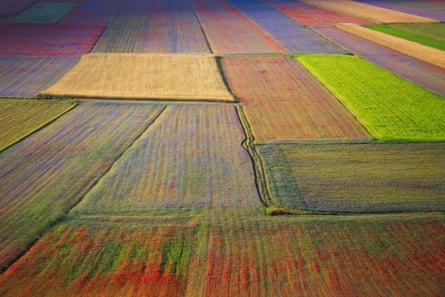
Christmas foods vary around Italy, but on New Year’s Eve lentils are a must. With their round, flat shape, they’re supposed to resemble coins and mean a wealthy year. The best lentils in Italy (some say the world) are the small, tender and quick-cooking ones from the high Castelluccio plain in southern Umbria, near Italy’s pork capital, Norcia. Castelluccio village and Norcia are still struggling after the 2016 earthquake, and make tourists very welcome. Conjure prosperity with a sausage and lentil dinner at Granaro del Monte, close to Norcia’s basilica, which finally reopened just over a month ago.
Dairy delight, Puglia
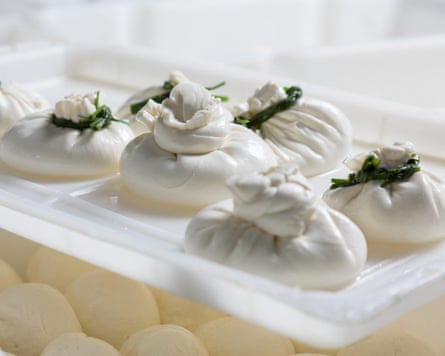
For years it has been rare to open a menu anywhere and not find a starter involving burrata. But while this soft cheese feels luxurious, it originated in hard, thrifty lives near the ancient city of Andria in Puglia. Snowed in and unable to get their milk to market in the early 1900s, the Bianchino brothers were apparently casting around for a way to use it up. They mixed cream with scraps left from making mozzarella and stuffed them in a casing made of the same stretched-curd cheese – never imagining the wobbly pouches would later grace tables from Stockholm to Sydney. Today, Andria is known for the freshest burrata and cow’s milk mozzarella, and many Puglians, such as my friend Savio, won’t eat these cheeses anywhere else in Italy, as they’re best enjoyed within 24 hours. Buy at Caseificio Olanda, with its “milk museum”, on the outskirts of Andria.
Bread of heaven, Sardinia
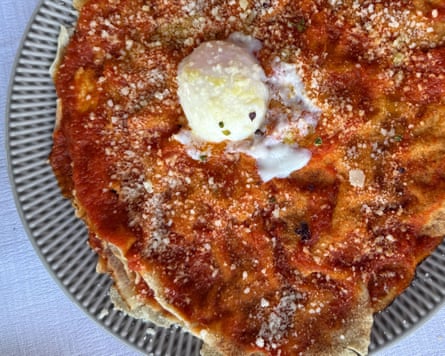
Looking like an oversized poppadum, pane carasau is a crispy flatbread also called carta musica (manuscript paper). Double cooked so that it keeps, it was carried by shepherds spending months in high summer pastures and is one of Europe’s oldest breads: traces were found in 3,000-year-old nuraghe (stone tower) excavations. It is also delicious. Shards of pane carasau sprinkled with olive oil and sea salt are as moreish with drinks as any kettle chip – and much better for you. In Fonni, the highest town in Sardinia, the Sunalle bakery has made pane carasau for as long as anyone can remember. Panefratteria in Cagliari tops the flatbreads with tomato sauce, pecorino cheese and a poached egg.
Onions that won’t make you cry, Calabria
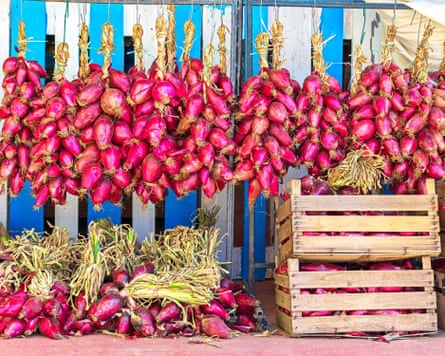
Also dating back millennia, sweet red onions grown around the seaside town of Tropea were probably brought to Italy by the Phoenicians. But Calabria has made the cipolla rossa its own, claiming you can eat them raw like an apple. Their sweetness comes not from a high sugar content but a natural lack of pungent pyruvic acid. Fresh onions are available from May through summer at the Saturday market in Tropea. When you tire of them in salads and sandwiches, stew them with olive oil, salt and a few chilli flakes to make cipollata calabrese – for cucina povera (poverty cooking) that feels anything but.
Fish in a barrel, Lombardy
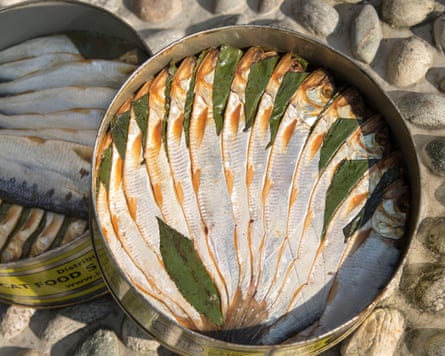
From cheese and charcuterie to pickles, many delicacies arise from humans’ need to preserve food. So it was with missoltini, a freshwater answer to anchovies produced on the shores of Lake Como. Agoni, a kind of shad, are cleaned, salted, hung to dry for 10 days then packed in a barrel with bay leaves. They are traditionally eaten grilled with polenta, which modern palates may find rather strong and salty. I love them as an umami nugget in pasta or risotto recipes, or topping crisp crostini with honey and vinegar. Fishmonger and restaurant Da Ceko in Lecco does an excellent pumpkin salad with raisins and missoltini.







 English (US)