
 5 hours ago
3
5 hours ago
3

16 minutes ago
MaryLou CostaTechnology Reporter

 Andy Barnes
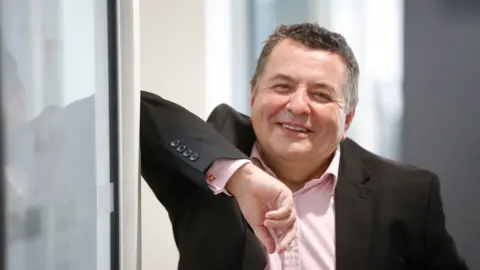
Richard Skellett has a digital version of himself
"Digital Richard" is the AI twin Richard Skellett has been building for the past three years. Bound within the confines of a screen, Digital Richard looks largely two dimensional, but he's no ordinary chatbot.
Digital Richard knows everything Skellett knows. He was built as a small language model which used ChatGPT to digest all of Richard's meetings, calls, documents, presentations and more. It was then refined to follow Skellett's way of thinking and problem solving.
The end product is a text-based window which Skellett can consult, helping him make business decisions and presentation to clients, as part of his work as chief analyst for research and design at technology consultancy Bloor Research.
Digital Richard even helps Skellett manage his personal life, with tabs labelled "family" and "admin" that are off limits to work colleagues, who can otherwise access Digital Richard to ask business-related questions.
Digital Richard has since served as a blueprint to create digital twins for Bloor Research's 50-strong team across the UK, Europe, US and India.
For example, an analyst who was planning to retire has been able to do so in a phased way, using their digital twin to take on some of their workload.
The company was also able to tap into a member of the marketing team's digital twin when they went on maternity leave, rather than hiring a temporary replacement.
A "Digital Me", as Bloor Research is calling it, is now offered as standard to anyone who joins.
Another 20 other companies have already been testing the technology, and it will be made widely available to others later this year. "In this environment, having a Digital Me is not optional if you want to operate effectively. It becomes part of how you work," says Skellett.
Technology analysts Gartner support Skellett's viewpoint, predicting that digital replicas of knowledge workers would start to hit the mainstream this year, following the trend of AI being trained to mimic the style and tone of recording artists.
 Getty Images
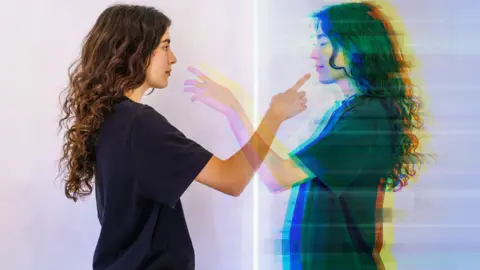
Which would benefit the most from a digital twin - the individual or the company?
It might sound like a dream scenario for companies, who stand to profit from the enhanced output of an employee with a digital twin. But currently there are many questions to be answered.
Who owns an AI digital twin - the employer or the employee? Should people using them get paid more, since they're able to do more work? Who should be able to access what within somebody's digital twin? And who's responsible if a digital twin makes a mistake?
"There are real potential benefits for sure, but it depends on getting the governance right, the direction of free time right, the autonomy of these agents right, and making sure that my name, image and likeness still stays mine, even if my employer is benefiting from it," says Kaelyn Lowmaster. She's a research director in Gartner's HR practice, focused on the impact of AI on work and the workforce.
"I think we will probably see the negative side of this coin before we see the positive side."
Skellett says Bloor Research's position on ownership and pay is "very clear". Individuals should own their AI digital twin so they can benefit from any value it generates. Companies should then pay to access it.
In Bloor's case, its people are paid based on the outcomes they generate, rather than the time they spend working - so they can earn more through their digital twin allowing them to do more.
"That is why compensation now reflects outcomes, measurable commercial impact, and value creation, rather than simply salary plus bonus. AI changes time and speed, so there's little future in the hourly rate," says Skellett.
 Josh Bersin Company
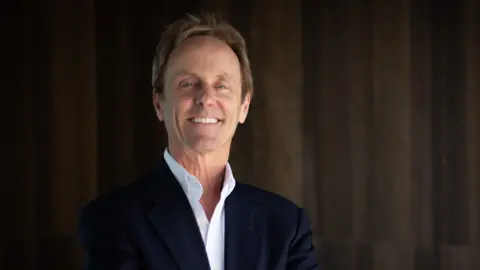
Digital twins have made his staff more productive says Josh Bersin
Josh Bersin is the founder and CEO of The Josh Bersin Company, a consultancy for HR leaders. Bersin started creating a digital twin for himself and the 50 or so people in the company about a year ago, using technology developed by a San Francisco-based startup called Viven.
Finding out the status of a particular project or client account can now happen via a quick question to the relevant person's digital twin, rather than a meeting, call or email.
Bersin has coined the term "superworker" for how AI is amplifying what an individual can achieve at work.
"People don't have the energy to have another conference call to talk about this and that. But you can wake the digital twin up in the middle of the night and talk to it for an hour - it doesn't care. It's incredibly valuable," says Bersin, who is based in Oakland, California.
While the company is growing at around 30% per year, Bersin only needs to make up to two new hires a year because of how much more productive everyone's digital twin is making them. As a result, he's been able to increase the amount given out in staff bonuses each year.
"The economic value of each person increases. If you're a valuable digital part of the company, why wouldn't the company pay you more?" says Bersin.
But where he and Skellett differ in view is on ownership.
"I'm pretty sure the way employment contracts work in most countries is that the IP or the information that you're creating is the property of the business, not yours personally," says Bersin.
"But if you think about it logically, if somebody leaves a company, their twin's going to decay in value over time, because the things going on keep changing and they don't. So after a while, I don't know if the twin would be that useful."
 Bellevue Law
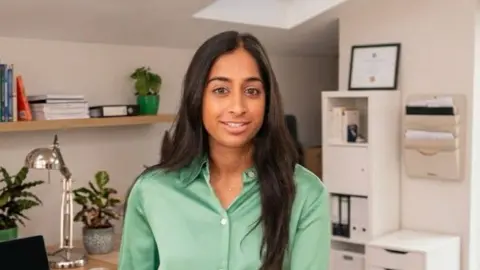
AI twins raise issues "at the heart of" employment says Anjali Malik
Lawyers have also yet to reach a consensus on how employment law will be updated so digital twins can be governed consistently.
"The moment an AI tool is trained on an individual's emails, meetings and work product, you're dealing with issues that sit right at the heart of the employment relationship: consent, control of personal data, performance, substitution of labour, and what happens when someone leaves," says Anjali Malik, an associate at Bellevue Law, which specialises in employment law and commercial disputes.
Chloe Themistocleous, partner in employment law at Eversheds Sutherland believes "clear statutory guidance" will be essential, otherwise employers and employees face considerable legal risk in navigating the use of digital twins.
"There are so many other changes in employment law at the moment, it is unlikely that changes to cater for AI will be any time soon, and it is likely to be left to the tribunals to grapple with in the meantime," she concludes.
Jean-Pierre van Zyl, partner and head of employment at Square One Law agrees tribunals will play an active role in shaping precedent.
"The law will likely develop if there are cases in the future where an employee is disciplined or dismissed because of something their AI twin did. The tribunal will be asked to make a determination on whether the employer acted fairly or not," he says.



 English (US)