
 3 hours ago
2
3 hours ago
2

Debut novelist Virginia Evans has won this year’s Women’s prize for fiction, while the BBC’s chief international correspondent Lyse Doucet took home the nonfiction award, also for her debut.
Evans’s The Correspondent and Doucet’s The Finest Hotel in Kabul were announced as the winners at a ceremony in central London on Thursday evening, with each author awarded £30,000.
Julia Gillard, former Australian prime minister and chair of judges for the fiction award, described The Correspondent as “a remarkable novel, with an exemplary combination of originality, excellence and accessibility”, adding that it “captured our hearts, and should be read and savoured by all”.
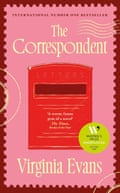
Composed of letters to friends, family and authors, The Correspondent follows the irascible 73-year-old Sybil Van Antwerp’s connection to her loved ones and the written word. As Sybil loses her sight, she uses letters to confront some of the unresolved parts of her life and relationships.
Rebecca Wait, reviewing the novel for the Guardian, called it “skilful and moving”, describing it as “a paean to the art of correspondence” and “an immensely enjoyable read”. A film adaptation is in production, starring Oscar-winning actor Jane Fonda.
Canadian journalist Doucet puts the Intercontinental Hotel in Kabul at the centre of her “people’s history” of modern Afghanistan. She charts the lives of the people who pass through the hotel, where she stayed while reporting from the country as a foreign correspondent, against a backdrop of decades of war and political upheaval.
William Dalrymple, reviewing the book for the Guardian, described it as “witty, observant and sometimes heartbreaking”, adding that Doucet “succeeds in making the hotel an oddly successful frame for a sweeping social history of Afghanistan over the last half century”.
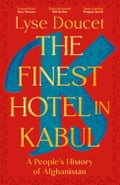
Thangam Debbonaire, former Labour MP and nonfiction chair of judges, described the book as “a perfect work of narrative nonfiction … cleverly constructed and brilliantly researched”, adding that “it will move you to tears or make you laugh, or perhaps both”.
This year’s fiction shortlist also featured Flashlight by Susan Choi, Dominion by Addie E Citchens, The Mercy Step by Marcia Hutchinson, Kingfisher by Rozie Kelly and Heart the Lover by Lily King.
Alongside Doucet’s winning book, the nonfiction shortlist included Art Cure by Daisy Fancourt, Artists, Siblings, Visionaries by Judith Mackrell, Hotel Exile by Jane Rogoyska, Mother Mary Comes to Me by Arundhati Roy and Nation of Strangers by Ece Temelkuran.
The creation of the Women’s prize for nonfiction in 2023 was prompted by research that found only 35.5% of winners across seven major UK nonfiction awards over the previous decade were women.
Last year’s prize for fiction went to another debut novelist, Yael van der Wouden, for The Safekeep, while the nonfiction award went to Rachel Clarke for The Story of a Heart. Past winners of the fiction prize include Zadie Smith, Ali Smith and Chimamanda Ngozi Adichie.
Gillard was joined on the fiction judging panel by poet and novelist Mona Arshi, writer and presenter Salma El-Wardany, actor and comedian Cariad Lloyd and author and DJ Annie Macmanus.
Debbonaire’s nonfiction judging panel included Roma Agrawal, engineer and author; Nicola Elliott, founder of Neom Wellbeing; Nina Stibbe, novelist and memoirist; and Nicola Williams, crown court judge and thriller author.





 English (US) ·