
 2 hours ago
3
2 hours ago
3

William Orbit, the British music producer whose dreamy yet propulsive style invigorated work by Madonna, Blur, All Saints, U2 and more, has died aged 69.
A statement on his social media, attributed to family and friends, said he died at home on 23 July. “He will be greatly missed by us and by so many whose lives he touched through his music, friendship and kindness,” the statement read. No cause of death was given.
Orbit was most famous for his collaboration with Madonna on her 1998 album Ray of Light: his strikingly original backings, rooted in trip-hop, jungle and techno, marked a new chapter for one of pop’s greatest stars, resulting in hits such as Frozen, The Power of Goodbye and the giddy title track. It had multi-platinum sales across the world, won Madonna three of the five Grammy awards she was nominated for in 1999, and has become seen by many as Madonna’s single greatest studio album.
But his work stretched far beyond one client, spanning Blur’s exploratory, emotionally scarred album 13, All Saints’ UK No 1 Pure Shores, Pink’s UK No 3 new wave hit Feel Good Time and more. He was credited as a guest artist on the latter, and released a raft of albums and singles under his own name: his electronic twist on Samuel Barber’s Adagio for Strings, aided by a trance remix by Ferry Corsten, reached the UK Top 5 in 1999.
Success came relatively late for Orbit – at least in pop music terms. He was born William Wainwright in 1956 and raised in north London, the son of two teachers he described as “decidedly working class and poor … they’d struggled to become middle class”. He left school at 16 and became what he described as a “post-hippie”, living in a squat, doing occasional low-paid labour and, by his recollection, consuming “a Mars bar and an acid tab a day”.
In 1980 he formed the electronic/ambient trio Torch Song with Laurie Mayer and Grant Gilbert, and were signed to the label IRS, releasing three albums between 1984 and 1987. Well versed in electronic music production after gradually assembling a studio full of digital and analogue gear, he was hired to create the soundtrack to the Rob Lowe and Patrick Swayze film Youngblood, and remixes for pop artists – including Madonna. Wielding hip-house breakbeats and puckish instrumentation, he gave a chirpier cast to her prowling, sexually infatuated early 90s singles Justify My Love and Erotica.
He was now on Madonna’s radar, but it would be later in the decade they would work together on original tracks. In the interim, Torch Song released another album in 1995 and he had another successful project, Bassomatic, whose psychedelic baggy epic Fascinating Rhythm hit the UK Top 10. He’d released his solo debut album in 1987, and found acclaim in the 90s with a series of albums with the title Strange Cargo. 1993’s Strange Cargo III featured a young Beth Orton on a track; Orbit produced her debut album Superpinkymandy the same year, and went on to remix her single Central Reservation.
Meanwhile, Madonna was struggling to make a new album and redefine herself: she had scrapped sessions with R&B producer Babyface in favour of a search for a new collaborator, and only had a small handful of songs for a new album. Orbit’s pedigree meant he was invited by her manager to submit tracks and was hired: “Just hang in there, work on your stuff, get your chops together and eventually you get a stroke of luck,” he later reflected. He and Madonna worked up much of the album together in studios in New York and Los Angeles.
“William is a complete madman genius,” Madonna said of the Ray of Light sessions. “I’d come to him with an idea of where I wanted to go musically, hum melodies or read lyrics, and then leave him alone in the laboratory. Sometimes he’d go in the direction I wanted and sometimes he’d swerve off somewhere else entirely. We’d end up with trance tracks that were eight minutes long and then keep adding and subtracting until we had real verses and choruses. We really put our noses to the grindstone.”
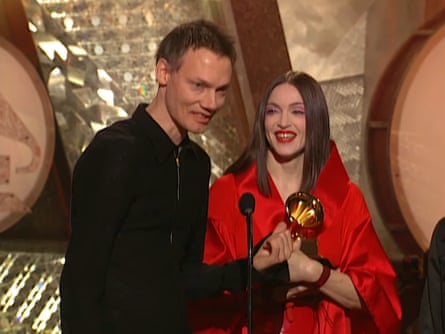
Orbit’s astonishing range of sound – heavy breakbeats, acoustic guitars, trance synths and more – was put to use on everything from sweeping ballads to the pell-mell acid house of the title track, re-establishing Madonna’s credentials as a vanguard pop star and earning her first non-video Grammy award wins.
Eager not to repeat herself, she switched her core producer up again for her next album Music, to Mirwais, though Orbit was retained for three of its tracks. He also produced two successful standalone Madonna singles which appeared on soundtracks: 1999’s Beautiful Stranger, from Austin Powers: The Spy Who Shagged Me, and her 2000 cover of Don McLean’s American Pie, from The Next Best Thing (which she also starred in). Orbit returned for her 2012 album MDNA, co-producing six of its songs. Earlier this year, Orbit said: “I will always love that woman. For real. She made my career.”
The late 1990s were a hugely industrious period for Orbit. In 1999, he released Pieces in a Modern Style, an album of classical reworkings including his successful take on Samuel Barber (an earlier 1995 version had been deleted from sale after an objection from composer Arvo Pärt).
1999 also saw the release of Blur’s album 13: similarly to Madonna, Blur wanted to reinvent themselves after five albums with producer Stephen Street, and had been impressed by Orbit’s earlier remixes of their work (collected on the album Bustin’ and Dronin’). 13 charted Damon Albarn’s breakup from musician Justine Frischmann, and the frontman later described Orbit’s role on the album as “a psychiatrist”. Like Ray of Light, 13 is regarded as one of the most singular and brilliantly realised albums in Blur’s catalogue, with Orbit crafting experimental yet commercial material with the group, including hit singles Tender and Coffee and TV.
Ray of Light’s success meant that he was also courted by a range of pop artists in the years that followed, including Britney Spears, Melanie C, Robbie Williams, Chris Brown, Pink, No Doubt and ex-Girls Aloud singer Nadine Coyle. He collaborated with co-writer Beck on Pink’s Feel Good Time – another film soundtrack hit, for 2003’s Charlie’s Angels: Full Throttle.
He brought the psychedelic Ray of Light palette of guitars, bleeps and breakbeats to two superb singles by British girl group All Saints: Black Coffee and Pure Shores, both UK chart-toppers. Regarded by pop fans as some of Orbit’s masterpieces, he told the Guardian in 2021 he initially thought the latter song was “pure shite” because it had taken so long to make: “When you really slave over something, it takes years until you can really listen to it with pleasure.” He worked with All Saints again on two tracks from 2018 album Testament.
Orbit produced two new songs for U2 which appeared on their compilation The Best of 1990-2000: Electrical Storm, which reached No 5 in the UK, and The Hands That Built America, which was used as the theme for Martin Scorsese’s 2002 film Gangs of New York.
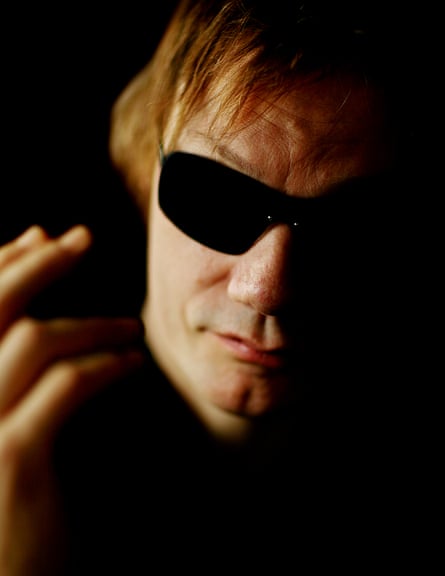
Orbit’s only other full-album project for a pop artist was Katie Melua’s fourth album The House, released in 2010. His work rate slowed thereafter, though he did bring a long-lost pop curio to fruition: There Must Be More to Life Than This, a Freddie Mercury and Michael Jackson duet, originally recorded in the early 1980s but eventually produced by Orbit and released in 2014.
Orbit also continued to release solo albums, adding six more after Pieces in a Modern Style, including a 2010 sequel to that release. His most recent album is 2022’s The Painter.
In March this year, he scotched rumours of a possible new project with Madonna. “Let’s put this Madonna ROL [Ray of Light] 2.0 thing to rest here and now folks. Can get exhausting. Is not going to happen … I have an album ready that imho is indeed the successor to ROL. Everything about how it was made and how it sounds yells that from the first few bars. And I reached out. And there has been heard. Nil response.”
He told the Guardian in 2021 that he struggled with substance use four years before. As well as heavy marijuana use, he was taking “LSD, mushrooms, MDMA, coke, some hormones that everybody was experimenting with. Codeine. I wasn’t aware of what I was doing and I ended up having a psychotic episode.” He was sectioned. “Fortunately, once the drugs were out of my system, I finally got back to being normal – and out I was,” he said.






 English (US) ·