
 2 hours ago
2
2 hours ago
2


The men's T20 World Cup in India and Sri Lanka starts on Saturday against a backdrop of political tension and uncertainty.
Bangladesh have already boycotted the tournament while Pakistan have said they will not play their scheduled match against India.
The situation became marginally more clear on Thursday with the confirmation of the playing conditions by the International Cricket Council, the tournament organisers.
The conditions state, as expected, Pakistan will forfeit the points from the match if they refuse to play, with India taking the maximum available.
There remains plenty of further uncertainty around potential further punishments and the wider impacts, however.
Why are Bangladesh boycotting?
Bangladesh, who have now been replaced in Group C by Scotland, had asked for their games to be switched from India, citing safety concerns amid growing tensions between the countries.
Relations between the South Asian neighbours have soured since former Bangladesh Prime Minister Sheikh Hasina fled to India in 2024, following deadly protests.
India has not agreed to send her back despite several requests, and violent protests broke out after Sharif Osman Hadi - a prominent student leader in Bangladesh - was shot dead.
India itself has raised concerns over violence targeting members of the minority Hindu community in Bangladesh.
In December, a Hindu man was accused of blasphemy and beaten to death by a mob in an incident that resulted in protests by Hindu nationalist groups in India.
Against that political backdrop, Indian Premier League (IPL) side Kolkata Knight Riders released Bangladesh bowler Mustafizur Rahman in January after being instructed to do so by the Board of Control for Cricket in India.
In response, Bangladeshi authorities banned broadcasts of the IPL in the country.
The Bangladesh Cricket Board then requested that their World Cup fixtures be played in Sri Lanka.
The ICC - the sport's governing body - rejected that request, saying there was an "absence of any credible security threat" and gave the BCB a final 24 hours in which to declare their participation.
When that deadline passed, Scotland were invited to the tournament.
The ICC said it was keen not to establish "precedents that could undermine the neutrality and fairness of ICC events".
Why are Pakistan boycotting their game against India?
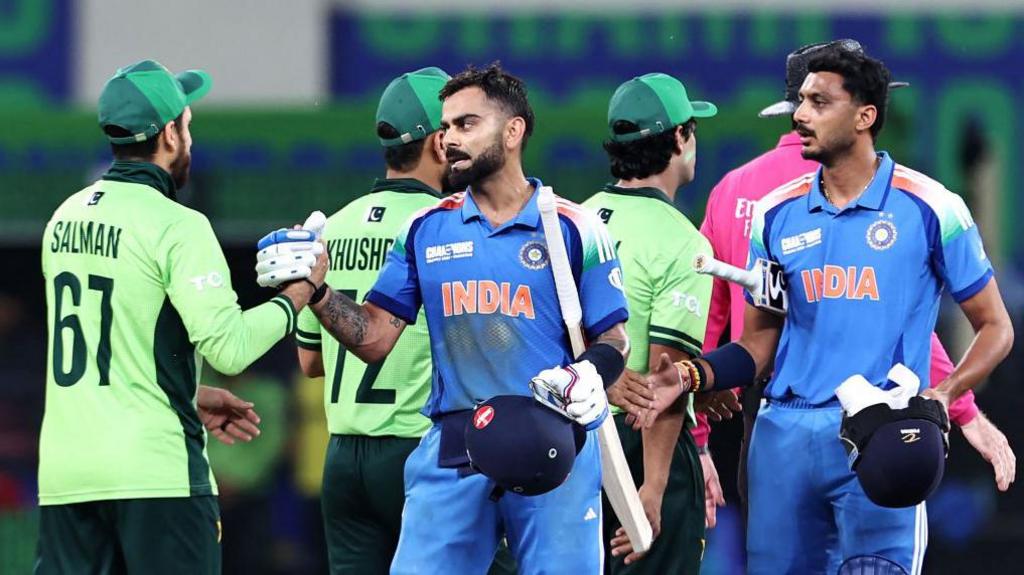 Image source, Getty Images
Virat Kohli hit a composed unbeaten century as India beat Pakistan in their last meeting at the Champions Trophy in 2025
Pakistan are boycotting their match against India, which was scheduled to take place in Colombo, Sri Lanka, on 15 February.
In a statement, the Pakistan government said it granted "approval" to the team's participation in the tournament but they "shall not take to the field" for the match against India.
Pakistan Cricket Board (PCB) chairman Mohsin Naqvi previously said the team could pull out completely after Bangladesh were removed from the tournament.
Pakistan Prime Minister Shehbaz Sharif said on Thursday, external the decision was made to "support" Bangladesh.
Last year India refused to travel to Pakistan to play in the Champions Trophy and had their matches moved to the United Arab Emirates.
It resulted in India and Pakistan signing an agreement stating the two countries would play at neutral venues whenever one of them hosts an ICC event.
Pakistan and India have not faced each other outside men's major tournaments since 2013, and India have not played in Pakistan since 2008.
Pakistan did not host any touring nations between 2009 and 2019 following the Lahore attack on Sri Lanka's team bus, which killed six policemen and two civilians.
Pakistani players have also been banned from the IPL since 2009 following the Mumbai attacks that left 174 people - including nine gunmen - dead.
The neighbours have fought a number of wars and had several military stand-offs since the partition of India in 1947, when the nation was split into India and the new state of Pakistan. It created an upsurge of violence, in which approximately 15 million people were displaced and an estimated one million died.
Recent escalations were sparked after the neighbours engaged in a four-day military conflict in April 2025 following a deadly militant attack on tourists in India-administered Kashmir.
The ICC said Pakistan's stance was "difficult to reconcile" and called on the country's cricket chiefs to explore a "mutually acceptable resolution".
The governing body said that "selective participation undermines the spirit and sanctity of the competitions".
It said it "respects the roles of governments in matters of national policy" but continued: "This decision is not in the interest of the global game or the welfare of fans worldwide, including millions in Pakistan."
It added it hoped the PCB would "consider the significant and long-term implications for cricket in its own country".
Former Pakistan captain Shahid Afridi is among those who have accused the ICC of mishandling the situation.
In a post on X, he said: "It's regrettable that Pakistan won't play India, but I stand behind my government's decision.
"This is the moment for the ICC to lead and prove through decisions, not statements, that it is impartial, independent and fair to every member."
Matches between Pakistan and India can draw huge TV audiences.
Reportedly, more than 600 million people watched last year's Champions Trophy fixture on Indian streaming platform JioHotstar.
Will Pakistan be punished?
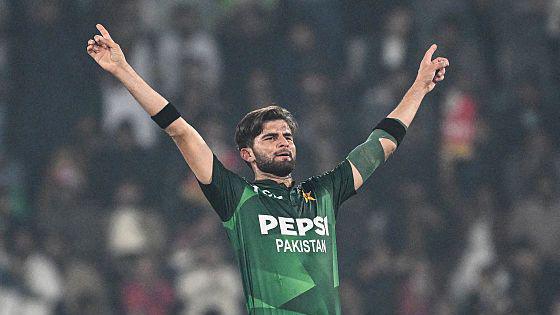 Image source, Getty Images
Pakistan were runners-up at the 2022 T20 World Cup, but did not make it past the group stage in 2024
The 2026 tournament playing conditions seen by BBC Sport state: "A match shall be lost by a side which either concedes defeat or in the opinion of the match referee refuses to play".
These conditions are effectively a copy of those from previous recent tournaments.
The conditions also add "any refusal to play prescribed under this clause" may result in "disciplinary action being taken against the captain and team responsible under the ICC code of conduct".
That leaves the door open for Pakistan to be given further punishments, though the clause was also present for the 2024 T20 World Cup so is not specific to this case.
Pakistan face the Netherlands, USA and Namibia in their other group-stage games, and it is unclear what could happen if they were to face India in the final.
Captain Salman Agha said on Thursday: "If we have to play them [India] in the semi-final or the final, we will go back to them [the government] and act on their advice."
Teams have pulled out of tournament fixtures before, with Australia and the West Indies both deciding not to travel to Colombo in the 1996 World Cup that was co-hosted by India, Pakistan and Sri Lanka.
England also decided not to play their 2003 World Cup match against Zimbabwe in Harare, citing security concerns and social unrest in the country.
None of those nations received a subsequent fine or punishment from the ICC, though all forfeited the matches.
What could happen in the long term?
Both Pakistan and Bangladesh could receive other sanctions as the ICC has a precedent for punishing governments who interfere in the game.
Under article 2.4 of the ICC constitution, it outlines boards must manage their affairs "autonomously and ensure that there is no government (or other public or quasi-public body) interference in its governance, regulation and/or administration of cricket".
In 2019, Zimbabwe were suspended for three months after the government replaced the cricket board, leading to a freeze on funding and exclusion from World Cup qualifiers.
Four years later, Sri Lanka also lost the right to host the Under-19 World Cup after its government dismissed the national board following poor performances.
Both nations later had their ICC membership restored.
There are also questions over how a Pakistan forfeiture and the risk of a repeat would impact future TV rights deals, given their fixture against India is highly lucrative.
This article is the latest from BBC Sport's Ask Me Anything team.




 English (US)