
 8 hours ago
2
8 hours ago
2

Sir Keir Starmer has authorised an "urgent" review into the extent of foreign interference in British politics, as he prepares to change the law to tighten donation rules.
Ministers have initiated a rapid inquiry into current financial rules on donations and election safeguards, which will report at the end of March.
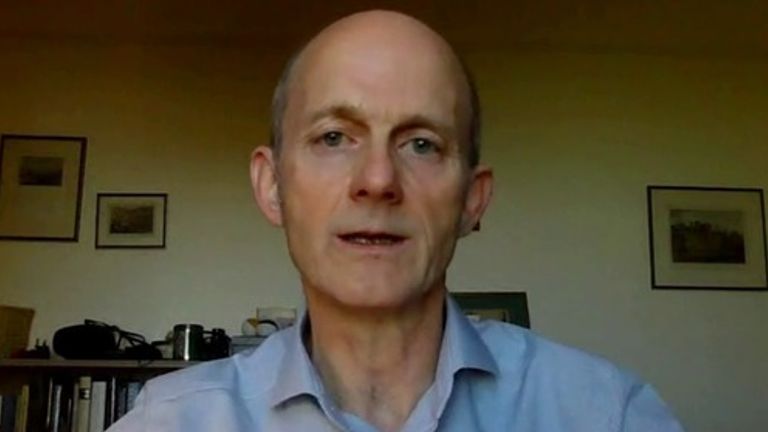
It will be led by Philip Rycroft, the former permanent secretary of the Brexit department.
Politics latest: Who could lead Labour instead of Starmer?
The inquiry is a direct response to the jailing of Nathan Gill, the former leader of Reform UK in Wales, who admitted accepting tens of thousands of pounds in cash to make pro-Russian statements to the media and European Parliament.
In this case, officers said that they believed some individuals had a direct link to Vladimir Putin.
Communities Secretary Steve Reed, who announced the inquiry to the Commons on Tuesday, wants Mr Rycroft to assess how well the rules work at the moment and promised the report will be published in full.
Mr Reed told MPs that the "conduct [of Gill] is a stain on our democracy".
"The independent review will work to remove that stain," he said.
The review could then lead to changes in the Elections Bill, due this spring, which could significantly change the way elections are financed.
Tuesday's announcement is likely to ignite a firestorm of criticism.
Among the changes that could result from the Rycroft report could be a clampdown on cryptocurrency donations, which Reform UK leader Nigel Farage has said in the past would be a direct attack on his party.
It could introduce new rules for donations to thinktanks, which fall outside any regulatory regime at the moment, and could see new rules around foreign donations.
Foreign donors can effectively give money if they have a trading UK subsidiary at the moment.
The government has already promised to clamp down on "shell" companies, but this could give more clarity over how this will work.
It could also look at funding of "troll farms" - vast banks of social media accounts based overseas designed to try and sway public opinion as part of state disinformation campaigns.
However, the financial affairs of and donations to Labour MPs could be in the scope of the review, and those named in the report could face fresh disciplinary consequences.
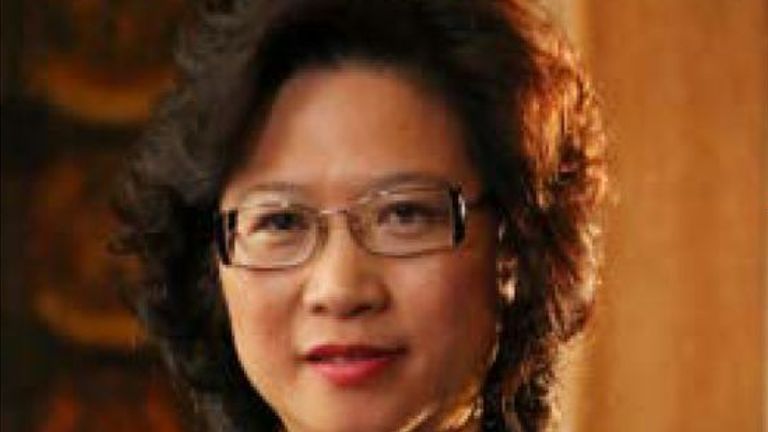
The government also singled out Christine Lee, the UK-based lawyer accused of working covertly on behalf of the Chinese Communist Party, as another case of concern.
Nevertheless, other parties are likely to suggest this is an attempt to change the donation rules in Labour's favour, after promising to lower the voting age to 16 and cancelling some mayoral elections because of a local government re-organisation.
The review will invite all party leaders to take part in "in-depth assessment of the current financial rules and safeguards and offer recommendations to further mitigate risks from foreign political interference".
Mr Rycroft cannot compel politicians to give evidence, but he will have access to the security services, though the extent of their cooperation is unclear.
The conduct around the Brexit referendum has been specifically excluded in the terms of reference, and Mr Rycroft will be instructed to focus on more "recent" cases, although there is no specific start date.
The 12-week timeline for the inquiry, alongside the lack of statutory powers, is likely to make it hard for Mr Rycroft to uncover substantial new incidents of bribery or corruption and prove them to a standard necessary to put details in the public domain.
The publication date, at the end of March, comes just five weeks before local elections in which Reform UK is expected to do well, and opposition politicians are likely to question the timing.
How worried should we be about Russia bribing politicians?
Mr Rycroft has previously locked horns with Boris Johnson.
He argued that, at times, Mr Johnson was a PM who "only speaks for England", his government was "not sensitive to the niceties of constitutional convention" and had "imperious disregard" for devolved policies, fuelling the breakup of the UK.
In June last year, just before the election, when Rishi Sunak was PM, he signed a letter to The Times which said: "Trust in politics, and in the people and institutions of public life, is at an all-time low.
"This is a serious problem for the health of our democracy and is indicative of the need for substantial improvement in the governance of the UK."
Mr Rycroft has previously expressed his caution about the relationship between big tech and politics, telling Sky News two years ago: "Politicians do have to be a little bit careful in this space.
"Nobody's elected Elon Musk, his opinions are those of a businessman, he is not a statesman.
"Clearly, they can court business people for their investment, but they shouldn't look as though they're kowtowing to them in terms of their regulatory concepts.
"They should listen to their views, but it should be democratically elected politicians that take those really, really important decisions, and let's hope that's the case in the UK."
It comes as Reform and the Conservatives both received significantly higher donations than Labour in the first three quarters of this year.
They included the largest ever political donation from a living person: £9m to Reform UK from British-Thai businessman Christopher Harborne.
A Reform UK spokesman said: "We welcome any investigation into foreign financial interference in UK politics. British democracy must be safeguarded from foreign powers with maligned intentions.
"However, to be comprehensive, any investigation must scrutinise the actions of all hostile states including communist China."








 English (US)