
 14 hours ago
3
14 hours ago
3

“I nearly fell over when I saw the travel insurance quote,” says the retiree Bernie Lawrence. The 77-year-old from Fleet, Hampshire, says that after he developed heart problems, the cost of buying cover became “astronomical”.
Lawrence, who usually travels with his wife, Barbara, 79, says he had always been active and fit before suffering chest pains while out running in 2018. Nine days later, he underwent quadruple bypass surgery.
Before the surgery, the couple bought annual travel insurance policies for Europe for under £100. However, after the operation, and as they got older, prices began rising sharply.
In 2022 they paid £302 for the same level of cover. After he suffered briefly from atrial fibrillation – a common heart rhythm disorder – and was placed on an NHS waiting list for an echocardiogram, they were quoted £1,200.
“I just couldn’t believe it,” he says. “All I was waiting for was for them to tell me something I already knew: that it had gone and probably wasn’t going to come back.”

Unable to wait months for NHS confirmation, he paid privately for the scan.
Once he had the all-clear, his travel insurance quote went to £584. The couple paid £805 in 2024 and then £1,009 this year for annual cover before a Mediterranean cruise.
While he says he thinks insurance companies look on older people as “a bit of a cash cow”, he adds: “You can’t really argue with them because they say: ‘Well, you’re 77 years old and you’ve had all these things in the past.’”
Medical bills
Despite never making a claim on his policy, Lawrence believes it is important to have cover. However, millions of holidaymakers with pre-existing medical conditions are planning to travel abroad this summer without insurance, according to a survey by specialist insurer AllClear that suggested 18% of Britons will risk not buying cover.
That will leave them at risk of big bills if anything goes wrong. Two years ago, insurers paid out £262bn for medical expenses for UK travellers who needed emergency care or treatment while on holiday.
Some countries such as the US and Canada charge hundreds of thousands of pounds for treatment if you fall ill, so it is important to find the right cover, says James Daley, the founder of Fairer Finance, a research and rating agency.
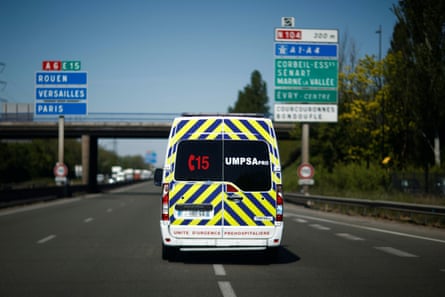
“Travel insurance can get very expensive if you’ve got a pre-existing medical condition,” he says. “But it’s incredibly important that you take out insurance that covers you for your condition – particularly if you’re travelling to countries like the US where there’s no reciprocal health agreement with the UK.
“If you end up having a medical emergency in the US without insurance, the costs can run into the tens and even hundreds of thousands of pounds.”
Buying cover
The cost of a policy will be based on your age, the condition, where you are travelling and for how long.
Price comparison websites allow you to search for policies even if you have pre-existing medical conditions, but it is important to check the small print with the insurer before you pay. It is also worth checking anything you declare to the comparison website is included in your policy details once you go through to buy the cover with the insurer.
If you can’t find cover via a mainstream comparison site or through a traditional insurer, specialists such as Medical Travel Compared and PayingTooMuch, or AllClear, could help. You could also find a broker via the British Insurance Brokers’ Association (at biba.org.uk) to help you.
When you are applying for cover, an insurer will ask you to tell it about any medical issues that you have had during a certain period – usually the last five years.
However, the questions can go back different lengths of time depending on the provider and condition – sometimes covering the previous two years or five years, or even longer for serious illnesses such as cancer or heart disease.
If you had a condition and have recovered and not received any more treatment since this time, then you do not need to disclose it.
You may consider buying a separate policy for the person with pre-existing conditions rather than a couple’s policy or group insurance, but Tommy Lloyd, the managing director of Medical Travel Compared, says his company would generally recommend that the entire travelling party is insured under the same policy wherever possible.
“This helps ensure that cancellation and curtailment cover applies consistently across the group,” he says.
“For example, if a traveller’s medical condition unexpectedly worsens before departure and the holiday has to be cancelled, a joint policy is more likely to provide protection for all insured travellers who are unable to travel as a result.”
He adds: “While cost is understandably an important consideration, travellers should be careful not to focus solely on the cheapest premium. The scope of cover and how it responds when travelling companions are affected by a medical condition can be just as important as the price paid.”
Common conditions
Some common conditions, such as anxiety, high blood pressure, arthritis and asthma, only add a few pounds to a typical policy.
You may, however, face high costs if you are still under investigation for a condition or waiting for treatment.
Disclosing any medical conditions is essential, as you could invalidate your policy if you don’t.
We sought quotes for a traveller with no pre-existing medical conditions and compared them with the costs for the same traveller with one of several different conditions.
Declaring anxiety did not increase the premium in this example, but the other conditions did bump up the price. Being diagnosed with angina and having had a heart attack had the biggest impact of all of those we checked. This added about 50% or so to the price.
It may not always be possible to easily find cover, depending on your condition and how recent your diagnosis is.
In 2021, the Financial Conduct Authority introduced rules for insurers to help customers with pre-existing conditions. If an insurer is unable to provide cover or if the premium is more than £200, it should signpost you to a specialist company that can offer insurance.
An Association of British Insurers spokesperson says that when people are looking for travel insurance, “we recommend shopping around for a policy that meets your needs, and comparing factors such as trip length, destination and policy excess”.
The spokesperson adds: “Improving access to insurance is a key priority for our industry, and we continue to engage with members and stakeholders on this issue.”
Our price check
We checked prices for a 57-year-old traveller taking a seven-night trip to Spain using the Medical Travel Compared website.
We found that the impact of pre-existing medical conditions on travel insurance premiums can vary depending on the condition declared.
-
No condition declared: £12.43.
-
Diagnosed anxiety disorder, not referred to psychiatrist: £12.43.
-
Diagnosed asthma, taking up to two medicines for it: £14.65.
-
Angina, one previous heart attack, no new symptoms, currently fit: £18.76.
-
Breast cancer, last treatment three to five years ago, given all-clear: £13.94.
Case study: ‘It’s just ridiculous’
The part-time parish clerk Ian Wardle, 68, from Hatfield Peverel in Essex, says he was quoted up to £6,000 for travel insurance after being diagnosed with non-Hodgkin lymphoma – leaving him questioning whether he could afford to visit his brother in the US.
Wardle was diagnosed with the cancer in July 2020, during the height of the Covid pandemic, after discovering a golf ball-sized lump in his neck. Scans and biopsies revealed he had 26 cancerous lymph nodes, with some “the size of an orange”.

Wardle underwent chemotherapy from September 2020 until January 2021, followed by maintenance treatment until the end of 2022. He has since been given the all-clear.
Once he recovered, he and his wife returned to travelling, including trips to the Maldives, for which he was able to find affordable cover.
However, when he tried to arrange insurance for a solo motorbike road trip to visit his brother in South Carolina in 2024, he was shocked by the quotes given on comparison websites.
“Some of them, even just for a week’s cover, were like £5,000 or £6,000,” he says. “I was just thinking: ‘No, I’m not paying that. It’s just ridiculous.’”
Wardle says the high premiums almost stopped him travelling.
“It just put everything in perspective,” he says. “I just couldn’t justify spending that sort of money for a week’s trip.”
He found more affordable cover through AllClear Travel Insurance and he says he was happy to call rather than buying online. “Being able to talk to someone was quite important,” he says. “There’s always a worry that if you don’t tick the right box or miss a detail, then they won’t pay.”
He now pays about £1,000 for an annual policy that covers travel to the US.








 English (US) ·