
 10 hours ago
3
10 hours ago
3

On a quiet street in New York City’s Ridgewood neighborhood stands an unassuming, windowless white building. Its lone door, covered with an amalgamation of cut-outs, looks like a teenager’s bedroom; the building numbers are displayed via peeling stickers above it. But if you look closely, herein lies Low Cinema, an indie movie theater which boasts just 42 seats and thrives on being lo-fi.
“We need to bring back theaters that are the size of porno theaters but don’t necessarily play pornographic films,” cracks owner John Wilson, who is best known as the host of HBO Max’s popular How To with John Wilson and opened Low Cinema in spring 2025.
“Four or five people have told me that they are actively opening or rehabilitating movie theaters across the country since we opened a little over a year ago,” Wilson added.
Wilson has found himself swept up in a gen Z-led wave fueling a fresh resurgence of indie movie houses. Earlier this year, a Fandango study found that the demographic is now the biggest moviegoing demographic. Meanwhile, a new survey from Art House Convergence, a coalition of indie theater owners, showed that independent cinemas have grown 38% since the pandemic, with 68% of attendees under the age of 45.
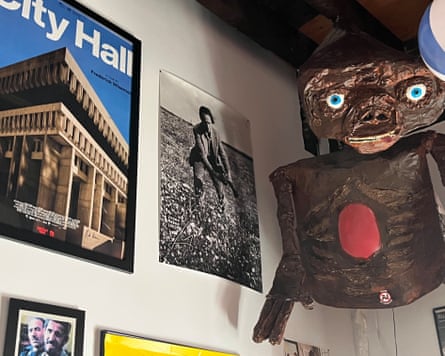
Indie movie theaters have suddenly found themselves “in the business of culture-making” after years of being a niche, highbrow activity, said Lela Meadow-Conner, the interim executive director at Art House Convergence.
“Gen Z is flocking to repertory cinema, which we know to be true around the world, and nobody curates rep better than the art house,” she says. “This is in large part because independent theaters are programmed by humans who understand the tastes and desires of their community rather than just programming for the bottom line.”
Art House Convergence’s study also found that a quarter of all respondents only started attending their local indie cinema within the past three years.
Factor in the recent box office successes of indie films such as Obsession and Backrooms, and publications like the Hollywood Reporter are asking if gen Z can save Hollywood.
“I think it’s because [going to a movie theater] can be anonymous or social, and it’s completely up to you how you want to play it,” said Wilson of what’s drawing younger audiences to theaters such as Low. In the week we talk, the tiny space boasts an eclectic slate, playing classics (1948’s The Naked City), cult favorites (the Jackie Chan flick Rumble in the Bronx from 1995) and otherwise (the forgettable 2010 sequel Wall Street 2: Money Never Sleeps).
Adding to its charm is a likeable off the cuff approach to social media. In its schedule for the 4 July weekend it simply states: “Might do something.”
“People just come in to buy popcorn if you leave the door open and they don’t even see a movie,” Wilson points out. The concession stand also flaunts stacks of worn, 90s-era VHS tapes, tapping into the nostalgia of movie culture.
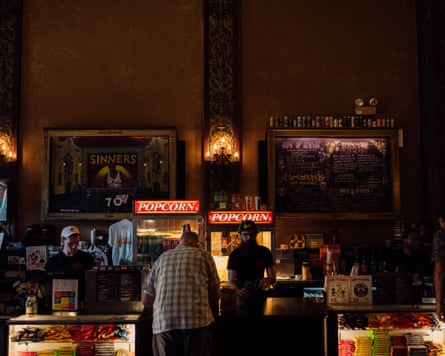
Chicago’s stately and church-like Music Box Theatre is experiencing the same rush of interest. Nearly a century old (it opened two months before the Great Depression) the 700-seat theater, which flaunts a neon marquee that towers over Lakeview’s Southport Avenue, has never been more popular.
“We’ve had a record-breaking 300,000 plus audience members coming into the theater in 2025 alone,” said Steve Prokopy, the theatre’s public relations manager.
“Gen Z has also grown to appreciate watching new and older movies on film, so when we play new films on 35mm or 70mm, people often come in from far and wide to watch it,” explained Prokopy. He added that the pandemic was the perfect gateway for younger generations to binge classic films at home, adding to their appetite for a big screen experience when theaters began to open up.
“Films from any decade played on film typically attract a larger audience than playing something digitally,” Prokopy says, with recent screenings including everything from Sister Act to last year’s Cannes standout The Mastermind, complete with a live score from composer Rob Mazurek. In July, is a series celebrating the foundations of French New Wave cinema.
Buck LePard, the Music Box’s assistant general manager, said he’s seen tickets selling for the 2001 Hollywood comedy Joe Dirt and The Lord of the Rings trilogy alike. “There’s especially an interest in seeing movies that people grew up loving, but may have been too young to see in a theater when they first came out.”
The director Rustin Thompson recently created a love letter to movie houses with his new documentary The Last Picture Shows. Billed as an “elegy for small town cinemas”, the documentary chronicles a road trip to visit theaters across the nation. Thompson initially envisioned the film as a mournful look back at what once was, later realizing he was painting a more optimistic portrait.
“I soon discovered how many small towns in the wide open spaces of the west still had working theaters, with dedicated owners and managers finding ways to keep their cinemas open,” says Thompson. “My film changed from a rather gloomy journey into a much more hopeful one. It still contains bleak portraits of long-abandoned cinemas, but several that are not only surviving but thriving as well.”
Thompson can’t help but ponder what he sees as encouraging statistics. “I think [many young people] are feeling like they are getting short-changed by algorithms, AI, and the streaming channels,” he explains. “No one asked for the quiet fascism of these tools force-feeding us repetitive and questionable programming, the movies and series the corporate behemoths now refer to as ‘content’.”
According to Meadow-Conner, that “intentional and thoughtful curation” is luring audiences. “Because they are so rooted in their communities, art houses are playing a really critical role in [bringing people together],” he says.
The Art House Convergence team has come to look at their mission akin to the rise of vinyl records. To that end, much like April’s Record Store Day, they’ve launched Art House Theater Day on 30 July, during which hundreds of indie cinemas will boast special programming nationwide.
For Meadow-Conner, the future is bright: “There’s a definite spirit of excitement in the air for the future of independent theaters and their vital role in the film ecosystem.”
-
The Last Picture shows is in US cinemas from 5 July with UK and Australia release dates to be announced








 English (US) ·