
 2 hours ago
3
2 hours ago
3

We Britons have loved brollies since about the turn of the 19th century. Previously an aristocratic luxury, today they’re a broad tent covering tight budgets and expensive tastes alike. You’ll see them sprout like mushrooms whenever rain hits the high street.
Most decent umbrellas will keep you dry(ish), but peek closer and you’ll find that not all are the same. Some have a stronger, smoother mechanisms; others are lighter and more comfortable to hold. The best stand out for thoughtful details: from polished wooden handles to gleaming tips, a brolly’s aesthetic finish can often be a clue to how long it will last.
At a glance
-
Best umbrella overall:
London Undercover Classic
-
Best budget umbrella:
Doppler Zero 99
-
Best compact umbrella:
Blunt Metro
-
Best-looking umbrella:
Oswin Hyde Joseph
-
Best mini umbrella:
Davek Mini
-
Best golf umbrella:
Fulton Titan 1
Why you should trust me
As a regular umbrella carrier, I use mine to stay dry on my soggy travels around the north of England. The best models keep the rain off and are convenient to carry. I’m also selective about colourways, materials, design and construction.
If I’m under a brolly, there’s a good chance I’m either on my way to field-test a product, or nipping to the library where I do much of my writing. I have extensive experience reviewing useful things, from travel pillows to reusable cups, for titles including The Filter. For the past decade or so, I’ve devoted much of my time to working out what differentiates one product from another, and what really matters to the user.
How I tested
Throughout October 2025, I carried each umbrella daily and noted how effectively it sheltered me from rain and wind. Did it cover my head, shoulders and torso adequately? Was it comfortable to hold? And would a sudden gust of wind turn its canopy inside out?
For a sterner test of resilience and wind resistance, I opened up the umbrellas in strong winds near the summit of Mam Tor, a highly exposed, 517-metre hill in the Peak District, which overlooks part of the Steel Cotton Rail Trail. (Thanks to photographer Christian Hopewell for capturing the fun, and to Alice Ostapjuk-Wise for helping it run smoothly.)
Of course, not all umbrellas are designed for use in extreme conditions. Each of the reviews below reflects the umbrella’s performance against the manufacturer’s claims, as well as how it fared during hilltop testing.
I assessed 15 umbrellas in total and have featured the best selection here. After testing, I took the wind-buffeted brollies to my local Mind charity shop.
The best umbrellas in 2026
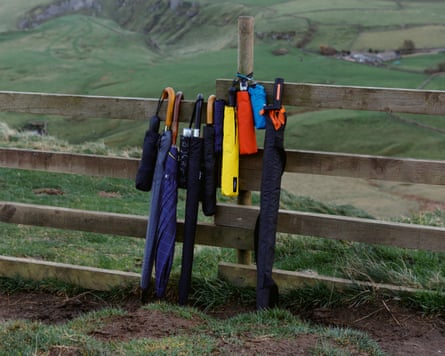
Best umbrella overall:
London Undercover Classic
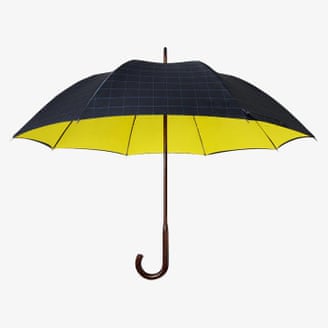
London Undercover
Classic
£115
What we love
Excellent craftspersonship and lovely materials
What we don’t love
It’s an investment
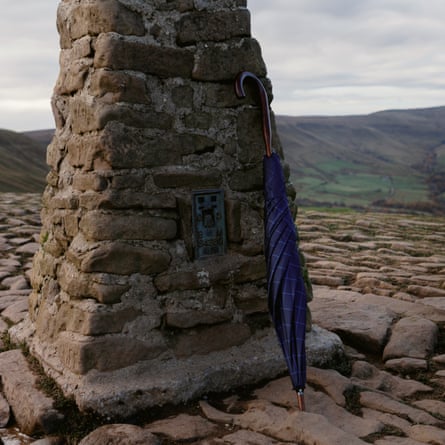
The London Undercover Classic emerged as the top performer in both day-to-day use and hilltop testing.
Why we love it
It’s a beautifully finished model, right down to the frilly orange rosette on the runner. Each design has a pleasant colour contrast on the underside to add some cheer to your under-brolly microclimate, which proved impressively dry here. I found the slim, elegant maple hook handle comfortable to hold.
The canopy is made entirely from recycled polyethylene terephthalate fabric and comprises two layers – this is key to the Classic’s exceptional wind resistance. On the hilltop, it withstood strong gusts without inverting, and even when I held it high into the air, it inverted only slightly at one side.
As the canopy is fairly deep, there’s decent coverage of the head and shoulders. For taller users, a wider model might be better for the torso and legs.
It’s a shame that … at £115, this umbrella is a serious investment, although you get outstanding quality in return.
Weight: 500g
Length (folded): 91.5cm
Canopy diameter: 105cm
Warranty: one year (and exceptional cases considered over a longer period)
London Undercover
Classic
£115
What we love
Excellent craftspersonship and lovely materials
What we don’t love
It’s an investment
Best budget umbrella:
Doppler Zero 99
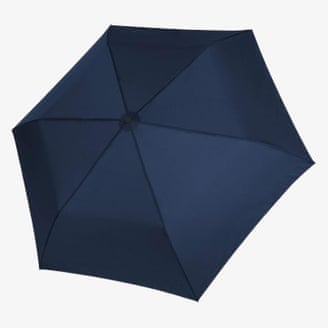
Doppler
Zero 99
from £24.20
What we love
Easy to keep in a handbag or backpack
What we don’t love
Relatively narrow coverage
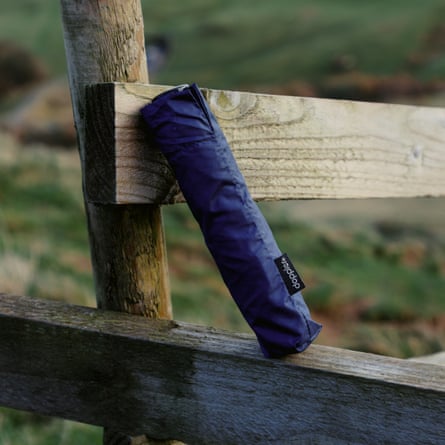
Are you someone who ends up buying an ultra-cheap brolly on unexpectedly rainy days? I suspect many of us are.
Why we love it
This fairly priced, pocket-sized brolly from Doppler is a better, eco-friendlier solution. Its weight and size mean you can happily keep it in your bag, ready for use whenever rain starts to fall. Using it on the sodden streets of Leeds, I found it helpful during moderate showers, although the smallish canopy meant my legs received a dousing.
It’s cleverly designed to minimise the heft, especially the small circular grip at the bottom of the pole. For the price, the design is outstanding.
It’s a shame that … this umbrella is highly prone to inverting in the wind, and coverage is relatively limited. It’s fine in a light shower but not suitable for challenging weather.
Weight: 99g
Length (folded): 21cm
Canopy diameter: 90cm
Warranty: three years
Doppler
Zero 99
from £24.20
What we love
Easy to keep in a handbag or backpack
What we don’t love
Relatively narrow coverage
Best compact umbrella:
Blunt Metro
What we love
Uplifting style and innovative design
What we don’t love
Some water flicks back when you shake it out
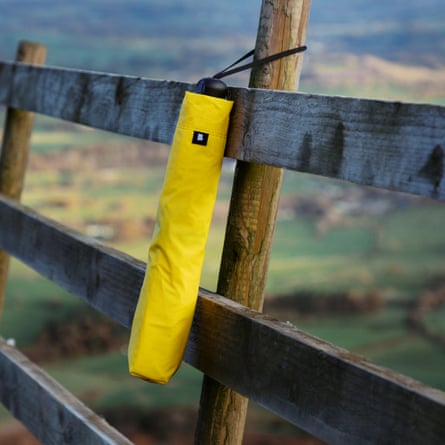
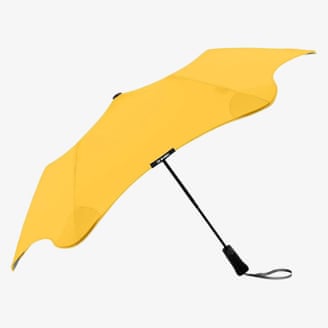
The Blunt Metro is a statement piece that will bring sunshine to a rainy day – especially in the citrus yellow colour I was testing.
Why we love it
It feels sturdy and durable, and the canopy proved broad enough to keep my head and shoulders dry. The automatic opening action is smooth, although the button for this in the handle was easy to press accidentally.
Victorian Londoners were crying out for this brolly: an initial brake on their uptake was the risk of collisions on crowded streets – so argued William Sangster in his book of 1855, Umbrellas and Their History. The Metro’s solution for this continuing problem? It can spin freely through 360 degrees when open, so it rolls breezily away when knocked.
Like every other folding umbrella I tested, it wasn’t long before the Metro inverted on the hilltop, but it popped back into shape easily. It stood up well against sudden gusts in day-to-day use, though.
It’s a shame that … this umbrella tends to send a shower of droplets back towards you when you try to shake it dry.
Weight: 385g
Length (folded): 37.5cm
Canopy diameter: 100cm
Warranty: two years
Blunt
Metro
from £74.45
What we love
Uplifting style and innovative design
What we don’t love
Some water flicks back when you shake it out
Best-looking umbrella:
Oswin Hyde Joseph
What we love
Attractive canopy with plenty of coverage
What we don’t love
Build quality is decent but not the best
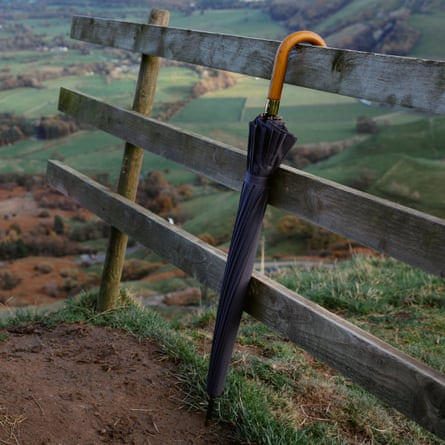
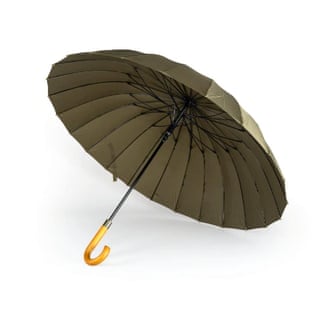
This Oswin Hyde umbrella is a remarkable buy at its current £49 price (RRP: £75). It’s attractive, reminiscent of traditional Indian state umbrellas (called chatra); the components feel of good quality; and the brolly rolls up neatly for carrying or storage inside its protective sleeve.
Why we love it
I found this a very pleasant umbrella to shelter under. It’s broad enough to prevent vertical or near-vertical rain from hitting most parts of the body, and wide enough for two.
This umbrella did invert in the wind, without needing as much blustery coercion as some rivals, but I was impressed at how it bounced back. It’s clear that the ribs are highly flexible, which should help them to resist damage.
It’s a shame that … this isn’t quite as robust as some of the higher-end brollies here. I found that the tip can be dented easily.
Weight: 658g
Length (folded): 92cm
Canopy diameter: 112cm
Warranty: six months
Oswin Hyde
Joseph
from £49
What we love
Attractive canopy with plenty of coverage
What we don’t love
Build quality is decent but not the best
Best mini umbrella:
Davek Mini
What we love
Great wind and rain protection relative to its size
What we don’t love
Quite costly for a mini-model
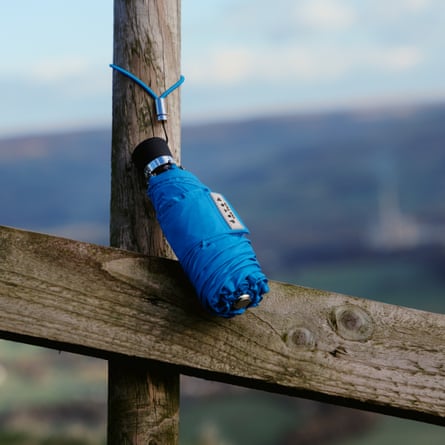
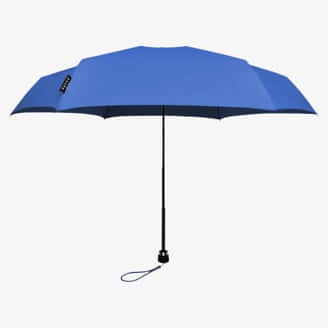
The Davek Mini is the finest miniature umbrella I’ve ever unfurled. Its elaborate frame (fibreglass reinforced for wind resistance) held up longer than other folding models at the summit of Mam Tor; however, I wouldn’t recommend it for use in blustery weather.
Why we love it
This brolly feels incredibly light, and if you study the details, you’ll understand why. For instance, the handle is tiny and hollow, but surprisingly more comfortable to grasp than many of its more bulbous rivals. I’d suggest using the wrist strap at the same time, for a more secure hold.
The canopy is broader than you might expect, with a diameter that rivals some mid-size umbrellas. It kept my head dry during rain showers, although the same can’t be said for my legs.
It’s a shame that … it costs £65, which is steep for a mini-umbrella. However, factor in the lifetime guarantee, and this could be a prudent choice.
Weight: 225g
Length (folded): 17cm
Canopy diameter: 86cm
Warranty: unconditional lifetime guarantee
Davek
Mini
£65
What we love
Great wind and rain protection relative to its size
What we don’t love
Quite costly for a mini-model
Best golf umbrella:
Fulton Titan 1
What we love
An effective, value-for-money option
What we don’t love
Personally, I’m not keen on the straight handle
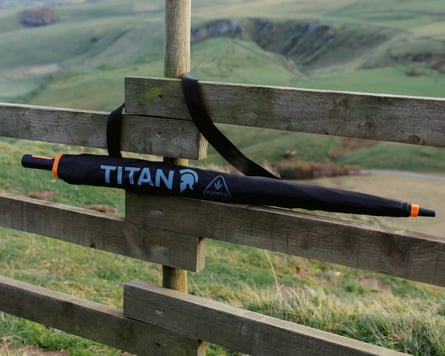
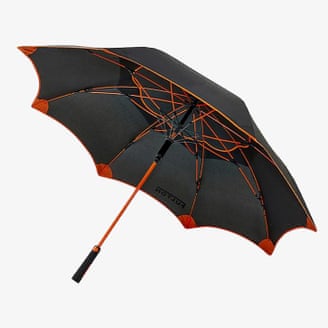
I’ll admit that golf umbrellas aren’t my favourite breed of brolly, but this model from Fulton won me over. The windproof vented canopy proved highly effective at resisting inversion in strong winds, even as I was beginning to lose my footing.
Why we love it
Fulton describes this canopy as “supersize”, and at 136cm in diameter, it’s certainly the largest I’ve tested. There’s ample coverage for two people.
The Titan 1’s construction is impressive, too, especially considering the affordable pricing. Its lightweight fibreglass frame has remarkable flexibility and gives the brolly a bouncy feel in hand.
Rather than sporting a sleeve, the Titan comes in a carry case with a shoulder strap, allowing for easier, hands-free transportation.
It’s a shame that … this umbrella can sometimes make your forearms ache. Holding it by the straight grip (which is undoubtedly comfy), I found it easy to rest back on my shoulder but quite strenuous to hold forwards into the wind.
Weight: 950g
Length (folded): 98cm
Canopy diameter: 136cm
Warranty: all manufacturing faults considered
Fulton
Titan 1
from £32
What we love
An effective, value-for-money option
What we don’t love
Personally, I’m not keen on the straight handle
The best of the rest
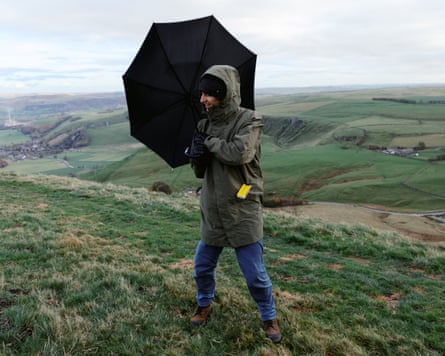
Fulton Minilite 2
What we love
Looks cheerful and costs little
What we don’t love
Lacks the refinement of higher-end brollies
Best for: a pocket umbrella
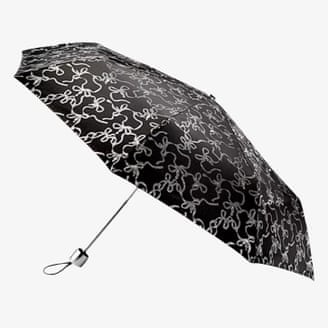
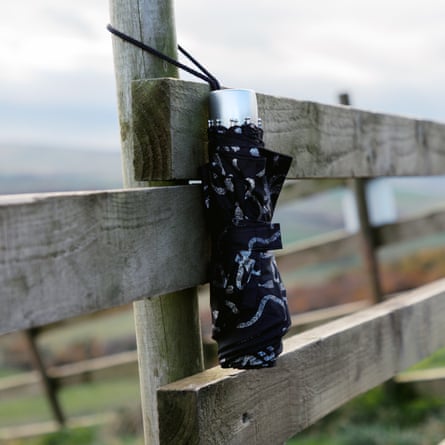
Fulton makes this Minilite 2 style with various printed canopies, including retro stripes, art prints and the glitter bow version shown. It’s a cheerful, affordable option.
In use, it was prone to inverting in the breeze, although the aluminium frame proved wind resistant, as promised. The folded size is suitable for handbags and backpacks.
It didn’t make the final cut because … it feels quite rickety compared with the other options here.
Weight: 236g; length (folded): 25cm; canopy diameter: 96cm; warranty: all manufacturing faults considered
Fulton
Minilite 2
£26
What we love
Looks cheerful and costs little
What we don’t love
Lacks the refinement of higher-end brollies
Paul Smith compact umbrella
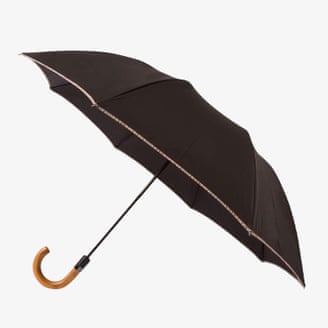
Paul Smith
Compact umbrella
from £120
What we love
Classic style and compact proportions
What we don’t love
Not the most protective option
Best for: a designer umbrella
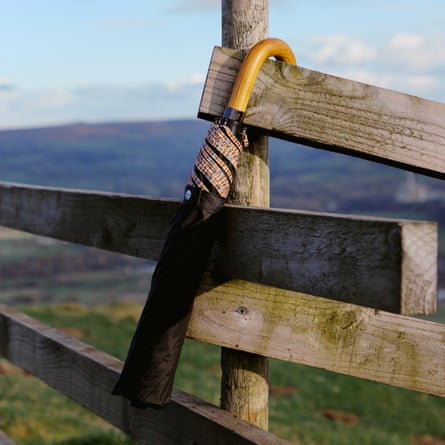
Would you like an umbrella with ample coverage and a classic aesthetic or one that fits inside a rucksack? This Paul Smith covers both bases. Its canopy is wide and deep, and the telescopic pole allows it to fold down to a manageable size.
My favourite touch is the wooden crook handle – a rarity in folding umbrellas.
It didn’t make the final cut because … although it’s mid-size, this umbrella fared little better than smaller folding models in strong winds.
Weight: 433g; length (folded): 47cm; canopy diameter: 100cm; warranty: two years
Paul Smith
Compact umbrella
from £120
What we love
Classic style and compact proportions
What we don’t love
Not the most protective option
Knirps T200 Duomatic
Knirps
T200 Duomatic
from £55.57
What we love
Super-slick opening mechanism
What we don’t love
While it resists wind damage, it inverts easily
Best for: automatic opening and closing
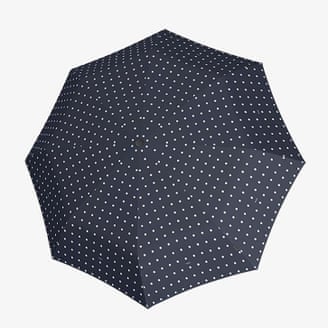
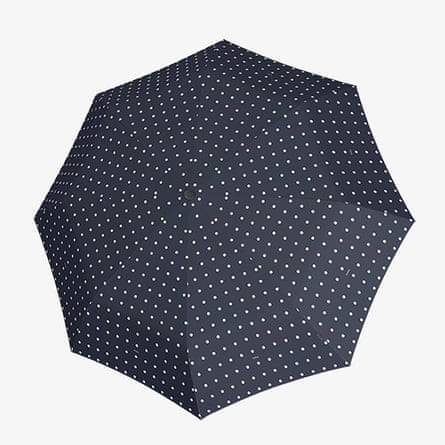
Not quite as small as some mini or pocket folding umbrellas, but this model from Knirps will fit comfortably inside a good-size backpack or handbag. The automatic open-close mechanism is super-smooth, and the red button that activates it positively begs to be pressed.
It has a dual-rib assembly that gives it strength when inverted by the wind, as well as when held head on, and apparently this has been tested in a wind tunnel at up to 150km an hour.
It didn’t make the final cut because … while the frame could indeed withstand a battering from the wind, the T200 was just as quick to invert as other lightweight models. So while it might not sustain damage in windy weather, it’s perhaps not the best brolly to use in these conditions.
Weight: 320g; length (folded): 28cm; canopy diameter: 98cm; warranty: five years
Knirps
T200 Duomatic
from £55.57
What we love
Super-slick opening mechanism
What we don’t love
While it resists wind damage, it inverts easily
Lifeventure Medium Trek
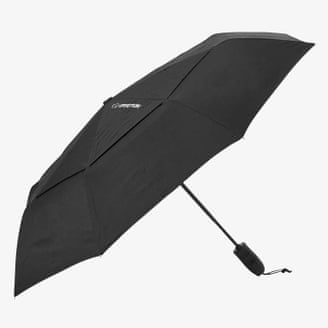
Lifeventure
Medium Trek
from £14.89
What we love
UV protective material for exposed treks
What we don’t love
Middling wind resistance
Best for: UV protection
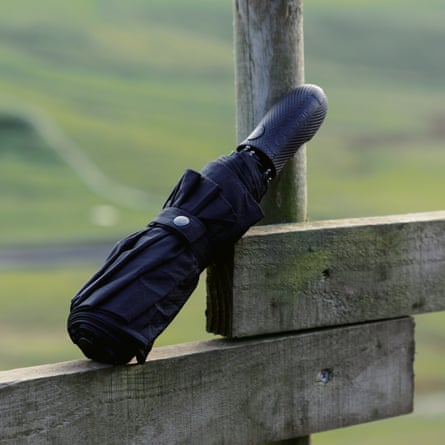
Before umbrellas were used to keep off rain, parasols shielded people from the sun. A growing trend among trekkers and mountaineers has seen small, lightweight umbrellas added to packing lists for both purposes.
This Lifeventure model is a good example, with automatic open-close, a grippy pleather handle and – here’s the important part – UPF50+ sun protection. I thought it felt strong and light, and the opening mechanism is excellent.
It didn’t make the final cut because … the Trek’s wind resistance is modest (although not bad for a folding model), so it’s best suited to sun or rain protection on still days.
Weight: 380g; length (folded): 32cm; canopy diameter: 97cm; warranty: three years
Lifeventure
Medium Trek
from £14.89
What we love
UV protective material for exposed treks
What we don’t love
Middling wind resistance
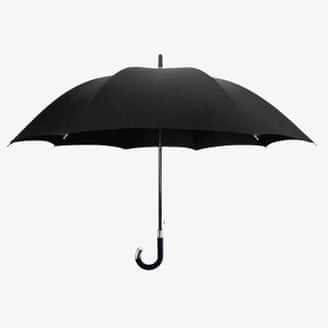
Davek Elite
What we love
It looks exceptionally smart
What we don’t love
Less refined than certain similarly priced rivals
Best for: a formal occasion
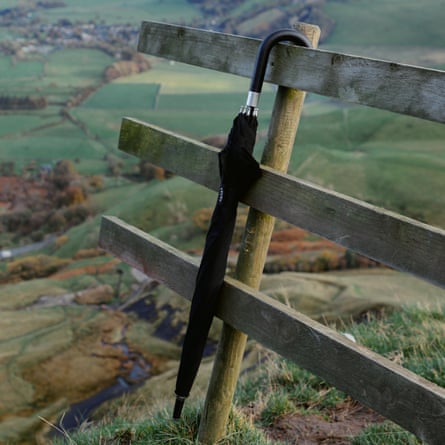
This sleek city umbrella (or cane umbrella) from luxury brand Davek is a perfect match for smart outerwear or suiting. In black, it has a slightly “goth winter” feel to it, with a stitched leather handle and elongated rib tips.
During tests in high winds, the Elite resisted inversion impressively, quickly returning to the desired shape. The fibreglass frame proved highly flexible and resilient to stress.
It didn’t make the final cut because … personally, I preferred other umbrellas in a similar price range. That’s not to say this isn’t a great brolly, though.
Weight: 708g; length (folded): 89cm; canopy diameter: 112cm; warranty: unconditional lifetime guarantee
Davek
Elite
£159
What we love
It looks exceptionally smart
What we don’t love
Less refined than certain similarly priced rivals
What you need to know
Features to look out for
Automatic opening (and sometimes closure) makes using an umbrella easier. It’s common in golf umbrellas and even more so in folding umbrellas, which employ a telescopic pole (or shaft) for compact portability.
Stormproof or windproof umbrellas have vents or dual layers of fabric to allow gusts through. These models performed best in high winds. Windproof models can also come with a double-ribbed frame, which makes the umbrella more resilient to the push and pull of high winds.
What types of umbrellas are there?
City umbrellas are the traditional choice in the UK, with a long, solid pole and a wide canopy. Most have a curved handle called a hook or crook.
Sportier and often with brighter-coloured canopies, golf umbrellas are another large, non-folding option. Many have straight-grip handles.
Folding umbrellas – also known as portable umbrellas or pocket umbrellas – have been around since the Victorian period. The best are made with super-lightweight materials and can endure blustery conditions without breaking. Their telescopic shafts make them easy to slip into a rucksack or handbag.
Parasols – in the UK, using an umbrella for sun protection hasn’t been seen since Victorian times, but shielding you from the sun’s harmful UV rays is one of a parasol’s greatest strengths. There’s little difference between a regular umbrella and a parasol, but choose a model with a wide, deep canopy – ideally one made using UV-protective material, such as the Lifeventure model reviewed above.
How to look after your umbrella
Care instructions for umbrellas vary from one brand to another, but there are some general rules to follow that will see your model last for as long as possible:
-
Allow it to dry after use. Eschew superstition and leave your rain-sodden umbrella open indoors in a well-ventilated space, having given it a good shake outside. Leaving a brolly wet can lead to buildups of rust, mould and mildew, along with the accompanying smells.
-
Clean it occasionally. Wipe it over with a mix of water and detergent to remove grime and germs. Dry it thoroughly after cleaning.
-
Don’t store it in a car. Widely fluctuating temperatures inside a car, compared with in a home, can cause an umbrella’s materials to expand and contract, weakening them and causing the umbrella to deteriorate faster. Plus, a damp umbrella could harbour mould. Heat exposure can also damage an umbrella, so don’t leave yours by the radiator.
-
Keep an eye on it. David McKie, formerly of this parish, once opined that “no object is so frequently lost” as an umbrella. To avoid this common misfortune while away from home, leave it with your coat or bag – or better still, keep it by your side.
-
Choose a brand that offers repairs. Certain brands, such as London Undercover, offer a repair service (at a cost for out-of-warranty items), covering issues with handles, canopies, ribs and other components – which means you’ll be able to use your brolly for many years to come.
What to do with your old umbrella
Charity shops will often accept preloved umbrellas that are in good condition. Sadly, if your umbrella is damaged beyond repair, then you’ll need to take it to your local household waste recycling centre. Guidance on umbrellas varies among these facilities, so check with your local centre before turning up.
For more, read the best waterproof jackets for men and the best waterproof jackets for women
Pete Wise is a journalist from Leeds. Pete thoroughly enjoyed reading Marion Rankine’s book Brolliology as research for this article. His favourite umbrella is a Bettys Tea Rooms-branded one that once belonged to his mother. Beneath its canopy is the place where they can still have a chat







 English (US)
