
 2 hours ago
3
2 hours ago
3

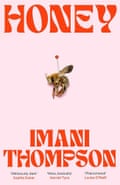
Honey by Imani Thompson (Borough, £16.99)
Thompson’s smart and incisive debut centres on Yrsa, a young Black woman studying for a sociology PhD and teaching undergraduates at Cambridge. Irritated by her solipsistic, over-privileged students and tired of situationships, she’s fed up with life, and men in particular. Her first killing – that of a much older supervisor who reneges on his promise to leave his wife for a colleague, and steals her research in the process – is an accident, but Yrsa, who has catastrophically poor impulse control, enjoys the sensation and, more importantly, gets away with it. “It’s theory in action”: as victims pile up, her academic research provides a spurious rationale for justifiable anger, as with Hugh, who used her for bragging rights (“Black girl magic, 20 points”). But somebody is on to her, and things are starting to spin out of control … The best kind of campus novel, satirical and razor-sharp, crossed with a crime story: Thompson is an exciting new voice.
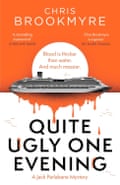
Quite Ugly One Evening by Chris Brookmyre (Abacus, £22)
Thirty years after Brookmyre’s debut, his latest novel to feature journalist Jack Parlabane makes a tonal return to his earlier, more irreverent style. Now 60, Jack feels increasingly like a “Boomer Ambassador” to the younger colleagues who are snapping at his heels. With his job on the line, he agrees to investigate a cold case: the death, 40 years earlier, of an MI5 operative. It’s thought to be connected to the Maskyn family, creators of much-loved but now contentious Thunderbirds-style TV series The Imaginators, and Parlabane finds himself on the transatlantic cruise liner hosting the 60th anniversary convention as “several hundred emotionally stunted fanboy incels alongside an over-remunerated family of nepo babies, trust fund pukes and outright fascists” duke it out over The Imaginators’ legacy. Masterfully plotted and scalpel-sharp, this is a riotously good read that uses a Golden Age set-up to take aim at the culture wars, while also providing a thoroughly satisfying mystery.
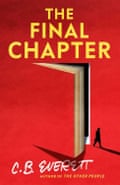
The Final Chapter by CB Everett (Simon & Schuster, £18.99)
Crime writer Martyn Waites’s second novel as CB Everett is a metafictional tour de force: the story of literary superstar Jon Durward, who achieved critical acclaim, commercial success, well-regarded film adaptations and a Booker prize before he mysteriously disappeared in 2009. When a manuscript turns up purporting to be Durward’s work, his erstwhile best friend, the far less successful writer CB Everett, agrees to edit and annotate it for publication. That’s what’s presented here, and it’s clear from the publisher’s disavowing note that the project has not gone as intended. Durward’s novel Russian Doll is a bog-standard thriller, but peppered with in-jokes and clues as to what happened to him, and, as the story of the two men’s souring relationship is revealed in the notes, Everett’s rueful, blokey tone hardens into something altogether more ambiguous. Buckle up for a darkly funny mystery about friendship, rivalry, ambition and – wannabe novelists look away now – the more soul-destroying aspects of authorship.
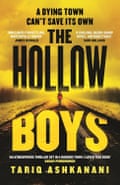
The Hollow Boys by Tariq Ashkanani (Viper, £18.99)
Set in Appalachia, prize-winning Scottish author Ashkanani’s latest novel is a masterpiece of smalltown horror, although the cause is in no way supernatural. Blighted by poverty, drug addiction, diseased crops, a mysterious beast that slaughters dogs and an underground coal seam fire that grows ever closer, the town of Aurora seems doomed – and as if this weren’t enough, nine-year-old friends Danny and Will drowned in a boating accident 10 months earlier, their bodies never recovered. When Danny reappears, rejoicing swiftly becomes concern when he insists that he is Will. Not only does he seem unable to say what happened, he has injuries that predate the “drowning” and point to a history of abuse. The Hollow Boys has a well-constructed, propulsive plot and tremendous atmosphere, but it’s the complex, well-drawn characters, led by police chief John Deacon, who is doggedly loyal to the place despite considerable problems of his own, that give the story true depth.
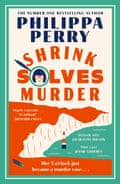
Shrink Solves Murder by Philippa Perry (Hutchinson Heinemann, £18.99)
The first novel from psychotherapist and nonfiction bestseller Perry bears all the hallmarks of a Richard Osman-style cosy: a small community with a picturesque setting; prickly-but-lovable middle-class types who turn to crime-solving in later life. Here, the solver is entertainingly filterless therapist Patricia Phillips, who lives on East Sussex’s South Downs with Dave the cat, and swims in the sea every morning. When her client Henry Clayton’s body is found below cliffs near the notorious suicide spot Beachy Head, the police assume he has taken his own life. Pat, however, disagrees, and, with the help of her eccentric retired neighbour Pritchard, starts to investigate. Suspects include an unscrupulous developer bent on despoiling the coastline with a golf course, a pair of swingers and Henry’s controlling boyfriend, in an enjoyable blend of mystery and gentle satire.




 English (US)