
 1 hour ago
3
1 hour ago
3

Just now
Glenn CampbellScotland political editor
 PA Media
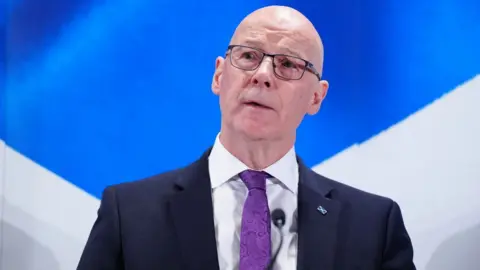
John Swinney told MSPs that independence could deliver greater security and prosperity
Angus CochraneSenior political journalist, BBC Scotland
MSPs have endorsed the Scottish government's call for Downing Street to agree to a second independence referendum.
The proposition passed a vote at Holyrood with the backing of SNP and Green MSPs.
The UK government would have to transfer powers to Holyrood for a second referendum to take place - but Labour ministers have repeatedly said they would refuse to do so.
Opposition parliamentarians used the debate to raise concerns about the criminality of former SNP chief executive Peter Murrell, who admitted embezzling more than £400,000 from the party following a police investigation into funds raised for a referendum campaign.
The motion agreed by parliament said that this month's Holyrood election result provided a "clear mandate that decisions about Scotland's future are best taken in Scotland and that mandate must be respected".
It called on the UK government to grant a Section 30 order, which would give SNP ministers the power to hold a referendum.
The motion also highlighted government commitments to eradicate child poverty, improve the NHS and public services, grow the economy, bring down the cost of living and hit its climate targets.
It was opposed by Labour, Reform, Conservative and Liberal Democrat MSPs.
Swinney told parliament that independence could take Scotland from "political chaos and economic stagnation" within the UK to "greater security and prosperity" as a member of the EU.
He urged MSPs to vote to "put Scotland's future in Scotland's hands" and deliver a "fresh start" for the country.
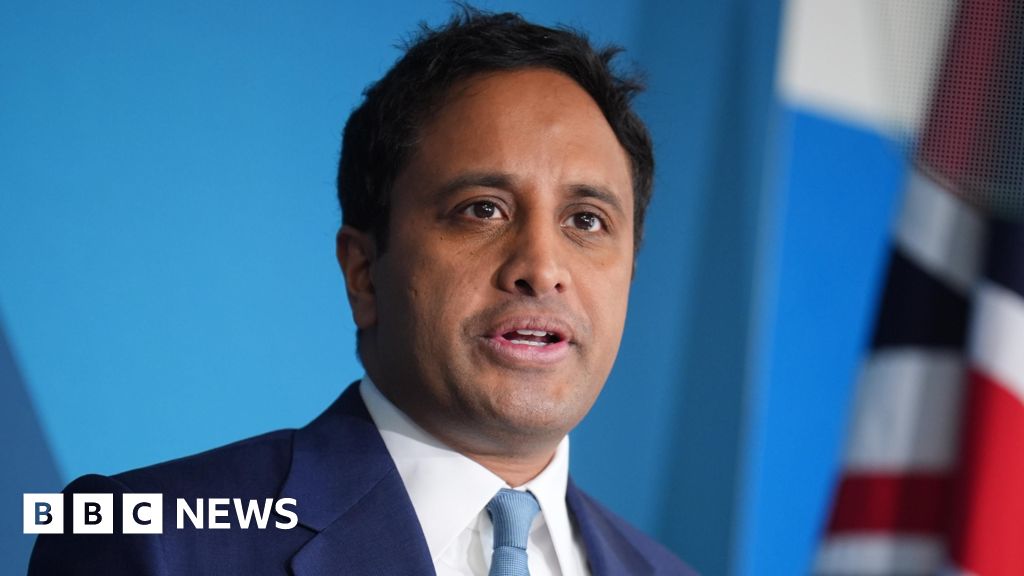
While he welcomed some of the measures in the SNP motion, Scottish Labour leader Anas Sarwar said the first minister had an "obsession" with independence.
He dismissed talk of a "fresh start" after almost 20 years of SNP rule.
Referencing Murrell's plea, Sarwar said SNP members had been "robbed" of their "hard-earned cash".
Conservative leader Russell Findlay accused the government of ignoring important issues such as the NHS, education, high taxes, a rising social security bill, and the decline of the North Sea oil and gas industry.
He called on the SNP to "drop the damaging independence obsession".
Findlay said that following Murrell's guilty plea it was laughable that the first minister "reckons the SNP can be trusted to take full control of an independent Scotland and our nation's finances".
He accused Swinney of dismissing valid concerns about the SNP's finances when they were raised in 2021, and went on to claim the former first minister Nicola Sturgeon "also told those with concerns to stay quiet".
Earlier, Swinney said he was "not conscious" of having shut down concerns about party finances.
Alex Kerr, the party's national secretary, also said that there had been a "huge overhaul" of financial oversight and said that he was "absolutely confident in it at the moment".
'Desperate mental gymnastics'
Lib Dem leader Alex Cole-Hamilton said a request for a Section 30 order was "performative" since Swinney had "manifestly failed in the test he set for himself" to secure an SNP majority.
Reform UK Scotland leader Malcolm Offord described it as "groundhog day" in the Scottish Parliament. While not ruling out another referendum at some point in the future, he said MSPs should not discuss a referendum for another 10 years.
Scottish Green co-leader Ross Greer said independence could help deliver affordable energy and progress in tackling poverty.
But he also said the government could make better progress on the NHS and climate action with the powers it already had.
The MSP accused unionist parties of resorting to "desperate mental gymnastics" to deny a mandate for a referendum.
He called for more "respect for Scottish democracy and Scottish voters".
The debate on independence was the first policy debate of the new parliamentary session following the SNP's election victory.
Swinney had told voters during the campaign that an SNP majority was the best way to break the constitutional "logjam" caused by the UK government refusing to grant a referendum.
After his party fell seven seats short of that threshold, the first minister highlighted that a record total of 73 pro-independence SNP and Green MSPs had been returned to parliament.
Critics have accused him of "shifting the goalposts" on his constitutional aims.
Although they returned more MSPs than ever, the combined vote share of the pro-independence SNP and Greens fell from about 48% in 2021 to about 40% this year.
Support for the SNP has declined since Nicola Sturgeon's time in charge of the party, but backing for independence has consistently hovered at about 50% in recent years.
Scotland, Wales and Northern Ireland all now have governing administrations in favour of breaking up the UK.
That has prompted questions for the UK government about its constitutional policy, with SNP politicians urging Downing Street to clarify Scotland's democratic route to independence.
A spokesperson for the UK government said that it did not support independence or a referendum.
They added: "People need and want their governments focused on the issues that really matter - economic growth, the cost of living, and public services. Our focus must be on delivery, not division."
 PA Media
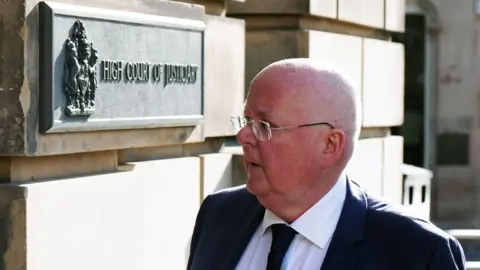
Peter Murrell served as SNP chief executive for more than 20 years
Murrell - Nicola Sturgeon's estranged husband - potentially faces a lengthy jail sentence after he pleaded guilty to embezzling £400,310.65 from the SNP between 2010 and 2022.
The 61-year-old used party funds to make hundreds of illicit purchases, ranging from staples and chopsticks to a luxury motorhome and two cars.
He is due to be sentenced next month.
Sturgeon was arrested as part of the police investigation into SNP finances, but was later told she would face no further action.
Swinney was in his first spell as SNP leader when Murrell was appointed chief executive in 2001.
Earlier, Starmer said Swinney had questions to answer about Murrell's crime.
He said: "Well, I think anybody looking at what's happening up in Scotland will be baffled that those at the top of the SNP say they didn't know anything about what was going on."
Speaking to reporters at Holyrood, Swinney replied: "I don't really think I'll be listening much to what Keir Starmer says to me about anything."

Analysis: Murrell case collides with independence ambitions
This is the day that the SNP's burning ambition for Scottish independence collides with the massive theft of funds donated to the party to help with that campaign.
Peter Murrell's admission that he embezzled £400,000 from the party is not the backdrop they would have wanted for a Holyrood debate and vote on another referendum.
As party leader, John Swinney has expressed his sense of shock and betrayal over the actions of the man he appointed to run the SNP a quarter of a century ago.
He has said that he is sorry people gave money to the party to campaign for independence only to discover that their cash had been stolen by Murrell to fund a lavish lifestyle.
What Swinney has not responded to directly is the suggestion from those who raised concerns within the party that they were sidelined.
Instead, he has insisted that the SNP now has strong financial management systems in place.
It seems unlikely that refunds will be offered to those who donated although some have indicated to the BBC they are considering ways of seeking redress.
The SNP has previously said that everything raised for independence campaigning will eventually be spent on that purpose. It is not clear how that could be achieved if the money has already been spent.


 English (US)