
 1 hour ago
2
1 hour ago
2

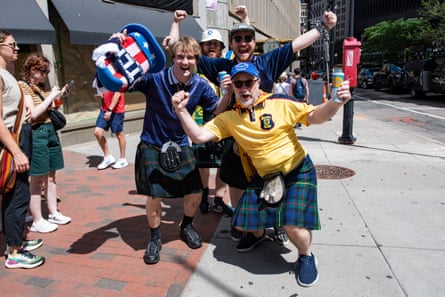
I could watch videos of the Scots online for hours. Wearing kilts, they marched through Boston playing bagpipes. In the stadium, the Tartan Army roared their team to victory against Haiti, their first World Cup win in 36 years.
Afterwards they went to a baseball game and, singing and wearing knee-length red socks, turned a Boston Red Sox home game into part of the World Cup – and one of its highlights, too. In the stadium they had the rules of this sport, which we Europeans find difficult to understand, explained to them.
I saw a clip of one local, moved to tears, thanking the Scots “for the best time” of his life. Now Miami can look forward to the Scottish invasion. The Norwegians and Dutch leave similar impressions wherever they go. “United by football” – the fans live it.
As the tournament director of Euro 2024, I’ve had my own experiences with the Scots. They won the hearts of us Germans in no time. Friendships were forged that are cherished on both sides. I know this from my home club, FT Gern. My daughter keeps a pin as a memento, a gift from a Scottish fan.
Whenever I’ve been asked about the purpose of major sporting events, I’ve always thought first of the 2006 World Cup. For a long time, my answer was: it was the defining event of my career because I experienced what it means to play for your country and because our country presented itself with a new openness to the world. Only in retrospect, through my encounter with the Scots, did I realise that the guests play the leading role.
What a stroke of luck that Scotland are participating. Under the previous 32-team format, they hadn’t qualified since 1998. Surely that’s argument enough for increasing the number to 48. The expanded tournament has sparked considerable criticism. Most recently Aleksander Ceferin criticised what he sees as its diminished quality. Thirteen non-European nations wrote an open letter of protest, including Morocco, semi-finalists in 2022.
The Uefa president’s statement revealed his association’s interests differ from the rest of the world. Europe is realising that others are catching up and fears for its dominance. However, it is Fifa’s mission to develop football everywhere. This can only be achieved through participation. Differences in quality must be accepted.
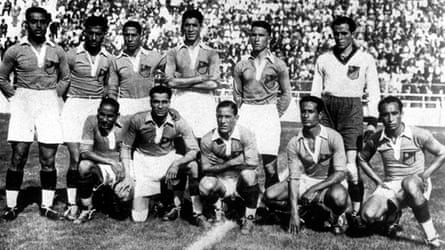
In the first eight World Cup finals combined, only one African country participated: Egypt in 1934. In 1966, in the midst of decolonisation, African nations boycotted the World Cup in England because Fifa did not guarantee them direct qualification.
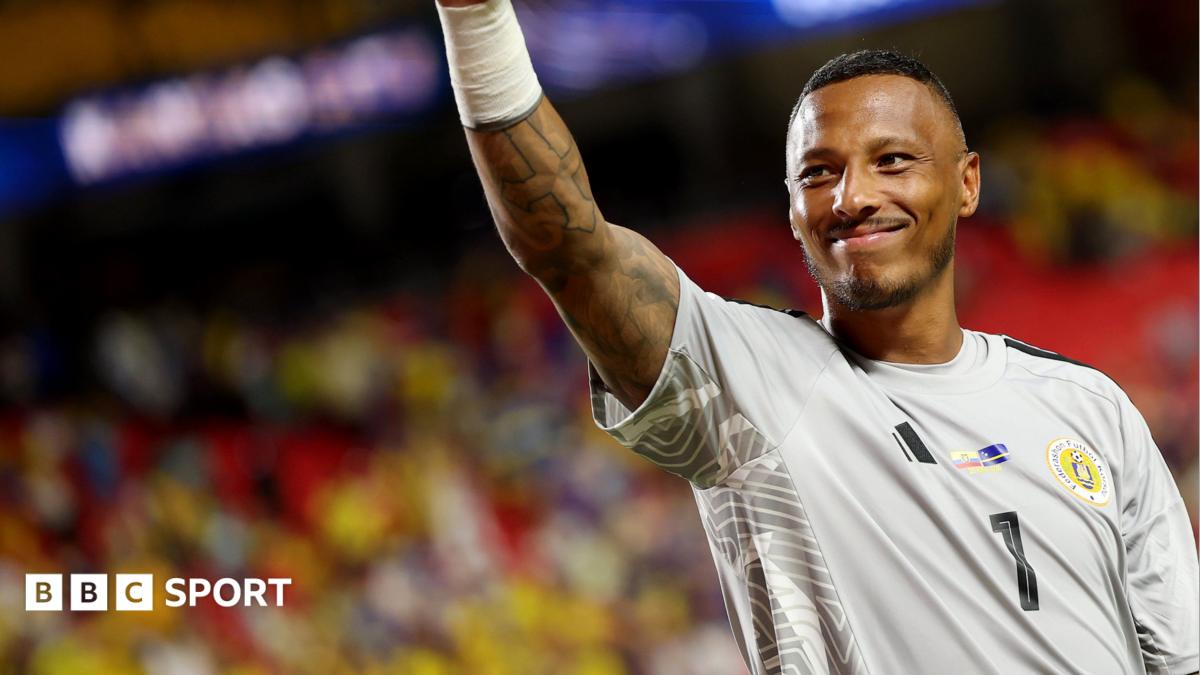
Football has long been the most popular sport in more than half of all countries – and its popularity is growing. This World Cup is producing heroic stories from around the globe. DR Congo secured a draw against Cristiano Ronaldo and Portugal, and newcomers Cape Verde achieved the same feat against the European champions, Spain, and the former World Cup winners Uruguay. For the first time there is a team from central Asia. It was wonderful to see Uzbekistan’s head coach, Fabio Cannavaro, a World Cup winner and Fifa world player of the year in 2006, celebrating with his goalscorer, Abbosbek Fayzullaev, after the equaliser against Colombia.
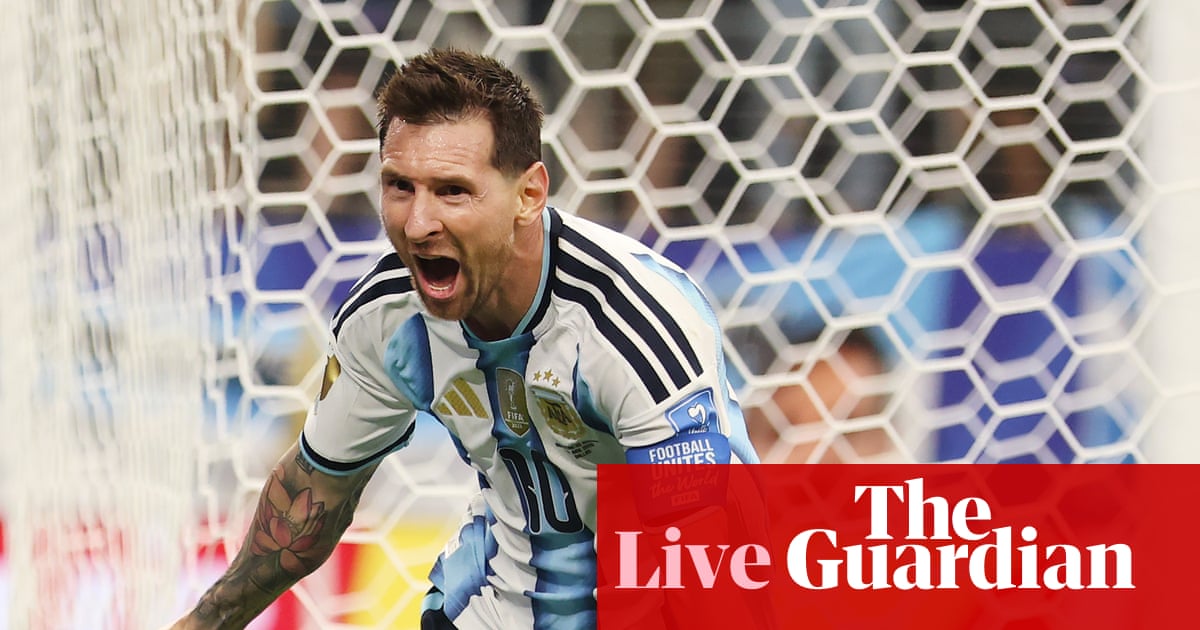
In the first few weeks, Lionel Messi, Kylian Mbappé, Harry Kane and Erling Haaland share the spotlight with the underdogs. Soon enough it will be theirs alone again. Thanks to the new format with the round of 32, the group stage increasingly resembles the first round of a cup competition. No traditionalist would want to abolish that, but many find it objectionable at a World Cup.
So Fifa is doing a lot of things right. Promoting economic growth, as many accuse them of doing, is simply necessary. Every village club knows the principle of generating revenue with a sporting event.
Criticism should be directed where it’s warranted. For example, there are the ticket prices. Fifa stands accused of not providing honest figures about the true demand and using this to maximise revenue. Furthermore, I’m irritated by the recurring suggestion to hold the World Cup every two years. A tournament needs preparation and follow-up to have a lasting impact.
The bloated Club World Cup has further compressed the already packed calendar. With an additional tournament spanning several weeks and sometimes extreme temperatures, the strain on the players has increased even more. How many more competitions and matches can professionals be expected to handle?
Most concerning is Gianni Infantino’s close ties to powerful figures such as Donald Trump. The World Cup is being sold out. This robs football of its credibility. As a result, fans are uneasy. It’s becoming increasingly difficult for them to separate Fifa from the event itself.
Football is rules-based and universal. No other event attracts nearly as much global attention for a month as a World Cup. Therefore, this game is the perfect tool for humanity to negotiate how we want to live together. But football is also being pulled in the direction of figures with other, more dubious, agendas.
To counter this, we need a strong Europe and a strong Uefa. It’s absolutely right that Ceferin has announced low ticket prices for Euro 2028. He also wants to ensure that accommodation and travel remain affordable. Football must not be reserved for an elite.
Then there’s the most important thing: “Die Welt zu Gast bei Freunden” (“The world as guests of friends”) was the motto of the 2006 World Cup. That’s how I experienced it in South Africa and Brazil, my other two World Cups as a player. That’s how it should be again in the future.
Philipp Lahm’s column was produced in partnership with Oliver Fritsch at the German online magazine Die Zeit.
 English (US) ·