
 13 hours ago
2
13 hours ago
2

16 minutes ago
Paul BarltropWest of England political editor

 BBC
BBC
Mike Rigby said the rules around housebuilding were very frustrating
A council has warned that rules designed to limit pollution are pushing up the cost of new homes and could lead to housebuilding targets being missed.
Developers in areas like the Somerset Levels face extra costs to reduce the impact of new homes on watercourses. Somerset Council wrote to the regulator asking for changes and arguing the rules are excessive and no longer proportionate.
That request has been rejected by Natural England, which says the area's environment is still going downhill.
In South Wiltshire, another area under restrictions due to polluted water, some farmers are trying their own measures to reduce pollution.
Why Somerset is under phosphate restrictions
Excess levels of phosphates led the Somerset Levels and Moors to be officially designated as having "unfavourable declining" status in 2021.
Phosphate pollution can come from human sewage and animal waste.
Where sewage systems struggle to cope, restrictions are placed on new housing unless additional mitigation measures are introduced, to prevent further damage to rivers and wetlands.
Developers say those requirements can add thousands of pounds to the cost of a new home.
'Sledgehammer to crack a nut'
In recent years Wessex Water has made considerable improvements to Somerset's sewage system, reducing the risk of overflows causing phospate pollution.
The councillor responsible for housing delivery in the county argues the rules have not kept pace with those changes.
Mike Rigby described the restrictions as "a sledgehammer to crack a nut".
Which is why the councillor tasked with getting houses built in the county regards the rules as "a sledgehammer to crack a nut".
"It's incredibly frustrating," he said. "Housing is having a much smaller impact than it ever has done, but we're still saddled with these rules."
The government has raised the housebuilding target for Somerset to 75,000 homes over the next 20 years.
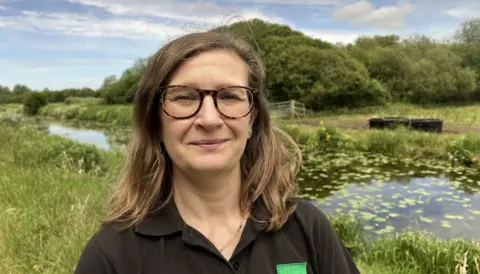
Claire Newill, Natural England's Wessex deputy director
Natural England said the rules remain necessary to protect vulnerable habitats.
"We're losing the species that are really rare and special here because of the excess nutrients," said Claire Newill, the organisation's Wessex deputy director.
Responding to claims the restrictions are excessive, she said: "Clean water's a problem that we all need to be concerned about. Housebuilding is one of the sectors that's contributing."
Natural England accepts that a larger share of phosphate pollution is caused by farming.
Excrement especially from cattle, as well as fertilisers washed off fields, are real problems for watercourses.
In South Wiltshire, another area under restrictions due to polluted water, a group of farmers are taking steps to reduce their impact.
"We've been encouraged to reduce all the time by fencing cattle away from riverbanks, so they don't tread the banks and defecate in the river," said Henry Collins, of the Wylye Valley Farmers.
"A lot of our meadows don't have any fertiliser on any more."
National housing targets at risk
Despite such efforts, the pollution rules remain in place, with housebuilders warning they are affecting development viability.
"It's simply unviable to build, unprofitable to build in large parts of the country," warned James Stevens of the Home Builders Federation.
They and others warn it makes the government's target of 1.5 million new homes during this Parliament very hard to achieve.








 English (US) ·