
 2 hours ago
4
2 hours ago
4

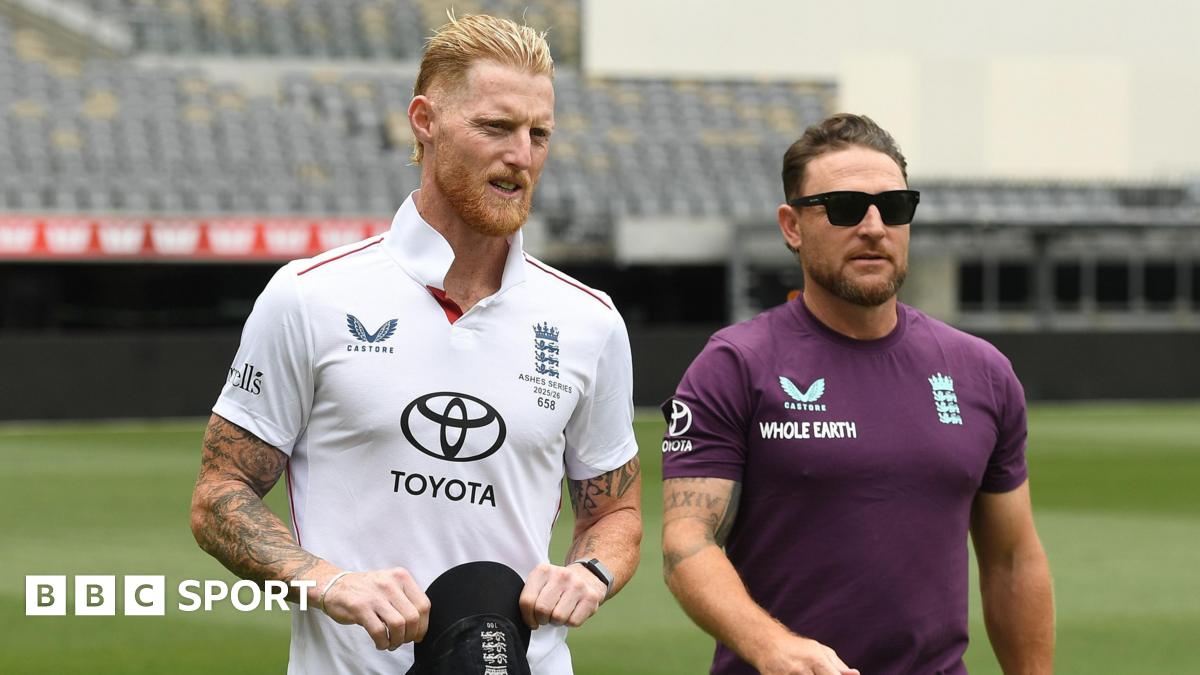
Having endorsed Brendon McCullum’s continuation as men’s head coach after an Ashes defeat riddled with self-owns and kept Rob Key above him as team director, the England and Wales Cricket Board could in one sense be viewed as having taken the path of least resistance.
McCullum’s contract runs to the end of 2027 and it would cost a pretty penny to cut him loose. The players enjoy the pair’s methods and tend to call the shots in the modern era. There may not be an all-format candidate for head coach out there. Besides, look over there: the Hundred returns in July, ready to overload your eyeballs with multicoloured content.
Difference being that while a Hundred team can tank without so much as a murmur from supporters, the Test team doing so elicits far stronger emotions. For all we are told the future is a global network of “exciting” leagues – by sheer coincidence, they also line the pockets of a select few – Test cricket is the format that stirs the English the most.
And while social media can be a dodgy barometer, it is clear that anger remains regarding England’s 4-1 defeat in Australia – anger scarcely softened by a valiant semi-final loss against India in the T20 World Cup. Not every defeat is unforgivable. It is fine for opponents to be too good. But in Australia and during the lead-up, pretty much every decision backfired.
They didn’t see it coming either. Two days out from the first Test in Perth, Ben Stokes got his team into a huddle and told them they were ready. And yet fast bowlers were not conditioned – fears over injuries led to a light-touch approach – and batters went into that jaw-shattering defeat, then Brisbane, blind to the perils of driving on the up.
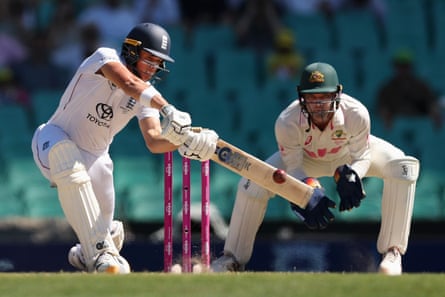
Shoaib Bashir, the first-choice spinner, was not picked because they suddenly wanted bob-each-way Will Jacks to lengthen the batting, while Jacob Bethell twiddled his thumbs until the Ashes were lost because of loyalty to Ollie Pope. As sublime as Bethell’s maiden Test century was in Sydney, it only added to an already maddening sense of “what if”.
We could go on. Although a personal annoyance is not so much England’s attacking outlook failing in Australia as their belief in it proving so brittle. Stokes weirdly turned his back on it when defeat in Brisbane was loading and then in Adelaide – Australia’s flattest pitch, the hosts bowling in 40C heat – the players suddenly blinked in confusion.
For those who were willing the project to fail, that third Test became an acceptable defeat; blokes digging in, showing some fight, even if 3-0 meant the Ashes were gone. When McCullum was asked why they met the best batting conditions with caution – the slowest 250-plus total under his watch, no less – his reply was a pregnant one: “Good question.” He and Stokes had clearly splintered by way of philosophy.
And so as much as retention looks the easy option, Richard Gould, the ECB chief executive, and Richard Thompson, the ECB chair, have in fact taken a leaf out of McCullum’s philosophy and run towards the danger. They took over in 2022 after McCullum and Key were already in place and could have made a change now with impunity. Having not, what follows is on them.
Gould at least acknowledged it would not be a popular call and the fact that Test cricket is what people in England care about most. Apparently Test viewership has gone up 25% in the past four years and that it remains the No 1 format across all age groups. And so in fairness at least they have not banked on apathy to see them through choppy waters.
Selling the status quo was never going to be easy, however, and the briefing on Monday did not hugely inspire. The tweaks either felt peripheral – a bowling guru here, a new selector there – or flagged up shortcomings that should have been spotted previously. Asked what phrases like “adapt” and “evolve” mean in practice, the answers were no less woolly. Key wanting greater “consequence” for poor performance also raised eyebrows.
There have been some enjoyable highs along the way, it must be said. McCullum breathed new life into the side in the first year. But the set-up has since overseen four major Test series against Australia and India, winning none. The Ashes campaigns in particular were approached too casually, needing a 2-0 deficit in 2023 for England to get serious.
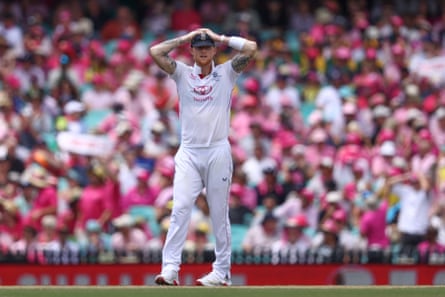
No one wants players stifled to the point of jacking it all in for the easy money in T20. Equally, an incident such as Harry Brook’s late-night altercation with a bouncer reflected poorly on the environment. As with plenty of this review, it was a case of learning a lesson that should have been known.
Beating New Zealand and Pakistan at home this summer may not in itself quell the concerns. What England must do beyond this is better engage with the domestic game, be more meritorious in selection – both incomings and outgoings – and demonstrate that Stokes and McCullum are truly back on the same page, not lurching with the captain’s emotions.
“There’s this view that it’s either blocking or slogging,” Key said. “That Ben is for blocking, Brendon is for slogging. That is not the case. We still want players to be aggressive. They’ve just got to be relentless in how they do it. Fundamentally there is alignment in the way we are going.”
While that relationship has seemingly been patched up with some honest conversations, winning back the public may take a bit longer.






 English (US)