
 2 hours ago
2
2 hours ago
2

Ever since Bulgarian singer Dara was crowned winner of the Eurovision song contest this May, it has been clear that the Balkan nation would for the first time in its history have the opportunity to host Europe’s biggest party.
So when Bulgarian officials announced last week that the world’s largest live music event in 2027 will be held not in the capital Sofia but in Burgas, a Black Sea port city home to 200,000 people, it came as a surprise – even to last year’s winner.
“I am really surprised,” singer Dara told the Guardian. “I think that BNT [Bulgarian National Television] will do a great job at producing the whole show. I trust them completely. If they decided Burgas, then probably Burgas is better.”
This spring in Vienna, Dara became the first Bulgarian to win Eurovision with her high energy party anthem Bangaranga, in an edition boycotted by Ireland, Spain, the Netherlands, Slovenia and Iceland over Israel’s participation.
Following her victory, Bulgaria’s four largest cities, Sofia, Plovdiv, Dara’s home town of Varna and Burgas sent an application with only Sofia and Burgas left as possible candidates in recent weeks. As the country’s capital and international hub, Sofia always seemed the obvious choice.

The preference for Burgas, Bulgaria’s fourth largest city, has been heavily discussed across the Balkan country of 6.5 million people, with many taken aback.
“We were surprised, because Sofia has the biggest arena,” said Pavel Stefanov, 29, an air traffic controller at Sofia airport.
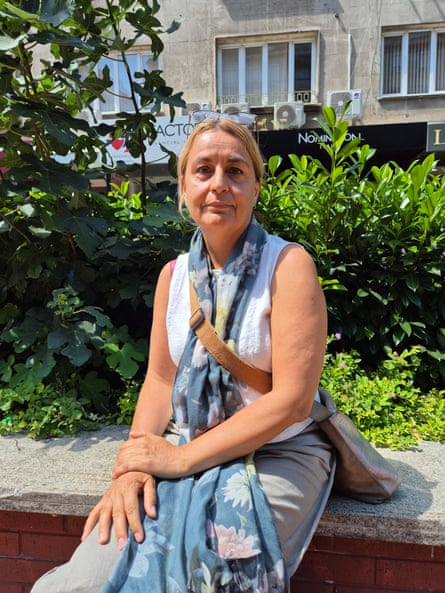
Milena Ouzounova, 54, a designer from Sofia said she was surprised and disappointed that the capital wasn’t chosen as host city and was sceptical over Burgas’ capacity to pull off such an event.
“I’m disappointed,” she said. “I think Sofia is a better place, it is bigger, we have a big arena. Burgas is a nice place but I am not sure it could be prepared enough after one year. I think the space is much smaller in Burgas.”
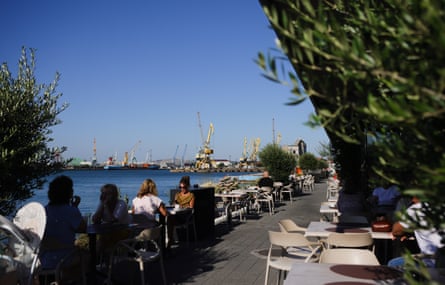
Located on the southern Black Sea coast, approximately 400km east of Sofia, Burgas is closer in distance to Istanbul than the Bulgarian capital.
Nestled among three lakes and the Black Sea, it has an established tourism industry and is a popular seaside destination among Bulgarian and international tourists. Meanwhile, it is home to Bulgaria’s second largest port and the largest oil refinery in southern Europe, accounting for a considerable chunk of the city’s industrial production.
Earlier this year, it hosted the arrival of the first stage of the 2026 Giro d’Italia, the Italian equivalent to the Tour de France, and hosting Eurovision will most likely boost Burgas candidacy for European Capital of Culture in 2032.
Preparations to host the Eurovision grand final have already started around Arena Burgas, the 15,000 concert capacity hall completed in 2023 which will have the herculean task of throwing Europe’s favourite party, while the city’s airport said it is ready to welcome the increased passenger flow for Eurovision 2027.
The accompanying Eurovision events will be in the centre of Burgas and the Sea Garden, the city’s biggest public park directly facing the Black Sea, where locals usually gather to hang out or have a drink.
However, it isn’t the smallest city to ever arrange Eurovision, still considerably bigger than Harrogate, which hosted it in 1982 following Bucks Fizz’s victory.
The Eurovision final will take place on 15 May, with the semi-finals on 11 and 13 May and will have Canada participating for the first time. Meanwhile new rules will be implemented such as increasing the minimum participation age from 16 to 18 and potentially barring countries involved in armed conflicts from hosting.
Many in Bulgaria believe this to be the perfect opportunity to showcase the beauty of the Bulgarian coast and boost tourism, while others are thankful it won’t be organised in Sofia.
Dimitar Nikolov, mayor of Burgas, said he was honoured that Burgas was chosen and thanked BNT and the EBU [European Broadcasting Union] “for the unique chance to present the beauties of Bulgaria and, through Burgas, to all the guests and fans who will follow the live broadcast to feel Bulgaria.”
Prime minister Rumen Radev told local reporters that he believed Burgas will succeed in representing Bulgaria with dignity.
“I think that every Bulgarian city has something to offer both in terms of culture and history, especially in terms of people and modern services. So let’s present ourselves with dignity. I think that Burgas is a really good choice,” he said.
Katrin Ninova, 20, a data science student at the Sofia University said she was relieved that Sofia will avoid Eurovision mayhem. “It’s crowded enough here. We don’t need to organise Eurovision,” she said.
Evtim Vodenicharov, 32, a data manager from Burgas said he was thrilled that his home town would be organising the event and believed that it will boost the region’s economy and tourism. Meanwhile, he hopes to attend next year’s Eurovision in the arena.
“Of course I’m excited,” said Vodenicharov. “I hope I will be able to get a ticket and go watch it live instead of being at home and watching it on TV. It’s in my home town.”
Meanwhile Dara urged visitors who will attend Eurovision to take the opportunity to visit Bulgaria, the Black Sea coast and discover the unique culture of the Balkan country.
“We should look at all of the positive sides. I think people should go to the seaside and all around Burgas, there are really good places,” she said.





 English (US) ·