
 5 hours ago
3
5 hours ago
3

2 hours ago
Gabrielle Williamson,BBC Scotlandand Catherine Lyst

 Darren Scott
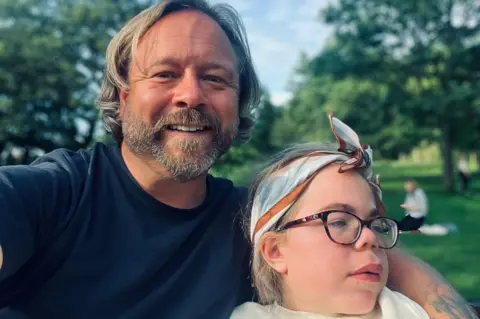
Darren Scott cares for his daughter Sophia, who is now 15
Just before her fourth birthday Sophia Scott's parents were told she had a condition that causes childhood dementia.
They walked away with a single sheet of paper and were advised to make the most of the time they had left with her.
Now 15, Sophia can no longer speak and cannot walk unaided. She may not live past her 16th birthday.
Her dad Darren and mum Amanda are now separated but both help care for Sophia.
Darren juggles this with his job as a hospitality manager while Amanda left her job to look after her.
Darren also campaigns to raise awareness of Sophia's condition, Sanfilippo syndrome.
It is an inherited, rare, progressive and incurable condition.
 Darren Scott
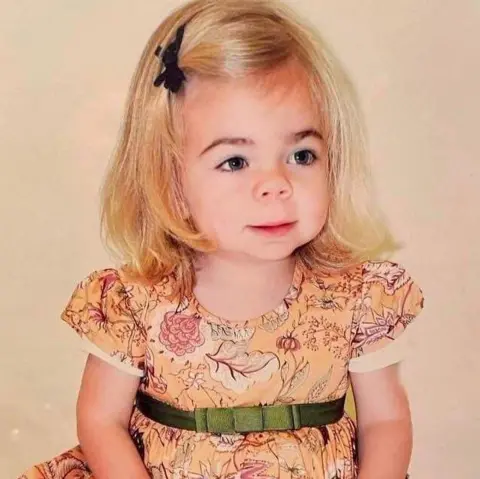
Sophia, who was diagnosed at the age of four, had a happy early childhood
Sophia's early childhood was happy. Darren, from Glasgow, said she loved dancing, cooking, playing and going to school.
Although there were some delays in her development, there was nothing to suggest the scale of what was to come.
"We didn't have any concerns there was something remotely wrong," he told BBC Scotland News.
"There were some delays on her markers, but we didn't think anything this huge.
"We were basically given a life sentence, this progressive incurable disease was going to take our only child.
"We were given a piece of A4 paper, and essentially told to make the most of the time we had."
 Darren Scott
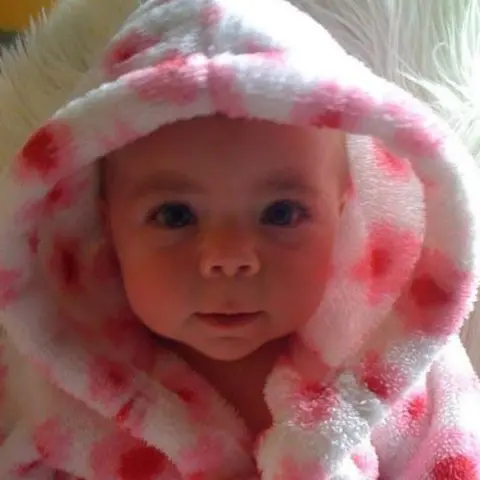
Initially Sophia showed no signs of the condition but there were later some delays in her development.
Darren said the couple were given no support or expertise.
"We were told to make memories," he said.
Darren, and Sophia's mum Amanda, were so shocked and devastated at the news that they threw up in the street outside the hospital.
"We were collapsed outside - we were told our daughter is going to die," Darren said.
"In that moment we both were broken, our lives had been shattered.
"We were in a complete state of shock and left feeling like what do we do now? Our life had changed forever and we felt alone."
 Darren Scott
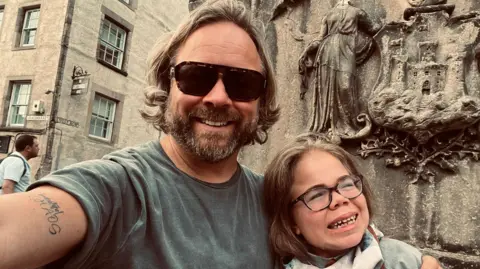
Darren Scott campaigns to raise awareness of Sophia's condition
What made the diagnosis even more difficult for the family was that, for a while, life still felt normal.
The condition is initially very gradual so for the next few years, Sophia, who is an only child, was still very much herself.
It left her family living with the knowledge of what was coming, while trying to hold on to everyday life.
As she got older, the disease began to progress.
Darren said that by the age of six or seven, changes in Sophia's behaviour had become more noticeable, including hyperactivity and mood swings.
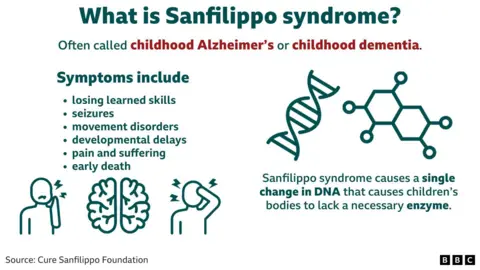
About 140 children in the UK are believed to have the condition
Over time, her condition continued to worsen and she can now no longer speak.
"We would look at Sophia, this perfectly happy little girl and think why her? Why? And how is this all going to change?' he said.
"We just kept looking at every little thing she did and thought will that be the last time she does that? Or will this be the last time she says that?"
Darren said it was very hard to cope with the fact that Sophia could no longer tell them when something was wrong.
But he said one of the hardest parts was not hearing her voice anymore.
"As for her last words, like much of her loss, it's all rather cloudy and painful," he said.
"It's all such a slow decline but we would sing together as much as possible as she'd remember the words of her favourite songs and smile.
"She always said I love you a lot and we have a video late on of her still just managing to say this."
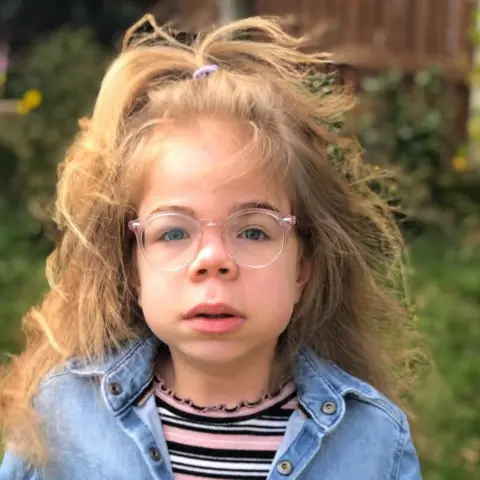 Darren Scott
Sophia's behaviour began to change when she was about six or seven
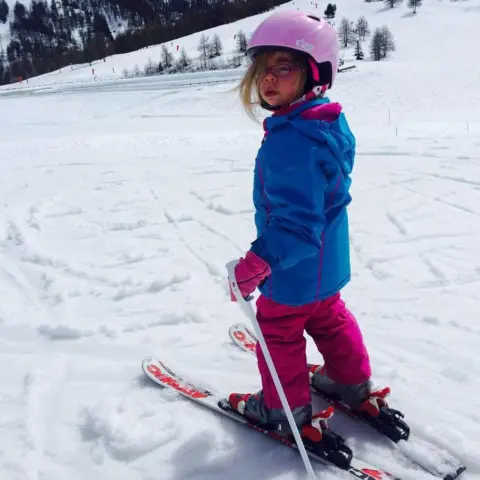 Darren Scott
Sophia's development has gradually declined and she is no longer able to walk unaided
Campaigners say childhood dementia remains one of the least understood and least recognised life-limiting conditions affecting children.
- According to Alzheimer Scotland, around 380 families in Scotland are affected by childhood dementia
- There are estimated to be 204 deaths a year of people with childhood dementia. The figure for childhood cancer (0-14 years) is 260
- Half of those with childhood dementia die by the age of 10 and 70% before their 18th birthday
The charity says the condition is caused by more than 145 rare genetic disorders, including Sanfilippo syndrome, and that children and families are too often left to navigate it without a clear pathway of care or support.
As well as caring for Sophia, Darren has become an advocate for families affected by childhood dementia, working with Alzheimer Scotland and speaking at the Scottish Parliament to push for better awareness and practical support.
He also raises awareness through his Instagram page @hundredsofpromises and has connected with families around the world facing similar experiences, including in Australia, where he says support for children with dementia and their carers is far more developed.
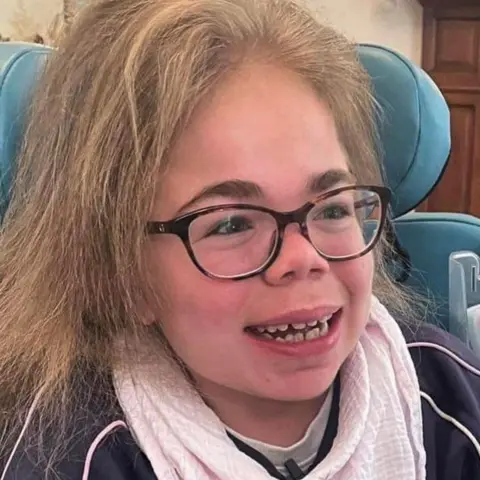 Darren Scott
Sophia may not live past 16
Although Sophia's family receives some support, Darren says it falls far short of what is needed.
They are entitled to about 20 hours of care a week but outside that, the responsibility falls almost entirely on him and Sophia's mum.
The Scottish government recently announced it was providing £118,873 to Alzheimer Scotland to support the employment of two new childhood dementia development officers - making Scotland the first country in the UK to fund this kind of dedicated support.
 Darren Scott
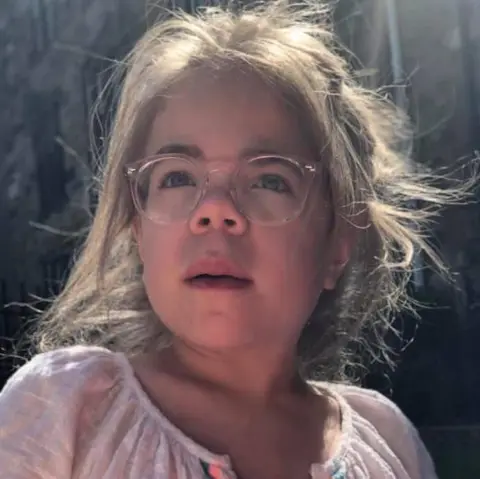
Darren wants whatever time Sophia has left to be as comfortable as possible
The development officers will be responsible for raising awareness of childhood dementia, developing understanding among professionals, and ensuring a support network is in place for families affected by it.
Health Secretary Neil Gray said: "Childhood dementia may still be considered rare but for many it can be life-limiting.
"That's why we're doing all we can to maximise life expectancy and to ensure families have access to the support and care they need."
While Darren welcomed the move, he said it highlighted what little help there had been available to families like his.
 Darren Scott
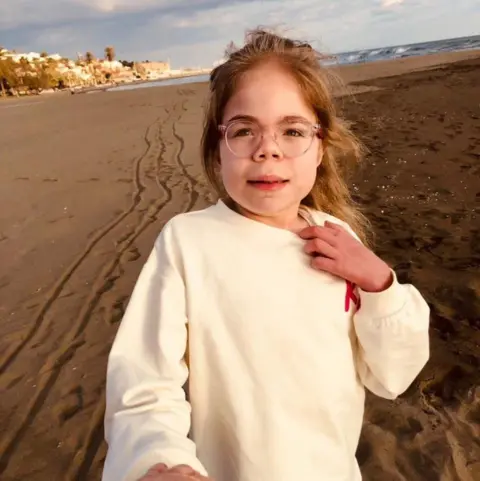
Darren says no family should have to receive the diagnosis they did
In a report published in December 2025, Alzheimer Scotland called for childhood dementia to be included in the Scottish government's national dementia strategy, alongside a nationally standardised framework of care and increased research investment.
Alzheimer Scotland said the newly funded roles were an important step, but campaigners believe much more still needs to be done.
Jim Pearson, the charity's deputy chief executive and chairman of Childhood Dementia Scotland, said in the report that childhood dementia remained "largely invisible" within health, social care and education systems.
He said: "Families cannot wait. Scotland must act now so every child gets timely, compassionate support."
For Darren, the issue is not only about awareness but about making whatever time Sophia has left as supported and comfortable as possible.
He added that no family should ever receive a diagnosis like his daughter's and be left to face it alone.









 English (US)