
 2 hours ago
3
2 hours ago
3

At 29, Rene Matić is the youngest ever person to win the £30,000 Deutsche Börse Photography Foundation prize. They were nominated for their solo exhibition As Opposed to the Truth at CCA Berlin – there is currently a much smaller reconfiguration representing part of the show at the Photographers’ Gallery in London. Matić was also the youngest artist ever to be nominated for the Turner prize last year.
There are things I like about Matić. I like the way they challenge what counts in life and art, and what counts as British. Their 2022 work, Upon This Rock (shown in Berlin though not in the current display in London) – a photographic installation and a film exploring the artist’s father, Paul, and his involvement with the skinhead movement – felt like it was breaking new ground, conceptually and materially. Matić’s yearning to understand masculinity and fatherhood as forces shaping national identity, and the way they incorporate new stories into the folds of Britain’s historical fabric, felt original and exciting.
Yet a lot of Matić’s other work doesn’t feel mature enough for the photographer to have taken the prize so early in their career. The installation Feelings Wheel, a series of diaristic snapshots which is shown at the Photographers’ Gallery, feels like something you’d paste on your wall or Tumblr at university. They are pretty mediocre pictures, safe from Instagram censorship, and arranging them in Perspex doesn’t make them more interesting. I find there is an annoying insularity, a sense of preaching to the converted, whereas the most effective art builds bridges between artist and viewer, allowing people who aren’t part of the gang to understand it and be moved by it, too.
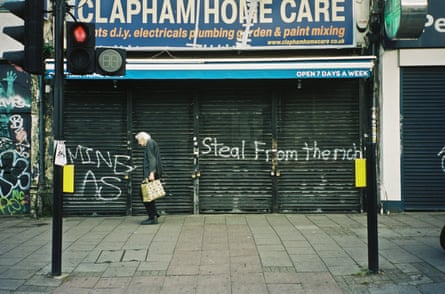
Too often, Matić’s images are only made interesting by the different ways they display them in assemblages, spatial and sculptural configurations. Their work draws comparisons with Wolfgang Tillmans or Nan Goldin, who both photographed their own subcultures and communities, but with more edge and verve. With slideshows to music (in the case of Goldin’s The Ballad of Sexual Dependency) and multi-format installations responding to the space (Tillmans), both photographers cast aside the traditional focus on a single image, creating new ways of looking at multiple photographs that Matić adapts but doesn’t quite move forward.
There’s nothing wrong with art that focuses on identity – especially identities that have been consistently erased and ignored in this country. The fact a queer, working-class person of colour won this award is good as a statement for what the Deutsche Börse prize can stand for. But based on what Matić has done for photography, I don’t think they should have won.
Autobiography can’t be the only thing a work has to offer. I am not sure what’s really radical or nuanced about Matić’s photographs of flags and tattoos, or people kissing at Glastonbury. At times, the vulnerability and compassion seems performative rather than sincere, and there’s not enough tension – questions in the work for the viewer to resolve. Leaving the exhibition, I felt flat – though there are ideas, they need more time to percolate. What this win seems to tell us about photography now is that how you market yourself is possibly more important than the work you make.





 English (US)