
 23 hours ago
4
23 hours ago
4

Richard WheelerPolitical reporter

 PA Media
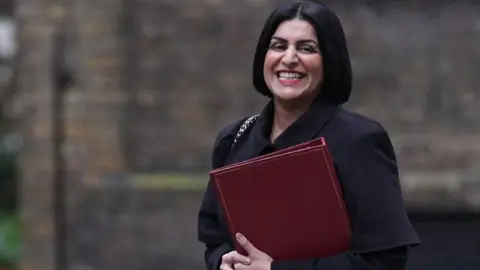
Home Secretary Shabana Mahmood faced questions from MPs about proposed immigration reforms
The home secretary has defended the government's immigration proposals as "fair" amid opposition from Labour MPs over changes to permanent settlement rights.
Shabana Mahmood said a "very large number of people" arriving in the UK in an "unprecedented way" in recent years does "demand an answer" from the government.
Ministers want to double the time it takes most migrant workers to qualify for permanent residence from five years to 10 years.
But around 40 Labour MPs have raised concerns about the impact of the proposals on migrants already living here, describing the retrospective approach as "un-British" and "moving the goalposts".
They have warned it could worsen the UK's skills shortage, particularly in the care sector.
Settlement, also known as indefinite leave to remain, gives a person the right to live, work and study in the UK for as long as they like and apply for benefits if they are eligible.
The Home Office has said its figures show net migration - the difference between those entering and leaving the country - added 2.6 million people to the UK population between 2021 and 2024.
The department has forecast around 1.6m people could therefore settle between 2026 and 2030.
The government's proposed changes would extend the standard wait to qualify for settlement to 10 years, although there would be criteria which could lengthen or shorten it.
The consultation, which closes on 12 February, has sought views on possible transitional arrangements for people already on a route to settlement.
The changes would not apply to people who have already obtained settlement.
Mahmood, appearing before MPs at the Home Affairs Committee, said settlement in the UK is a "privilege not a right" and it would be "odd" for the UK not to seek to attract the "brightest and best" people to work in the country.
She told MPs: "I think at five years that's actually quite a short period before people can be permanently settled in the country with all of the benefits that that brings.
"I think it's right therefore that we extend it. And in the range of proposals that we've set out there are some things that could help you bring that qualifying period down.
"So if you're a particularly high earner, you've come through on any of the global talent routes, you're a higher band taxpayer, you can earn that period down from 10 years to potentially three.
"But then the reverse is true as well so if you do fall upon the state and you end up accessing benefits that can increase your qualifying period."
The proposals include those people who arrived on post-Brexit health and social care visas having to wait 15 years.
Labour MP Dr Peter Prinsley highlighted the demand for care workers who are "not high earners but who are nevertheless extremely useful members of society", adding: "We need to be able to attract people to come to work in those sectors."
Bell Ribeiro-Addy noted there was "anxiety of retrospectivity" and added it was "causing a lot of issues".
The Labour MP for Clapham and Brixton Hill asked what would happen if a person has the right to apply for settlement now but could not afford it until the new system came in.
Mahmood said an application is "assessed based on the rules that are in force at the point that the application is made", adding this was not a new change.
The exchanges at the Home Affairs Committee followed a parliamentary debate in Westminster Hall on Monday in which several Labour MPs voiced their concerns.
Tony Vaughan, the MP for Folkestone and Hythe, said: "You cannot talk about earning settlement if you keep moving the goalposts after the game has started.
"In my view, retrospectivity is un-British and undermines our sense of fair play. It should be abandoned."
York Central MP Rachael Maskell said the government's immigration reforms risked worsening the UK's skills shortage and the "only place where this policy belongs is in the bin".
Elsewhere in the committee session on Wednesday, Mahmood said she could not guarantee she would be able to say whether the number of small boats crossing the English Channel would decrease in the next 12 months.
In 2025, a total of 41,472 migrants crossed the Channel in small boats, which was almost 5,000 more than the previous year.
Mahmood told MPs: "I would love to be in that position. I can't guarantee I'm going to be in that position.
"That's because the measures will take some time to come into effect. We will legislate at the earliest opportunity to change the appeal system, to further restrict the way that Article 8 of the Human Rights Act is interpreted."







 English (US)