
 1 hour ago
1
1 hour ago
1

There are decades in which nothing happens, and weeks in which decades happen, and those weeks tend to result in leaders being toppled. Not even a fortnight ago, Gianni Infantino was taking his victory lap on Instagram, attacking “those behind their pens and papers, behind their screens spreading hate and false rumours” who had dared to question elements of his World Cup, which had generated a record $15bn in revenues. But the next day came the revelation of his plan to sell the World Cup to outside investors and a backlash that has him scrabbling to save his presidency.
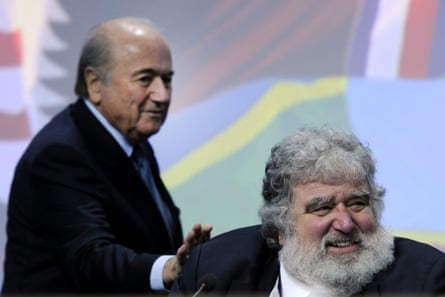
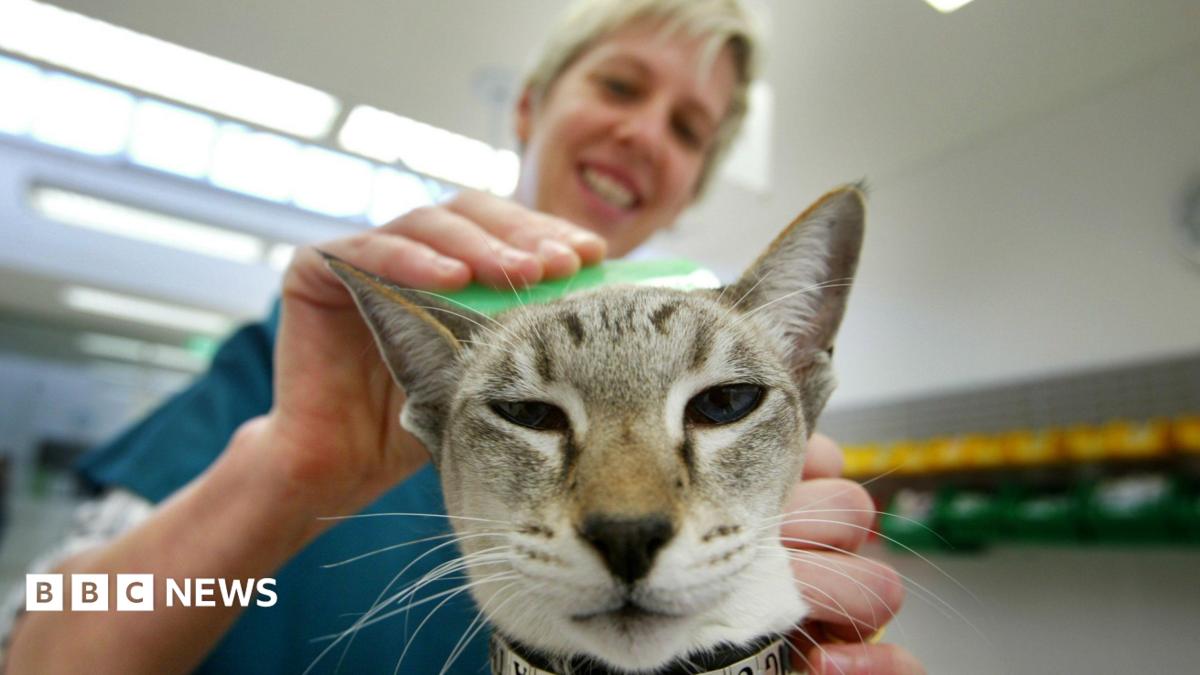
It has been a remarkable few days, but this is a story whose roots stretch way back, to the decision in Zurich in 2010 to award the 2022 World Cup not to the US but to Qatar, to a furious Bill Clinton hurling an ashtray across the room and demanding action, to an FBI inquiry into corruption, and to the flipping of the larger-than-life Concacaf general secretary Chuck Blazer, who had two apartments in Trump Tower, one for himself and one for his cats.
Blazer now appears as the cheery, bearded, acceptable face of Fifa corruption. He drove about on a mobility scooter with his parrot, Max, on his shoulder and once high-fived Vladimir Putin after the Russian president suggested he looked like Karl Marx. But it was Blazer’s evidence that led to the arrests at Zurich’s Baur au Lac hotel in 2015 and the resignation of Sepp Blatter six days later.
The overwhelming favourite to replace Blatter was the president of Uefa, Michel Platini. He, though, was unacceptable to the US, because it was his decision to switch his vote to Qatar, following – although he maintains not as a result of – a meeting at the Élysée Palace with the then French president Nicolas Sarkozy and the crown prince and prime minister of Qatar.
Conveniently, evidence was found of a payment he had received from Fifa in 2011 leading to his suspension. The Berne federal prosecutor, Michael Lauber, broke protocol to name Platini as something “between a witness and a suspect”. It was enough: Platini stepped aside and Infantino stepped in as Uefa’s candidate. Lauber subsequently became attorney general of Switzerland only to resign after secretly meeting Infantino while investigating Fifa. Platini was subsequently cleared and is suing both Fifa and Infantino.
At the time, Infantino was the secretary general of Uefa, notable largely for his comical earnestness while conducting Champions League draws. He was elected Fifa president in February 2016, defeating the Bahraini Sheikh Salman bin Ibrahim Al Khalifa, the president of the Asian Football Confederation, an avid hunter of wild boar who denied allegations of complicity in the torture of pro-democracy campaigners. Key had been a late change of mind by the Caribbean bloc: Sunil Gulati, the president of the US Soccer Federation, took credit for his persuasiveness.
With an ally elected, the US, Mexico and Canada won the right to host the 2026 World Cup. “You wanted to have it there and I wanted to have it there, and we really did it before we came to office,” Donald Trump, performing his classic trick of supervillain exposition, told Infantino at a dinner in Davos in 2020. The order of events is worth reiterating: Infantino was elected in February 2016, Trump was inaugurated in January 2017, the World Cup hosting decision was taken in May 2018.
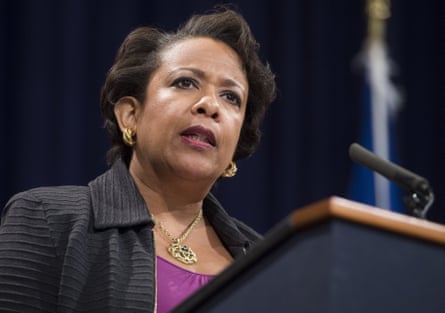
The US has been a constant in Infantino’s presidency. He took power at a time when the US attorney general, Loretta Lynch, was promising to swill corruption out of Fifa but in terms of decisive action that has amounted to little more than a handful of cases involving dodgy South American broadcast rights deals. In May 2019 Fifa appointed as legal representatives the US law firm Paul Weiss. A few weeks earlier Paul Weiss had named a new senior partner: the former US attorney general Lynch. The following year, she praised Fifa’s newfound “transparency and ethical behaviour”.
Few would agree with her. Infantino arrived promising reform, yet within a year he was removing two leaders of Fifa’s ethics commission. The same weekend that Trump sacked James Comey as head of the FBI, in part for investigating Russian interference in US politics, Infantino fired Miguel Maduro, the chair of the governance and review committee, for blocking the re-election as a Fifa vice-president of the head of the Russian Football Union Vitaly Mutko on the grounds that as Russia’s sports minister he breached guidelines on political involvement.
Infantino repeatedly bypassed the Fifa council, ducked the scrutiny of press conferences and came increasingly to rule by fiat. The plan to sell off a chunk of the World Cup is just the most egregious example. Why would he keep a plan of such revolutionary significance from his senior staff? Why would he give his members 53 days to consider such a plan, offering them a cash bonus to acquiesce? Why would he undermine his own tournament with hydration breaks and a half-time show in the final? Why override disciplinary protocols so the right players will be on the field, seemingly to highlight the tournament’s commercial appeal to potential investors?
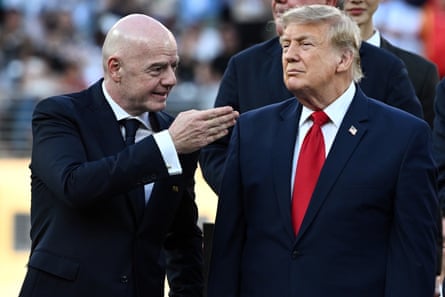
The people who were in on the deal were connected to the Trump family, specifically Joshua Kushner, the brother of the president’s son-in-law. Again, questions immediately arise. Why would you sell off 21% of all future revenues for only 28% of what this World Cup made? Infantino’s relationship with Trump – awarding him the inaugural Fifa Peace Prize, appearing with him at world events, giving him a Club World Cup trophy, renting an office for Fifa in Trump Tower that is seemingly barely used – had already brought criticism.
after newsletter promotion
Uefa’s robust and united response, the threat to boycott Fifa tournaments, was evidently not anticipated. The plan is dead, at least for now. Infantino, damaged, clings on, having rallied at least some senior Fifa staff at an emergency meeting in Rabat this week. The chief operating officer, Kevin Lamour, one of the two members of the five-man inner council who voted against the plan when informed about it the day before the World Cup final, was, notably, not there. Plans to expand the World Cup to 64 teams, rallying Infantino’s base, have been accelerated.
Letters of support that had looked as if they would ensure Infantino a further term unopposed are being withdrawn. On Friday, perhaps impressed by the promise of the 2030 World Cup final being in Casablanca, the Confederation of African Football pledged its support, joining Mexico, Argentina, Qatar, the UAE, Lebanon, Kuwait, Bhutan and Sri Lanka in backing Infantino.
Perhaps there will be an election, as scheduled, next March. Perhaps Infantino can muster a majority among Fifa’s 211 members. But Uefa has vowed to “paralyse” Fifa until he is gone. The first tournament that might be boycotted is the Under- 20 Women’s World Cup, which begins in Poland on 5 September. Poland has made significant investment in infrastructure and is keen for the tournament to go ahead as scheduled but its football federation would be unlikely to step outside the Uefa bloc.
The politicking goes on although already the discussion seems more about who might challenge or defeat Infantino than about how to change Fifa, where clientelism has reigned since João Havelange won the 1974 presidential election. The institution itself is rotten; it may be that it is irredeemable.
It’s very hard to know how genuine Infantino’s attempt to reform Fifa was, but it quickly foundered. And so Fifa’s attempt to move on from the crisis caused by the executive who rented an apartment for his cats in Trump Tower has wound up back in Trump Tower, with a president who rents an office there.

 English (US) ·