
 8 hours ago
3
8 hours ago
3

Stacy Martin is “not a religious person”. Still, the actor insists things have happened in her life that have made her realise there’s “a whole expanse of things that are unexplainable”. Once, at home in north London, she noticed a lightbulb flickering. She couldn’t solve the mystery: no matter how many times she changed it, the bulb continued to blink. Instead of consulting the internet, Martin went to see her psychic, a tea leaf reader she meets annually, booking in under a fake name.
The psychic suggested that someone was trying to communicate with her. “I was like: ‘What if I just start talking to this person that apparently wants to talk to me?’” says Martin. “And so I did. And that light never flickered again.” Martin prefers not to use the word ghost, but she’s aware there are things the mind can’t make sense of; things the body somehow knows.
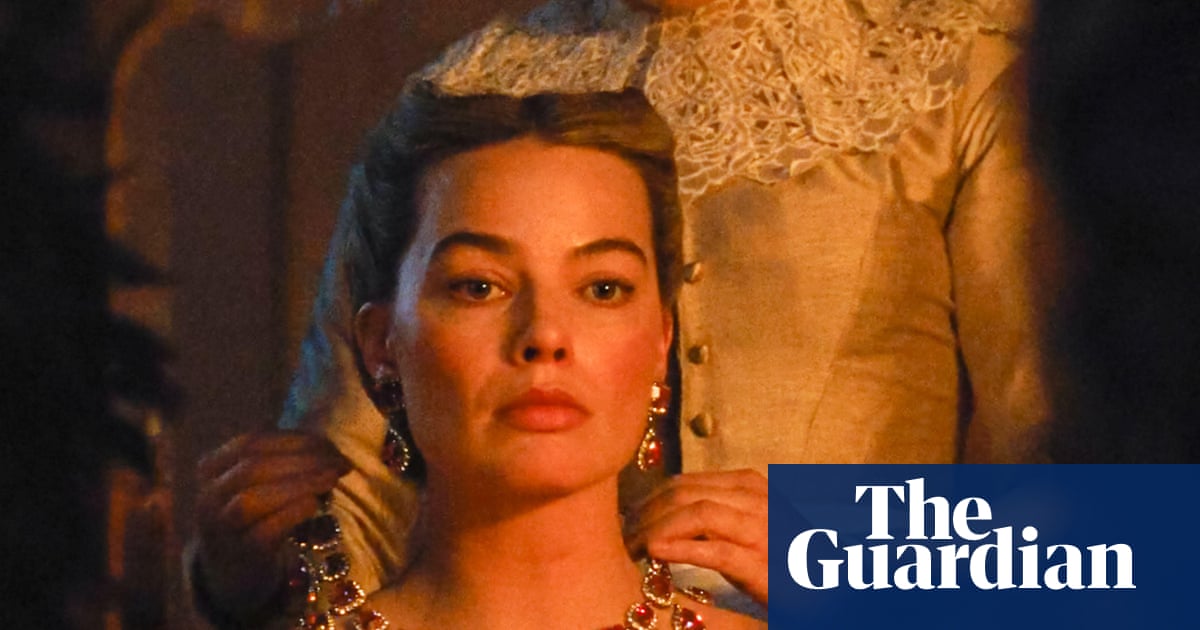
In her new film, The Testament of Ann Lee, her body is a vessel for the divine. Mona Fastvold’s wild movie musical tells the story of the 18th-century religious leader and mother of four who swore off sex with her husband but gave her body over to God. Ann Lee (Amanda Seyfried), founder of the Shakers, expresses devotion through song and dance, writhing, trembling and shaking her way to deliverance. Martin plays a key part as Jane “Mother Jane” Wardley, leader of the Shaking Quakers and the woman “who showed Ann Lee who she could become”, says Martin.
Co-written with Fastvold’s partner Brady Corbet (director of The Brutalist), scored by the Oscar-winning experimental musician Daniel Blumberg and featuring hypnotic, ecstatic choreography by Celia Rowlson-Hall, the film is unlike anything I’ve ever seen.
Since her breakout role in Lars von Trier’s Nymphomaniac in 2013, Martin has worked with arthouse provocateurs including Michel Hazanavicius, Ben Wheatley and, on three different occasions, Corbet. On screen, the half-French, half-British actor and model appears coolly intelligent and, sometimes, a little stern. “No one would ever think of me to be in a musical,” says Martin, “and so I like this idea of transgressing expectations.”
Barefaced and wrapped in a fuzzy grey jumper, she is video calling from the study of her home in Beachwood Canyon, Los Angeles, which has the appearance of an oak-panelled library. “A lot of my books are still in London,” says Martin, who is now living between the two cities, and has been contemplating whether she should simply buy all her books twice. “Is that outrageous?” she asks, eyebrows furrowing. “I think it is.”
Martin is quick-witted with a surprising, dry sense of humour. Lately, she has been reading “this great David Lynch biography” and getting into quantum physics. “Some of my dear friends love it and I have no idea what the hell they’re talking about, so I’m trying to wrap my head around it.”
When she was researching the Shakers, Martin found little information about Mother Jane, except for “what she says to Ann Lee about not having relations with her husband”. Today, the Shakers are best known for the integrity of their minimalist wooden furniture. But the dwindling Protestant sect are also notorious for their celibacy, with just three remaining members alive today. Martin was amused by the seeming contradiction between her character’s chaste marriage and her passionate spiritual reveries. “For the movement to be so visceral, and about catharsis, and worshipping … I was just quite surprised that she decided not to have sex with her husband,” she says with a chuckle. But Martin was interested in the idea of abstinence as a potent form of power. At that time, she says, “it probably made sense for women, because it was the only way they could really gain status”. The Shakers believed in gender equality and so by removing desire, “it wasn’t about women and men being part of a hierarchy that I think sex will always shape”.
She was also curious about the shaking. She was mesmerised by the “tender violence” of Rowlson-Hall’s expressive, instinctive choreography. Learning the film’s dance sequences over a two-week rehearsal period was “like summer camp”, she says. “Not that I’ve ever been to summer camp.”
Martin first met Fastvold in 2015, in “freezing Budapest” on the set of Corbet’s debut film, The Childhood of a Leader. The married couple direct their own films but write together, working with a recurring cast of collaborators. “In French, it’s a troupe,” Martin says, slipping into a perfect accent. “T-R-O-U-P-E, that sense of working with the same people, in a space where you’re being pushed because they all know you so well.” Fastvold and Corbet’s troupe includes Martin, Blumberg (Martin’s ex-partner of 14 years), who scored The Testament of Ann Lee as well as The Brutalist, Rowlson-Hall (who also choreographed Natalie Portman in Corbet’s Vox Lux) and the actor Christopher Abbott, who plays Ann Lee’s despicable husband and has appeared in all of their films.
Fastvold and Corbet are “very in symbiosis”, says Martin. “They’re both committed to writing a story that is bigger than them, that also feels very close to their heart.” In The Testament of Ann Lee, Martin reckons Fastvold is exploring her own relationship to motherhood. “Not just in terms of having children, but creating a space for people to thrive, and for artists to come together and be greater than what society’s told them.” A natural matriarch and “force of nature” on set, Fastvold has also spent the last decade as a kind of mother figure to Martin. “She met me when I was a baby! I’ve been in all their films, I’ve lived with them, they’ve lived with me. I’ve seen their daughter grow up,” says Martin. “She understands that sometimes there isn’t a solution, we just need a rant. That is an incredible friend to have.”
The Brutalist was arguably the surprise critical darling of last year’s awards season and went on to win three Oscars. Martin says the film’s success felt like an affirmation “of all the decisions and instincts I’ve had about film-makers”. The actor has, by her own admission, actively pursued a career in independent cinema. After Nymphomaniac, “making sure I worked with artists and I worked on films that were director-led, that was a big thing for me”, she says.
It was a particularly special moment, then, when at the end of The Brutalist’s long awards campaign, Martin attended the Oscars with Fastvold and Corbet. “They give you alcohol under your seat – I think it was tequila,” she says, deadpan. “It’s useful to keep people’s spirits up, because it is quite long.” The spectacle of the ceremony was a little strange, she says, but entertaining to witness. “I just thought: You’ll probably never go back, so make the most of it,” she says.
Over email, Fastvold describes Martin as “a true cinephile” with “an instinctive understanding of the larger vision of a film”. Martin is a regular at east London’s Close-Up, a tiny cinema and lending library just off Brick Lane, and a collector of DVDs. “There was an amazing guy in Stoke Newington,” she says, who used to run The Film Shop, a video and DVD rental shop specialising in world cinema. “It was all from the Criterion Collection and Second Run. I’d go there and take a film from a director I knew and then he would recommend another film. It was so great,” she says wistfully. “The ritual of it, I really loved.” When it closed, she was so devastated she ended up buying half the shop. “I was like: ‘What are you gonna do with all these films?!’”
Last year, impatient between projects, Martin wrote and directed her first short film. “I didn’t realise, as an actor, just how shielded you are from the whole experience.” Being behind the camera, she says, “was like an on-set experience on steroids”. One of her next films, The Queen of Fashion, about avant garde fashion editor Isabella Blow, will see her step into designer Daphne Guinness’s hoof-shaped platform shoes. When Blow died, Guinness bought almost all of her clothes. Guinness lent her archive to the production. “We had original McQueen pieces, we had Philip Treacy’s lobster hat, we had original Marc Jacobs pieces that still had soup on them,” she remembers.
“I don’t want to do the same thing over and over again,” Martin says. Over the summer, she shot a studio adaptation of Sense and Sensibility, in which she plays formidable Jane Austen villain Fanny Dashwood. She says she hasn’t steered away from Hollywood blockbusters, but that “they just never came to me”. Now having carved out an enviable career in indies, the mainstream is firmly in her sights. Still only 35, she is “trying to manifest being in the next Jurassic Park”. It was the first film she ever saw in the cinema, and it blew her mind. “If I say enough, it’s just bound to happen.”
The Testament of Ann Lee is released in UK cinemas on 27 February.




 English (US)