
 2 hours ago
2
2 hours ago
2

Jeffrey Epstein had power and influence because he had money.
It attracted wealth and those who also sought it. His fortune enabled the crimes he committed. Its role cannot be underestimated.
The frenzied fallout from his death leaves a trail of questions over how he came by his money.
Epstein files: See the latest revelations
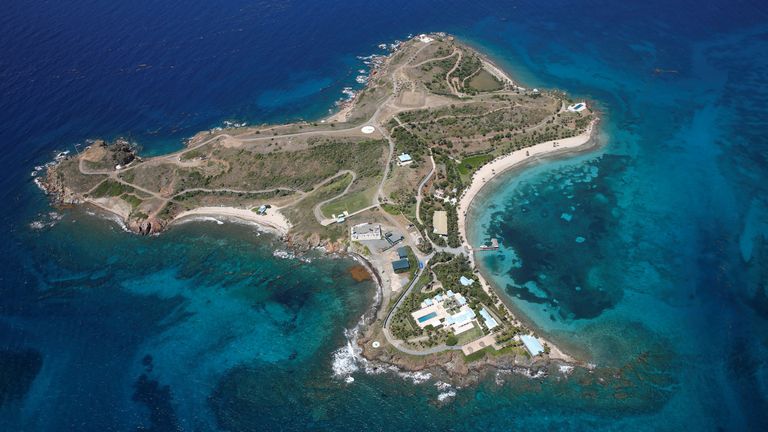
Epstein's empire once included the largest residential property in Manhattan, two sun-soaked islands and three planes.
But were they the product of pure financial acumen or were there also more sinister elements; blackmail disguised as financial expertise and a free rein to ensnare people of interest to the security services?
Here's what we do know.
How much was Epstein worth?
A document, signed by the convicted paedophile just two days before his suicide in 2019, suggests his estate was worth in the region of $580m (£475m at that time) before the payment of any taxes and liabilities.
The 1953 Trust - likely named in reference to the year of his birth - was a trust fund that allowed the identities of his beneficiaries to be hidden, as opposed to a simple will.
The final version was released by the US Department of Justice (DoJ), with some redactions, for the first time last week and showed more than 40 people were set to inherit millions of dollars each, including Ghislaine Maxwell ($10m).

Where it all began
To understand the end, we have to explore the beginning.
New York-born Epstein was considered a maths genius but never graduated, despite attending university.
He left education for education - to teach teenage boys and girls, without qualifications, at a private school that was attended by children of many of New York's elite.
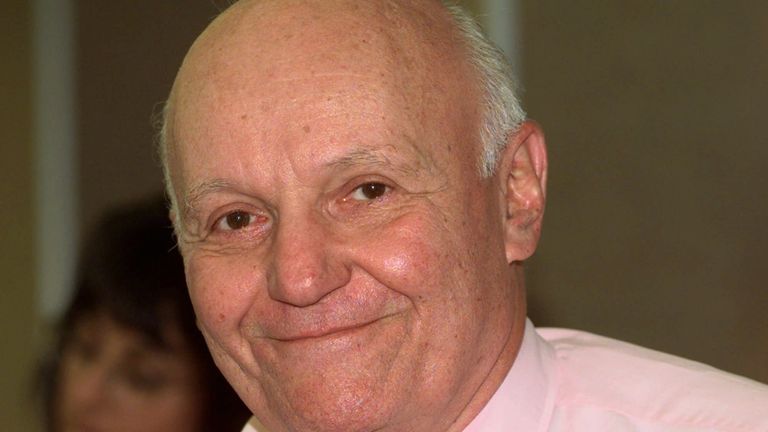
After being fired - apparently for lacking teaching skills - Epstein was given a job at the investment banking giant Bear Stearns by its soon-to-be chief executive Alan "Ace" Greenberg, who had children at the school.
It marked his first big break - one that would underpin his financial status for years to come.
Epstein worked his way up over five years but left Bear Stearns in 1981 over a trading violation for which the company fined him $2,500 - worth almost $9,000 (£6,597) in today's money.
He told regulators at the time he was latterly earning over $200,000 per year - around $710,000 (£520,501) now - in total compensation from Bear Stearns for his work as an adviser and limited partner.
He may have left the bank, but that was not the end of his relations with the company that became the first domino to fall in the financial crisis 27 years later.
The big bucks
It is from here that Epstein's obsession with privacy starts to cloud his earnings.
His business interests from 1981 onwards lacked transparency as they were not listed entities, though lawsuits and some filings have revealed limited data on performance.
He started his own firm which specialised in recovering money for individuals and, reportedly, a number of foreign governments, and was also hired as a "consultant" in 1987 at the then Towers Financial Corporation.
He left in 1989, four years before it was exposed as a Ponzi scheme. He earned $25,000 per month for his role at Towers and was never charged over the $450m fraud.
J Epstein & Company, founded in 1988, was where the big bucks started to appear.
This entity became Financial Trust Company after Epstein based his financial operations in the US Virgin Islands - a tax haven.
He also started, in 2011, Southern Trust Company which latterly became his main source of income.
How much did he rake in, and how did he do it?
The extent to which the revenue he generated - largely tax-free - from his clients and from investments was legitimate, is one of the big questions hanging over Epstein's activities.
He certainly evaded regulations covering financial advisers, lawyers, and accountants globally by painting himself as a consultant.
A review by Forbes showed that two individuals accounted for the bulk of the fees that Epstein's vehicles attracted.
First, J Epstein & Co managed the financial affairs of the US billionaire Les Wexner - the long-time boss of Victoria's Secret.
He was found to have paid Epstein $200m until they parted ways in 2007.
Leon Black, the co-founder of private equity firm Apollo Global Management, is believed to have handed over $170m to the entities from 2012 to 2017. He said in a letter to Apollo investors in 2020 that "I deeply regret having had any involvement with him", adding that their relationship was confined to "estate planning, tax and philanthropic endeavours".
Mr Wexner has previously said he cut ties with Epstein in 2007 and also denied knowledge of his sexual abuse.
In all, Forbes said, Epstein took at least $360m in dividends from his companies between 1999 and 2018 and saved himself $300m in tax due to the US Virgin Islands jurisdiction.

It wasn't all plain sailing…
US prosecutors have suggested, according to the Financial Times, that Mr Wexner received a $100m payment from Epstein in 2008.
It related to claims by the lingerie tycoon that hundreds of millions of dollars were stolen from him while Epstein had power of attorney over his personal financial affairs. It included allegations of improper property purchases, the FT said citing US Department of Justice documents, that saw Epstein buy real estate from Mr Wexner's portfolio at a discount.
The repayment sum was said to have been divulged to the authorities as Mr Wexner's legal team sought to assist their enquiries before Epstein's death in 2019.
How did the King handle the Epstein scandal?
The financial crisis
Epstein suffered big losses in the wake of the financial crash later in 2008.
Financial Trust was an investor in a Bear Stearns fund that collapsed along with the bank in March of that year - the first major casualty of the crisis.
The company recorded net losses of $166m between 2008 and 2010 - losses that gave rise to his new venture Southern Trust.
It was also widely reported that Epstein lost money through an exposure to mortgage-backed securities at a Bermuda-based company where he previously served as chairman.
The Epstein files: Why all the redactions?
What about other income sources?
Epstein oversaw Liquid Funding Ltd for eight years until 2007.
Months before his death, a report by the International Consortium of Investigative Journalists (ICIJ) highlighted evidence that Epstein's wealth was being "cloaked" through a series of offshore shell companies based in tax havens.
The ICIJ, citing papers seen by its partners McClatchy and the Miami Herald, reported that Bear Stearns was among Liquid Funding's owners and its interests were in financial products that became synonymous with the 2008 crash.
Epstein given 'market sensitive info'
Were his interests legitimate?
Epstein clearly made money through various vehicles, investments, and tax avoidance. They may have been legal but a facade too.
Files released by the Department of Justice only add to the suspicions that the lining of Epstein's pockets was facilitated by the blackmail of wealthy individuals, potentially through covert filming of sexual activities at his properties.
The "victims" could save themselves some tax in return for more business. It's a theory that has gathered traction as journalists continue to flick through the vast document dump.
It is important to point out that the business relationships highlighted do not suggest any wrongdoing on the part of those identified.
'The devil' video and bank payments in new Epstein files
And the sex-trafficking operations?
JPMorgan - the US investment bank that retained Epstein as a client between 1998 and 2013 and paid for that relationship through a series of later settlements - flagged more than $1bn of suspicious transactions linked to Epstein soon after his death.
The New York Times said the bank identified thousands of transactions that could have facilitated sex trafficking.
His true wealth
Financial journalists have spent years trying to get to the truth behind Epstein's fortune.
You can see, from his story, he was a master of manipulation from the off.
But it would not be surprising if there is more money to be found, once his estate has been exhausted through legal costs, compensation, and victim settlements.








 English (US)