
 1 hour ago
2
1 hour ago
2

Sport coverage is powered by hyperbole and recency bias, but the following statement is justifiable: Bangladesh’s defeat of Australia in Darwin is the most profound upset, the greatest revolt against the pre-game odds, in international cricket history. Australia’s win in England in 1882 so shocked locals that they published a cremation-themed obituary, but the same result had already happened four times on the other side of the world. Zimbabwe stunned India in 1998, but that was at least in the underdogs’ home conditions.
India’s bench-depth win at the Gabba in 2021 has a claim, or the new nation of Pakistan winning either in India in 1952 or England in 1954. But in truth, Sunday’s result is now the title holder, not just because of the disparity between the resources and histories of the two teams, not just because of the location, but because of the manufactured rarity of this match-up even taking place. Since Bangladesh’s admission to Test ranks in 2000, Cricket Australia have treated a cricket populace of well over 100 million people with the most blatant condescension.
Six Tests before this series, and only two of those in Australia, in 26 years. A cancelled Test visit in 2015 on spurious security grounds, another during the pandemic that was unavoidable but was never rescheduled, and between those a rescinded invitation to tour Australia in 2018, CA forgoing excuses and admitting that they just didn’t want to pay the hosting bill. Meanwhile, white-ball meetings have largely been confined to those unavoidable at World Cups: the bilateral count is 15 matches in one-day cricket and eight in T20s, less than one per year on average.
Teams do not simply walk into Australia and win Test matches. Teams from Asia particularly. Sri Lanka, winner of two World Cups, have never done it. Pakistan haven’t in the last 31 years, and all up have four wins from 40 attempts. India found a repeatable method in the last eight years, but won five in 46 matches before that.
In this context, take the most junior of the principal four Asian nations, a country that has nine away Test wins in its entire history. Take a group of players who have – three survivors from the 2015 World Cup squad aside – never faced or bowled an international delivery in Australia. Put that team in a warm-up match against a CA emerging talent XI where they get bowled out for 54 by a kid with one first-class match to his name. And try to figure how this side then fronted up against four bowlers with over 1,600 Test wickets, and a top seven with 66 centuries and more than 25,000 runs, and didn’t just win, but turned out a Mortal Kombat flawless victory in which they did not lose a single session across the full four days.
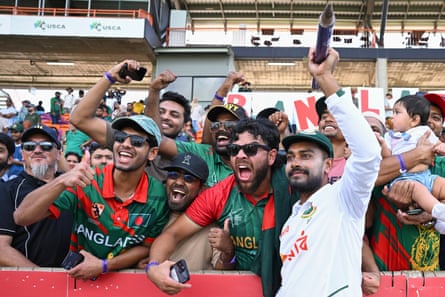
As is always the case when an underdog wins, celebration of one side will be offset by knives coming out for the other. A team as well supplied as Australia simply cannot drop matches like this without repercussions, at least from supporters, even if selectors do as past behaviour suggests and stand by their side. Still, though the angst is doubtless flowing among a portion of the national fanbase, there aren’t a lot of obvious candidates to blame. Of those under most question before the match, Cameron Green came good with a century that for a while gave Australia a chance for revival, Marnus Labuschagne built well for an hour and a half before making an error, and Jake Weatherald had a bad Test, as especially openers are wont to do.
While administrators have looked down their noses against Bangladesh, Australia’s players this past week can’t be accused of the same. They would have expected to win, of course, but that doesn’t mean they weren’t ready to do the work to make that happen. There was no complacency in their comments before the game or their conduct during it. There were errors, chasing the angle or playing the wrong line or chopping on due to angled bats, and that will renew the usual debates about rustiness and match-play prep. But nobody got out to contemptuous slogs. Nobody took it easy in the field. The fast bowling had some good new-ball bursts and old-ball discipline. Nathan Lyon lacked pep, but he hasn’t played since the Nixon administration. The Australians didn’t take this match for granted. They just weren’t good enough, and got soundly beaten by a team that was.
after newsletter promotion
Nobody who has watched Bangladesh’s quarter century of Test cricket would have expected this win. Hence the scale of the upset. What Bangladesh have also done is to overturn that expectation, perhaps for good. They have proved to themselves that they can play this way, they have dragged Australia off top spot in the World Test Championship, and they have a chance to go again in the second Test. Australia desperately need to win that, to settle nerves. But whatever happens in Mackay, Darwin will stand.
It demands that Bangladesh be brought in from the periphery. Having not played in England for 17 years, England’s next summer grants them a single Test. Australia are unlikely to have marked them down for the next future tours program, having hosted them in the current cycle. India took 24 years to invite them over. If the sport is to flourish, nations with potential must be given time and space to grow. This week Bangladesh showed what they have been able to build on their own. The more help they are given, the more they could lift the global game. In the last week, they already have.









 English (US) ·