
 2 hours ago
3
2 hours ago
3

A rather drab event space hidden away next to Boots near Piccadilly Circus feels a long way from the 18,000-capacity Etihad Arena in Abu Dhabi, where the Indian Premier League auction was held in December, but the Hundred will take a significant step in the direction of its new big brother when the first major player auction in English sport takes place on Wednesday and Thursday.
As is likely to be the case for all aspects of the competition moving forward the impetus for switching from a player draft to an auction has come from the new overseas investors, four of whom also own IPL teams, who having committed £975m to buying stakes of between 49% and 100% in the eight Hundred franchises, understandably want to control its future.
How will things change this week?
For the first five editions of the Hundred recruitment operated via a draft system, with players registering themselves at one of five fixed salary bands, and the franchises taking it in turns to select five players from each to complete a squad.
In the new auction all players will be bought via competitive bids, although they have all been assigned a category – Hero, Ranked and Nominated – based on the interest they attracted when franchises submitted initial shortlists.
The women’s auction takes place on the opening day, followed by the men’s teams 24 hours later, with a day of bidding thanks to a total of 425 names in the hat.
The auction has been introduced to inject more competition into the recruitment process, while several of the new investors have made little secret about their desire to break up the Oval Invincible squads that have dominated the Hundred, winning a third successive title in the men’s competition last year after their women went back-to-back in 2021. (Oval are now known as MI London as they are part-owned by the owners of the Mumbai Indians.)
How will the auction work?
The 10 top-ranked Hero players, who include Joe Root, Adil Rashid and Haris Rauf in the men’s competition and Tammy Beaumont, Beth Mooney and Nadine de Klerk in the women’s will be auctioned off first but eager bidders will need to keep some funds in reserve, as in addition to the cap there is a salary collar in place guaranteeing minimum contracts.
Auctioneer Richard Madley, known for his role in the daytime television favourite Bargain Hunt, will oversee the bidding for several hours from 9.30am, just as he did for the inaugural Indian Premier League auction in 2008 when MS Dhoni fetched a then unthinkable 1.5m US dollars from Chennai Super Kings.
While the capacity at Piccadilly Lights is so restricted that only the Hundred’s TV rights holders – Sky Sports and the BBC – have been invited to attend, for the players ultimately offered contracts the numbers involved will be significant.
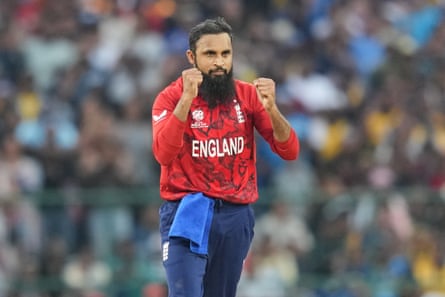
Photograph: Eranga Jayawardena/AP
What sort of sums are involved?
For the first season of joint ownership the total salary pot in the men’s competition has increased by 45% to £2.05m for Thursday’s auction, with the women’s fund doubling to £880,000 when female players go under the hammer the previous day. Harry Brook has already agreed a deal worth £465,000 with the renamed SunRisers Leeds to play between eight and 10 matches, depending on whether the Headingley-based franchise reach the eliminator and/or final.
Such sums represent a major increase from the original Hundred draft six years ago, when top-earning male and female players’ pay was capped at £125,000 and £15,000 respectively, and given further increases in the IPL investment are expected in subsequent years.
Why have some players already signed?
In keeping with a competition in a state of flux this process has not been handled brilliantly, even by MI London, with former Oval captains Sam Billings and Lauren Winfield-Hill revealing last month that they were not told they were being released.
Despite releasing Billings and Winfield-Hill MI London and Southern Brave in particular had lobbied hard last autumn to be allowed to retain much of their existing squads. So in a compromise agreement each franchise was permitted to re-sign three players out of four so-called direct signings before the auction, with limits of two England contracted players and two overseas stars in place.
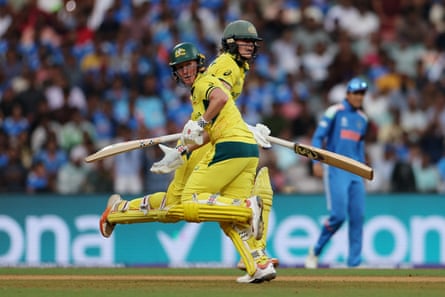
As a result many of the world’s top players have already been recruited, with Sam Curran, Will Jacks and Rashid Khan retained and Nicholas Pooran signed by MI London. England stars Jofra Archer, Jacob Bethell and Jos Buttler will join Brook in the Hundred as they have already been snapped up, with the Australian trio of Mitch Marsh, Ellyse Perry and Meg Lanning the biggest overseas names already assigned franchises.
Which players are available then this week?
The eight franchises submitted lists of between 75 and 100 players they were interested in signing last month to the ECB, who created a longlist of 710 registered for the auction, which has since been trimmed to a shortlist of 243.
South Africa’s Aiden Markram and David Miller, and New Zealand’s Daryl Mitchell and West Indian Sunil Narine are among the overseas stars available alongside England players who have yet to be signed, with the exception of Ben Stokes, who has not registered as he is prioritising rest for Test cricket, and Moeen Ali, who did not make the longlist.
Most interest will focus on whether any of the 14 Pakistan players on the men’s shortlist, which includes Rauf, Mohammad Amir and Shadab Khan, and either Fatima Sana or Sadia Iqbal from the women’s list are picked up.
Is there likely to be controversy?
The England and Wales Cricket Board (ECB) released a joint statement with the eight franchises last month committing to selection at the auctions being based on “performance, availability, and the needs of each team” after it had been reported by the BBC that the four IPL-owned teams – MI London, SunRisers, Southern Brave and Manchester Super Giants – would not sign players from Pakistan due to diplomatic tensions with India.
Pakistani players have not featured in the IPL since 2009, and have never been picked up by any of the six teams in South Africa’s SA20 that are all owned by IPL franchises, so the emergence of the so-called shadow ban issue is no surprise.
There were 45 male and five female Pakistan players in last year’s Hundred draft before the investment process was completed and none were selected, so proving any discrimination would be challenging, but the optics are problematic for the ECB, who will be hoping at least one of the 16 Pakistani hopefuls is signed this week.


 English (US)