
 2 hours ago
3
2 hours ago
3

Opera’s stories of power aren’t only played out on stage. The mechanics of producing opera involve vast amounts of people, from set builders to wig-makers to chorus and orchestra, and even vaster amounts of money. An opera company needs huge reservoirs of cash: whether from governments, companies donating for tax benefits, or private individuals whose motivations may be entirely driven by sheer love of the form, or they might not. The Royal Opera House named a hall after the American investment banker Alberto Vilar who promised the company £10m, before being convicted and imprisoned for fraud in 2010, while the Sackler family’s millions sponsored swathes of culture across the US and UK – but the source of this wealth gave the world an opioid epidemic.
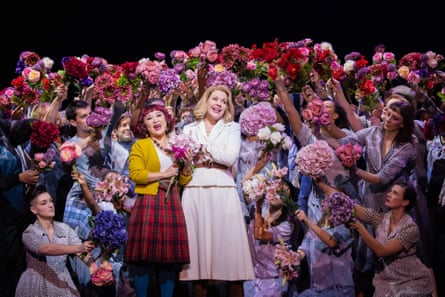
So pity the poor opera house manager, trying to deal with an essentially insoluble situation: choose your donors, choose your poison. And pity especially Peter Gelb, who has been running the Metropolitan Opera in New York, the world’s biggest opera house, for the past two decades. Gelb faces in extremis the same hard economic truth that all opera houses, classical music institutions and performing groups face. Unlike so many parts of the economy, the services they provide have not become – and cannot become – more efficient. It’s what is known as Baumol’s cost disease, a term coined by the economist William J Baumol in the 1960s. One of the examples he used to illustrate the “disease” was a string quartet. It took four players in 1800 – and still, today, takes four musicians. How stupidly inefficient! It’s the same story, only exponentially less efficient and more expensive, for putting on an opera. Wagner’s Tristan und Isolde, one of the Met’s recent blockbuster productions, still needs an army of stage managers as well as orchestral musicians, it still requires gigantic sets and a stellar cast just as it did in 1865, all to fill the Met’s 4,000-seat auditorium.
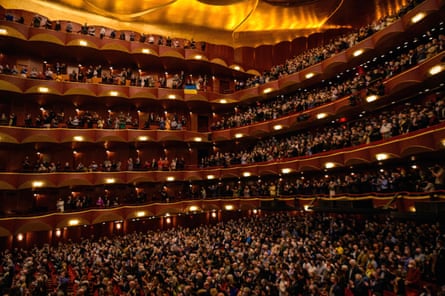
Gelb and his board have been dipping into the Met’s endowment, reducing it by a third over recent years. They’ve also been making redundancies, reducing wages and cutting back on performances. But none of it is enough to cover the eye-watering shortfall that the Met has to make up between what it earns from its box office – around $70m last year – and its annual operating budget of approximately $330m.
Enter the Saudis. After years of negotiation, in September Gelb announced a $200m windfall from Saudi Arabia, whose terms included the Met decamping to Riyadh’s Royal Diriyah Opera House for three weeks a year. Except what he announced last year wasn’t a deal at all, but a “memorandum of understanding” that the Saudis have now pulled out of, citing the economic turmoil of the war. “A very significant disappointment,” Gelb told the New York Times, which is putting it mildly. And yet this amount pales into irrelevance when put next to the money the Saudis have already invested in sport, from tennis to football and golf (support whose future is now in doubt too).
But should Gelb have been negotiating with the Saudis at all? Was he happy to be in debt to a regime for whom women’s, LGBTQ+ and human rights have not been a historical or cultural priority, where there is no press freedom, a regime that assassinated Jamal Khashoggi and who executed more people last year than any on record (including one man who was 17 when he committed his alleged offence).
It’s worth noting that Gelb has made the Met’s ongoing support of Ukraine very clear: he denounced tyranny before a live broadcast of Beethoven’s Fidelio last year: “At the Metropolitan Opera, in our own fight for a civilised world, we always remain committed to [Fidelio’s] values of freedom from oppression,” he said. And the star Russian soprano Anna Netrebko remains not welcome in New York.
It’s easy to criticise from the outside, and there are versions of the same contradictory stances on politics, Ukraine and the Middle East wherever you turn. Opera managers, like anyone else, have choices they can make, lines they could and should draw in the sand about what amounts to ethical investment and partnership, and what doesn’t.
The argument that money, wherever it comes from, no matter how criminal or controversial, is turned into a force for good when it’s used for culture, is manifest nonsense, as are the claims on behalf of opera that the art form is somehow above politics. It isn’t; and of course without politically motivated support over the centuries from governments and aristocrats democratic, autocratic and fascist, there would be no opera in the first place.
But to run an opera house today without recourse to funds that have no link to tainted international markets and investment funds, let alone national governments and their ideologies, seems similarly impossible. Like the tortured characters on its stages, the big opera companies around the world are all caught in the thorns of irresolvable dilemmas that are financial, political and moral.
This week, Tom has been listening to: Jordi Savall’s recording of Beethoven’s Fifth Symphony with Le Concert des Nations. The complete cycle of symphonies, released in 2022, is billed as Beethoven Révolution, and that’s what you hear: a metaphysical journey that’s grounded in thrilling, revolutionary physicality. Listen to the drums, trombones, piccolo and contrabassoon of the finale of the Fifth, turn your speakers up to 11 and make the world shake with C major joyfulness.


 English (US)