
 11 hours ago
3
11 hours ago
3

Good morning. Last month, we brought you the story behind the Guardian’s year-long investigation into the US-based Free Birth Society, a multi-million dollar business whose philosophy has been linked to traumatic births and even baby deaths around the world.
The society promotes a version of free birth (or unassisted birth) with no medical support that is seen as extreme, even among advocates of the practice. Unlike home births, which have a midwife in attendance, free birth involves delivering without medical help. The group influences women via podcasts, social media and online schools and, the Guardian found, advises mothers to steer clear of doctors and midwives, is anti-ultrasound, which it falsely claims harms babies, and downplays serious medical conditions.
For today’s newsletter, we revisit the story to focus on one young woman’s experience with the society, told as part of a new six-episode podcast series, The Birth Keepers, which came out on Thursday, and is presented by Sirin Kale and Lucy Osborne.
Lorren Holliday, a former actor, moved from Los Angeles with her husband, Chris, to a cactus-strewn desert in the middle of Joshua Tree national park, to be with nature and to live “wild and free”. The young couple wanted kids, and she became pregnant quickly. Then she discovered and joined the Facebook group of Emilee Saldaya, the founder of FBS, and became captivated by the society’s podcasts. It was a discovery that led to tragedy.
After the headlines, more on what the Guardian podcast series reveals, and what happened to Lorren. A warning: what follows is distressing and graphic in its description of what Lorren experienced.
Five big stories
-
UK news | The US is engaging in “extreme rightwing tropes” reminiscent of the 1930s, British MPs warned ministers on Thursday, after the release of Donald Trump’s national security strategy.
-
Health | The NHS is facing its “worst-case scenario” for flu cases this month across England after the number of people in hospital with the illness increased by 55% in a week.
-
Iran | A child bride who was due to be executed this month in Iran over the death of her husband has had her life spared by his parents, who were paid the equivalent of £70,000 in exchange for their forgiveness.
-
UK politics | Downing Street has vowed to force the Lords to vote on the employment rights bill again next week, after Conservative and cross-bench peers blocked it on Wednesday night.
-
Topic | The US wants Ukraine to withdraw its troops from the Donbas region, and Washington would then create a “free economic zone” in the parts where Kyiv has held off the Russian invasion – but “they don’t know” under whose control it would be, Volodymyr Zelenskyy has said.
In depth: ‘Am I about to lose everything right now?’
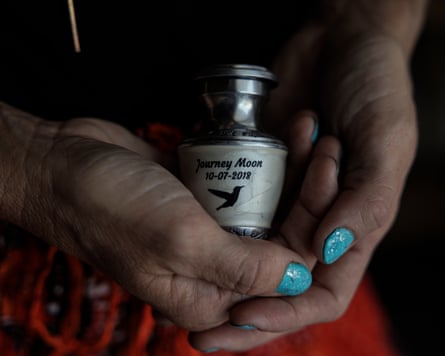
“My goal for my life was to be basically wild and free roam the land, barefooted, you know, in the sand,” Lorren tells Sirin and Lucy in the podcast.
After she became pregnant, Lorren’s initial plan was a hospital birth, but her first meeting with a doctor put her off. A home birth midwife she liked cost $5,000, but the couple had just begun a new business and money was tight. She began scrolling online for information on natural birth and then her algorithm served up the Free Birth Society.
“I just got hooked,” she tells Sirin and Lucy. She began listening to FBS podcasts on “amazing, successful” birth stories, sometimes as many as seven a day. She joined the Facebook group and became friendly with Emilee Saldaya, whom she says she “trusted, very much”. “I felt like she proved herself since she had led all these other women to these great victories in their births,” she said. Chris was also on board: “I loved the concept,” he said.
Many things in Lorren’s story, the Guardian found, were similar to other stories of women they talked to, linked to FBS: women discovering their content through social media algorithms, the addictive nature of the podcast with its positive free birthing stories, a bad experience with the mainstream medical industry. All of the women, the Guardian found, felt strongly they were doing this for their babies.
“They tell you not to do the OBGYN stuff,” said Lorren. “I quit doing that. No more doctors. No blood work or visits or ultrasounds, nothing.”
When her due date came, in October 2018, Lorren was confident her birth would play out like the stories she had heard. But she was blindsided by how excruciatingly painful it was. And she began to feel something wasn’t right.
‘There’s no way out’
By day two, Lorren felt like her labour wasn’t progressing and decided to message Saldaya directly on Facebook. She told her that the pain was “unbearable” and that she had been throwing up.
“The pain is not unbearable,” Saldaya replied. “This is birth, You make a choice to move though one sensation at time or you make a choice to go to the hospital. There’s no way out.” She told Lorren that “you’ll have to die a thousand deaths and let go of everything you think you can’t do”.
Days after her contractions began, Lorren started seeing what she thought might be meconium, which can be a sign that a baby is in distress and can sometimes be dangerous if it gets into a baby’s lungs.
She messaged Saldaya again, with details of fluids and a picture of stains. An exchange of texts followed, with Saldaya saying the fluid looks like normal, adding: “All looks well and healthy. Ride those waves sister your baby is coming, all is well.”
While Lorren was in her trailer messaging Saldaya, she also turned to the FBS Facebook group to ask if this seemed normal. “I was just getting nothing but, ‘you’re doing good, you’re just at the beginning’,” she recalls.
‘Please go to the hospital’
Renee LaPonte, a midwife from Massachusetts, was also in the group and had grown concerned with Lorren’s prolonged labour.
LaPonte told the Guardian: “I remember saying, that’s not OK, and people saying, that’s a variation of normal. That’s not a variation of normal. She needs help. And I remember typing, ‘Please go to the hospital’. But as quickly as I would type it, it would get taken down. There were several of us doing that.”
The posts were being deleted by FBS group admins, because they were against the groups rules. There was no “assistance” talk, meaning you could never recommend someone go to the doctors, call a midwife or home birth group, LaPonte said. Lorren says she can’t remember ever seeing messages urging her to go to hospital.
‘A scratch on the soul that just would never leave’
Six days into her labour, Lorren sent Saldaya a picture of a luminous green stain. “That’s [meconium]”, she messaged back. The next morning, Saldaya asked if Lorren knew any midwives who could come over, adding: “How far are you from hospital, do you feel concerned?”
When Lorren replied that she was 30 minutes from hospital and there were no midwives around, Saldaya warned her what to expect if she goes to hospital. “Some people fudge the date when their waters open,” she said, adding that if they have been open for 24 hours, they will perform a c-section.
Lorren, who could still feel the baby, told Saldaya she was going in. “I was like, all right, we’re going to have the baby today. Let’s go to the hospital. We’re done.”
But, after being admitted, Lorren and Chris were told there was no heartbeat. “I remember looking over at my husband. And he just went: ‘It’s OK, it’ll be OK’, and we had to stay strong until she was born.”
What followed was “an excruciatingly painful” procedure, involving seven doctors, to deliver the baby. Her daughter’s arm and shoulder were lodged on the right side of Lorren’s pelvis, so much so that they had to use a vacuum and forceps. She found out later that the doctors told Chris there was a chance she could die, too.
“So many thoughts are going through my head,” Chris recalls in the Guardian podcast. “Of just, am I about to lose everything right now? And it’s one of those moments in life that just kind of create that little scratch on the soul that just would never leave.”
Lorren and Chris’s baby was stillborn, weighing 8 pounds 13 ounces. They had already chosen a name, and called her Journey Moon.
‘A preventable death’
After being shown the messages between Lorren and Saldaya, one professor of midwifery told the Guardian there were “huge warning signs that the baby was in distress”. Another expert said: “This was not a tragedy, but a preventable death.” And an experienced home birth midwife told us that “this outcome was overwhelmingly avoidable”.
Emilee Saldaya and her business partner Yolanda Norris-Clark were both approached for comment. Neither provided a substantive response. In reply to one email, Saldaya said: “Some of these allegations are false or defamatory”.
In May, FBS issued a disclaimer, saying its content was not intended to diagnose, treat, cure or prevent any medical condition related to pregnancy or birth. After the Guardian published its investigation last month, Saldaya published a statement on Instagram, branding the report propaganda and suggesting it contained lies. She has previously criticised other media coverage for unfairly depicting her a “cult leader” and says she wants women to have the option to choose free birth.
Saldaya has always denied involvement in Journey Moon’s death. “The story wound up that I was her virtual midwife,” she has told students, “which is not true. We had never worked together. I didn’t know this woman at all.”
The Guardian Investigates: The Birth Keepers is our six-part podcast series on how two influencers made millions radicalising pregnant women around the world – and the tragedies that followed. The entire series can be listened to now.
What else we’ve been reading
-
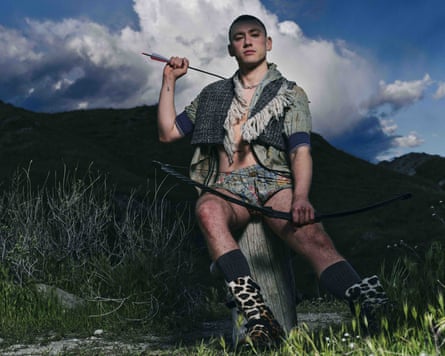
This piece on gay male and non-binary popstars hitting a glass ceiling is an incredibly interesting and thoroughly depressing read. Poppy Noor, newsletters team
-
I’ve not played Clair Obscur: Expedition 33 with its “Belle Époque” setting, but this behind the scenes interview with the French team behind the game has me intrigued to give it a whirl. Martin
-
If you’re in need of a hope injection I very much recommend Lucy Knight’s piece on the Sunderland charity that’s been improving lives (and fighting far-right hate) one house, park and shop at a time. Poppy
-
For i-D magazine, Pedro Pinho has this look at the style and personalities of people attending the BATEKOO Festival in São Paulo, a showcase of Brazil’s Black queer counterculture. Martin
-
Labour is talking big on its commitments to reduce the welfare bill – while quietly gutting the programmes needed to keep deindustrialised regions out of poverty. Larry Elliott on this topic is a must read. Poppy
Sport
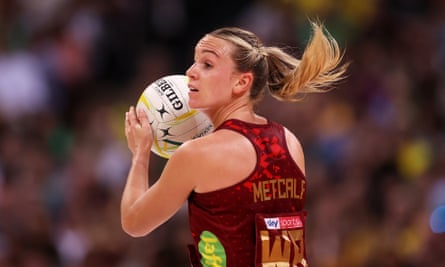
Netball | Receiving her first centre pass at London’s Copper Box Arena will be an unforgettable moment for England captain Nat Metcalf on her return to action.
Darts | Luke Littler won on opening night 3-0 over Darius Labanauskas on the opening night of the PDC world darts championship at Alexandra Palace.
Football | Youri Tielemans struck within eight minutes of coming on to earn a 2-1 win for Aston Villa in Basel in the Europa League, their eighth victory in succession. Igor Jesus’s late goal sealed Nottingham Forest a 2-1 win in Utrecht and boosted their hopes of a top-eight finish.
Something for the weekend
Our critics’ roundup of the best things to watch, read, play and listen to right now
Exhibition
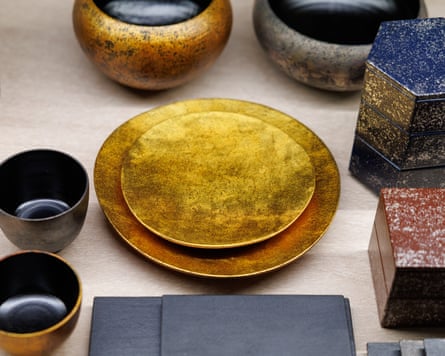
Hyakkō: 100+ Makers from Japan | ★★★☆☆
On show at London’s Japan House is the work of more than 100 pairs of eyes and hands, constituting an overwhelming profusion of human creativity, corralled into an exhibition of laconic simplicity. About 2,000 objects – bowls, trays, cups, metalwork, glassware and some perplexing bamboo cocoons – are grouped according to their makers on long, softly lit display tables. At first glance, you might think you have stumbled into an especially refined John Lewis homeware department, but then you notice the delicate black and red lacquer work, the gleaming gold on the inside of a perfectly shaped sake cup, the intricacy of the bamboo and some eccentrically shaped vessels, like alien seedpods, that look like ceramics but turn out be a kind of petrified leather. Catherine Shoard
TV
Man Vs Baby, Rowan Atkinson’s festival slapstick | ★★☆☆☆
Trevor Bingley is not Mr Bean, but the two have a few things in common. For a start, they are both self-destructively single-minded when it comes to overcoming trivial annoyances. In Netflix’s 2022 series Man vs Bee, Bingley ended up building a fake explosive-laced hive to destroy the insect who refused to vacate the swish home he was house-sitting; for Bean, life consists almost exclusively of finding absurd solutions to minor problems. Both are pitiable figures: Bean because he’s a walking disaster zone; Bingley because he’s lonely and broke, having lost numerous jobs due to general ineptitude.
In Man vs Baby, Bingley is back, struggling to make ends meet in a chocolate-box village in the home counties. It’s Christmas and he has just been let go as a primary school caretaker. His final job is to assist with the nativity (the opportunity to shamelessly channel Love Actually is not wasted). There, he discovers a baby on the doorstep; this must be the local child starring as Jesus in the play! Except, worryingly, it’s not. Rachel Aroesti
Film
Ella McCay | ★★☆☆☆
This new comedy drama written and directed by James L Brooks, feels like a relic, and not just because it’s set, seemingly arbitrarily, in 2008. Broadly appealing, well cast, neither strictly comic nor melodramatic, concerning ordinary people in non-IP circumstances, it’s the type of mid-budget adult film that used to appear regularly in cinemas in the 90s and aughts, before the streaming wars devoured the market. Even its lead promotional image, turned into a life-size cardboard cut-out at the theatre – Emma Mackey’s titular Ella in a sensible trenchcoat, balancing on one foot as she fixes a broken block heel – recalls a bygone era of films like Confessions of a Shopaholic, Miss Congeniality or Little Miss Sunshine, that would now go straight to streaming. Adrian Horton
Theatre
Museum of Austerity at the Young Vic | ★★★★☆
Here is an excoriating production that examines what austerity meant for those targeted by it. They include some of the most vulnerable members of society – people who were abused, destitute, disabled, mentally ill and jobless (what was it that Pearl Buck said about the test of a civilisation?). The show is based on the lives of people who were denied welfare benefits and died. Directed by Sacha Wares, it is an installation that combines promenade theatre with holograms. Wearing a mixed-reality (MR) headset, you enter a room where eight static figures emerge, played by actors. They lie on gurneys, bare mattresses, park benches, pavements and soiled duvets, and make for a woeful army of “invisibles” who have, for this time, come into our line of vision. Arifa Akbar
The front pages
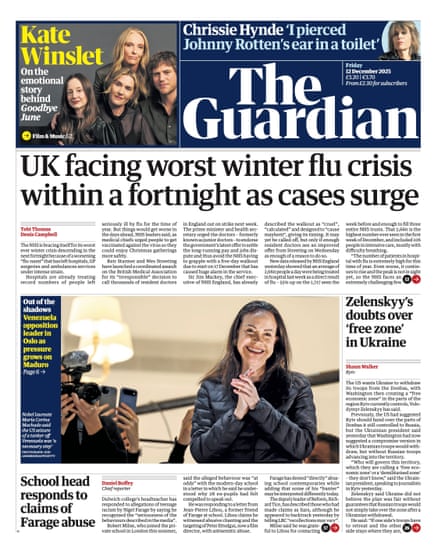
“UK facing worst winter flu crisis within a fortnight as cases surge” warns the Guardian and the i paper says “‘Super flu’ hits UK, with cases highest in young children”. The Times runs with “Streeting: strikes may force NHS to collapse”. The Express catches both strains: “Stop ‘reckless’ strikes as NHS fights super flu”. The Telegraph has “Britain ‘must not rely on US for defence’” – its interview is with Al Carns, a defence minister. Looks like the Mail was at the briefing too: “Minister: Britain’s on a war footing”. “World cup of greed” – the Mirror says high ticket prices are a “new low for shameful Fifa”. The Metro leads with the Bristol Museum robbery: “Raiders of the lost archive”. Top story in the Financial Times is “China leads resistance to US carve-out on OECD global minimum tax regime”.
Today in Focus
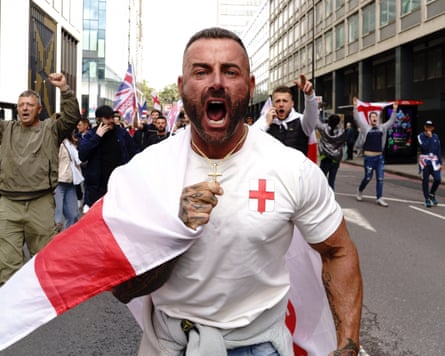
Is the far right hijacking Christianity?
Are US-style Christian politics finally taking root in the UK? With Lamorna Ash
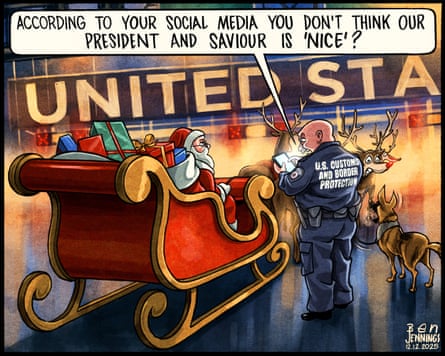
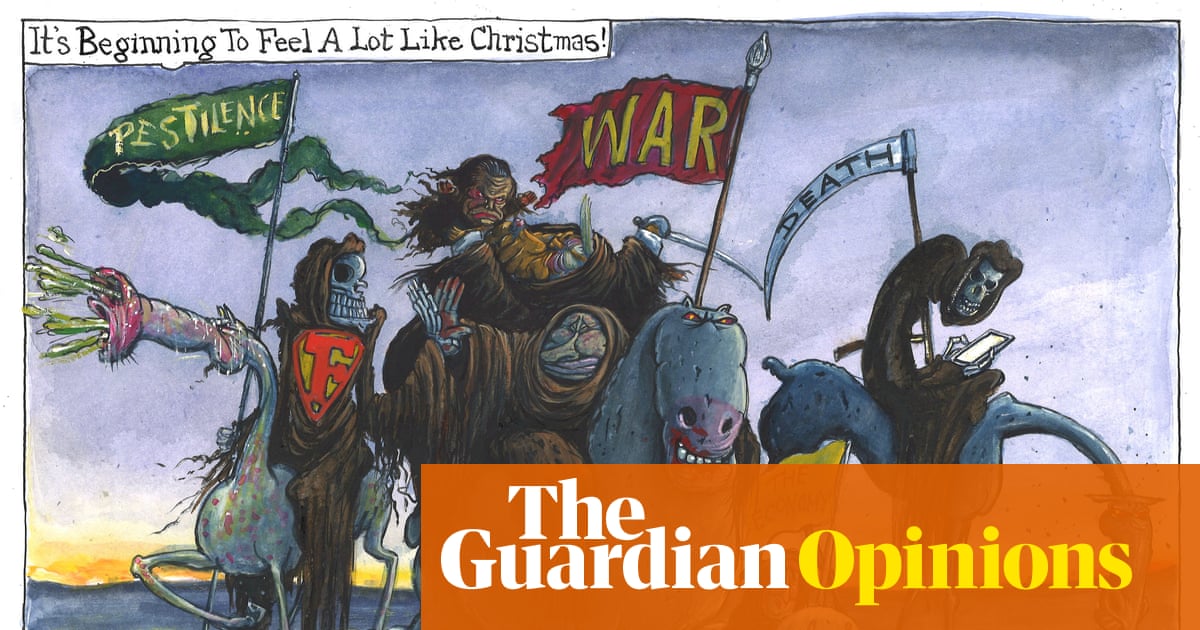
Cartoon of the day | Ben Jennings
The Upside
A bit of good news to remind you that the world’s not all bad
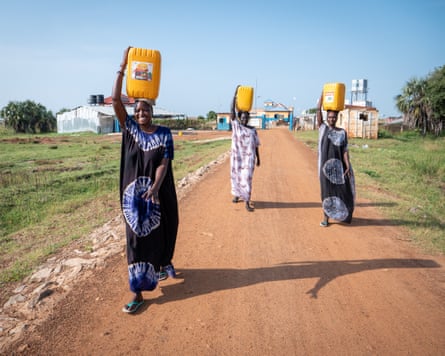
Until last year, residents of Bor, South Sudan, filled up their jerrycans with dirty water from the nearest stretch of the White Nile. Now, a new water treatment plant has transformed the town in what is being seen as a beacon of climate crisis adaptation.
In 2020, the White Nile broke its banks and submerged the town in floods that had not been seen there for 60 years. Experts say extreme flooding due to climate breakdown has displaced just under 380,00 South Sudanese people. The town has now recovered, with the $5.4m (£4m) project bringing in jobs for locals and connecting 704 households, seven schools and a hospital to the network. Locals say clean water has been life-changing: “Before, we have been suffering. But now we can get water anytime.”
Sign up here for a weekly roundup of The Upside, sent to you every Sunday
Bored at work?
And finally, the Guardian’s puzzles are here to keep you entertained throughout the day. Until tomorrow.


 English (US)