
 2 hours ago
4
2 hours ago
4

As Premier League teams get younger and transfer fees get bigger, we are seeing players with little experience commanding huge prices. Jérémy Jacquet’s £60m move to Liverpool makes him the fourth most expensive player aged 20 or younger in Premier League history. Spending so much money for a defender with just 36 appearances in France’s top flight looks like a risk, but how have players Jacquet’s age fared after big moves?
Leny Yoro: £52.2m, 18 years old
Few clubs beat Real Madrid in a transfer battle for a young player, but Manchester United did just that in the summer of 2024, when they signed 18-year-old Leny Yoro. Born in Paris in 2005, Yoro joined Lille’s academy in 2017 and made his Ligue 1 debut as a 16-year-old, becoming their second youngest ever player. He established himself as a regular in the 2023-24 season and, after just 46 league appearances, moved to Manchester United for £52.2m, making him one of the most expensive teenagers in history.
After a season in which United finished eighth, with a negative goal difference for the first time since 1989-90, Yoro was stepping into a turbulent environment he was not expected to fix singlehandedly. He offered the team a calm centre-back who relied on intelligence, anticipation and clean defending rather than aggression: very much a long-term project rather than an instant solution.
Yoro recently brought up a half-century of Manchester United appearances, becoming the youngest defender to reach that mark for the club since Phil Jones in 2013, and the long-term project remains very much alive. As is often the case with young centre-backs, he has shown flashes of potential alongside moments of vulnerability. That was evident at Aston Villa in December, when he was involved in both goals his team conceded, failing to apply sufficient pressure on Morgan Rogers for the opener and then unable to prevent him cutting inside on to his right foot for the second. Ruben Amorim later acknowledged Yoro’s tendency to dwell on errors, after he conceded a penalty at Crystal Palace in late November, admitting that “he makes a mistake and then he struggles.”
Yoro has started just six of United’s past 17 matches so is not exactly integral to the team, but he is just 20. It remains to be seen whether he will live up to his price tag.
Roméo Lavia: £54m, 19 years old
Lavia was at the centre of a mini soap opera in the summer of 2023, when Chelsea and Liverpool locked horns for the teenager’s signature. Chelsea ultimately emerged victorious, signing the Belgian from Southampton, but was he worth the fight?
Lavia had established himself as one of Europe’s most promising young midfielders before joining Chelsea. In the 2022–23 season, he was one of only three teenage central midfielders in Europe’s top five leagues to make 60 or more tackles, alongside Eduardo Camavinga and Jude Bellingham, and he was among the Premier League’s top midfielders for winning possession. Press-resistant and mature beyond his years, Lavia offered both defensive solidarity and composure on the ball.
But he has not had the chance to live up to his expectations. His time at Chelsea has been disrupted by injuries, with muscular problems limiting his first season to just 32 minutes of action. He made 22 appearances the following season but was sidelined five times with muscle injuries. This season has been no different. In nearly three years, Lavia has made 30 appearances for Chelsea but has not yet completed a full 90 minutes.
“When he’s fit, he’s one of the best midfielders because he can defend very well, he can attack, he breaks the line, the pass between the lines, it is unbelievable,” Enzo Maresca said about Lavia. We are yet to fully see his full potential.
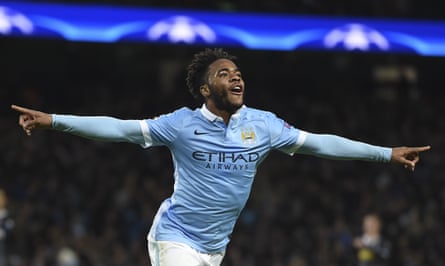
Raheem Sterling: £55.4m, 20 years old
From a 16-year-old kid plucked from QPR’s academy to one third of the Premier League’s most feared attacking trident alongside Luis Suárez and Daniel Sturridge, Sterling’s rise at Liverpool was meteoric. He nearly won the Premier League with Liverpool but instead joined the club that kept pipping them to the title.
Liverpool fans might not care to admit it but, if there is an example of money well spent on a young player, it is Sterling. With 131 goals and 94 assists in 339 appearances, he is one of the most influential attackers in the Pep Guardiola era. Only Sergio Agüero and Erling Haaland have outscored him among City’s modern greats. His goals weren’t just for show either; he collected four Premier League medals, an FA Cup and five League Cups.
Yet, for all the output, Sterling’s importance at City began to quietly erode. Guardiola’s side evolved and so did Sterling’s role. The emergence of Phil Foden, the arrival of Jack Grealish and Guardiola’s increasing reluctance to use Sterling on his most effective flank saw him drift from automatic starter to rotational option.
Chelsea moved quickly, making Sterling their first signing under new ownership in 2022. But what initially looked like a marquee signing quickly became a victim of constant managerial turnover and an overcrowded squad. Six managers later, his Chelsea career tells a far less flattering story. Wingers arrived by the dozen, systems changed by the month, and Sterling’s role shrank accordingly. Once the symbol of a new era, he found himself training away from the first team, grouped into the club’s so-called “bomb squad”, marginalised despite being one of the highest earners at £325,000 a week.
Sterling is now a free agent, an extraordinary position for a player with 82 England caps, 13 major trophies and his career arc now also acts as a cautionary tale: not of early success but of how quickly narratives shift in football.
Christian Pulisic: £55.6m, 20 years old
Pulisic arrived at Chelsea in 2019 carrying a burden few young players would handle: the expectation that he might fill the void left by Eden Hazard. The Belgian had delivered two Premier League titles, two Europa League trophies, an FA Cup, a League Cup and 110 goals, and his departure left not just a positional gap but a psychological one. Pulisic was never explicitly billed as Hazard’s replacement, but the timing and the fee ensured the comparison was inevitable.
“I didn’t know anything about Pulisic yesterday,” said Maurizio Sarri after the signing. “The club asked my opinion about him about one month ago. My opinion was positive and today I knew the deal was done but I didn’t know anything.” That quote summed up Pulisic’s time at the club. Injuries constantly disrupted his rhythm and his confidence suffered under managers who either did not believe in his qualities or prioritised other players.
Sarri, Frank Lampard, Thomas Tuchel and Graham Potter all came and went but Pulisic struggled to find consistent playing time under any of them. In the end, he started just 58 of Chelsea’s 152 Premier League games over four seasons, seeing only 40.7% of the team’s available minutes and never truly establishing himself. He moved to Milan in 2023 for less than half what Chelsea paid to sign him.
Rasmus Højlund: £67.7m, 20 years old
Manchester United were once the best club in the country at nurturing youth talent. “If you’re good enough, you’re old enough,” is written on the walls of Carrington. Unfortunately for Højlund – a 20-year-old striker signed with barely a season of top-level experience – his time at Old Trafford did not follow the path carved out by the Busby Babes, Class of 92 and Cristiano Ronaldo.
By Christmas of his debut season, he had gone 14 Premier League appearances without a goal, finally breaking the drought on Boxing Day. A run of seven goals in seven games followed, earning the accolade of becoming the youngest-ever player to score in six successive Premier League games.
He ended the season with 16 goals in all competitions, the top scorer at the club that season – not bad for a young prospect – but expectations at United are unforgiving. Ten goals in all competitions the following season, including just four in the Premier League, brought scrutiny. What might be framed as a learning curve in a young talent’s career was instead considered a failure.
Despite expressing a desire to stay, last summer Højlund was added to Amorim’s summer exiles alongside Marcus Rashford, Alejandro Garnacho, Jadon Sancho, Antony and André Onana. If you aren’t needed in a midweek League Cup tie away at Grimsby – and it’s the third game in succession you’ve been left out of the squad – the writing is on the wall. With United already out of the cup, no European football, and Benjamin Sesko now in the squad as the new £73.7m centre-forward, Højlund’s opportunities vanished fast. A move to Napoli offered a solid solution for all parties and confirmed a failed transfer for the talented youngster.
This is an article by WhoScored





 English (US)