
 2 hours ago
3
2 hours ago
3

Denmark's centre-left prime minister has said she wants to stay in her job after inconclusive election results left the country facing weeks of coalition talks.
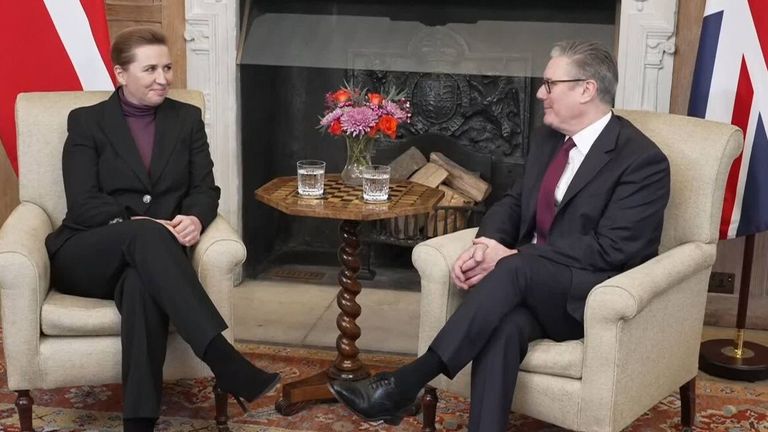
Mette Frederiksen has been seen by some in Britain's Labour government as a role model for success, especially concerning her tough approach to immigration.
Read more: Does UK fancy Danish model?
UK to take a slice of Denmark's immigration policy
But her Social Democrats have been left bruised from the left and the right after a campaign dominated by the cost of living, which has proved damaging for incumbent leaders around the world in recent years.
She had called an early election for Tuesday hoping her handling of foreign affairs - notably the crisis sparked by Donald Trump's ambitions for Greenland - would see voters place their trust in her again.
Why Trump backed down on Greenland
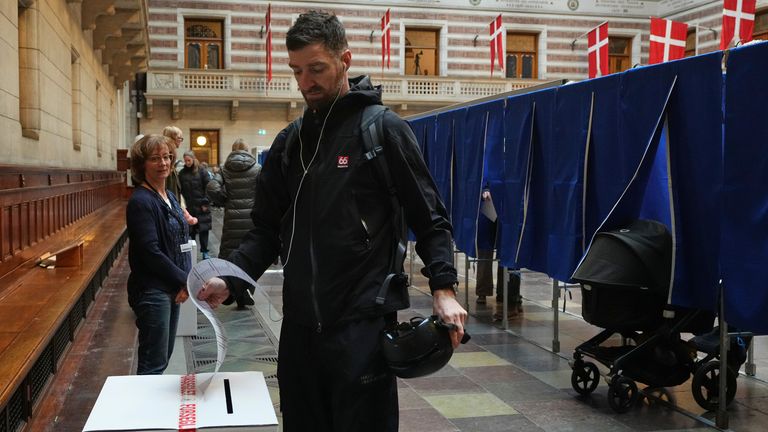
What are the results?
While her party is again the largest on 21.9% of the vote, it's well down on the 27.5% secured in 2022.
Tuesday's vote leaves the Social Democrats with 38 seats in the 179-seat parliament.
Denmark's Green party, to the prime minister's left, won 11.6% of the vote and 20 seats.
The centre-right Liberal Party and Liberal Alliance won 18 seats (10.1%) and 16 seats (9.4%) respectively.
The anti-immigration Danish People's Party won 9.1% of the vote and 16 seats - its vote share up 7% on last time.
With the left nor the right securing enough votes to form a coalition, it could leave the Moderates party - firmly in the centre ground - as kingmakers.
Led by foreign minister Lars Lokke Rasmussen, a former PM, it won 14 seats.
It was part of the 2022-2026 coalition, with the Social Democrats and Liberal Party.
Coalition talks to commence
Ms Frederiksen said she was ready to stay on, saying Denmark "needs a stable government" in an "unsettled" world amid war in Europe and the Middle East.
"We are ready to take the lead," she added.
Mr Rasmussen echoed the PM's call for stability, saying Denmark - a NATO and EU member - "is a small country of six million people", and "we must come together".
But Liberal Party leader Troels Lund Poulsen, the defence minister, has indicated he will not go into coalition with the Social Democrats again.
Coalition governments are the norm in Denmark, like many other European countries, and there will now be weeks of negotiations about the make-up of the next administration.
What were the key issues?
Ms Frederikson has been PM since 2019. Now 48, she was the country's youngest ever leader when first elected.
She defended her record during the campaign, citing having to deal with the pandemic, war in Ukraine, and being "threatened by the American president".
But domestic issues like the cost of living and beyond were front and centre for voters, while she has been squeezed from the left and right.
Read more from Sky News:
FA hits back at Reform
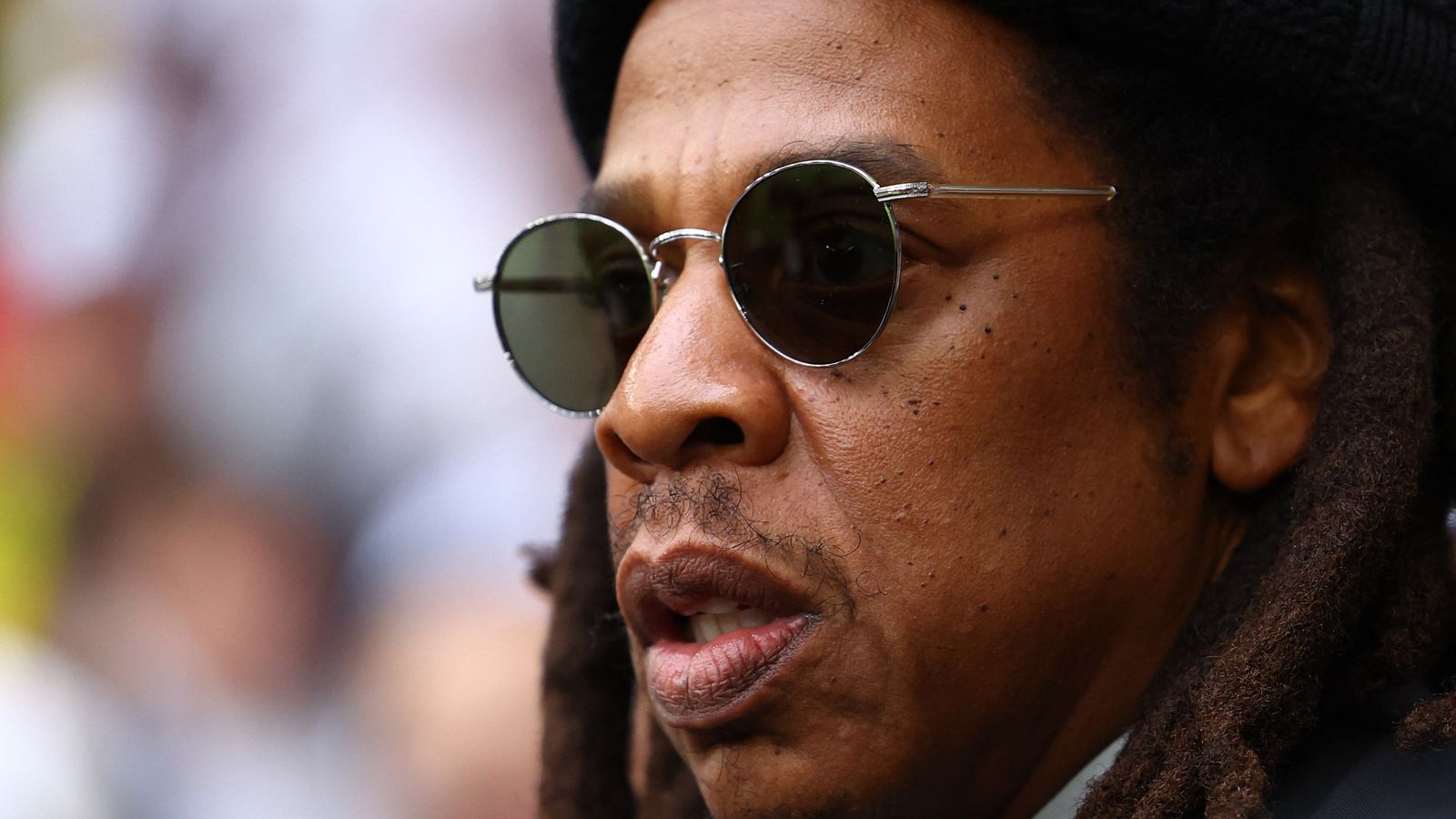
Jay-Z breaks silence
Ms Frederikson has overseen one of the toughest approaches to migration in Europe, with refugee status temporary, conditional support and expectations of integration in society.
Some on the left believe she's been much too tough, but the Danish People's Party leader Morten Messerschmidt increased his support with a pledge to ensure net zero migration of Muslims.
On the economy, Ms Frederiksen had sought to enhance her leftist credentials with a wealth tax proposal - one of the policies which drove a wedge between her and Liberal leader Mr Poulsen.


 English (US)