
 2 hours ago
3
2 hours ago
3

I can’t remember where I first read about buzkashi. Played across central Asia, the sport is thought to date back to the time of Genghis Khan. It involves large groups of men on horseback trying to grab the headless body of a goat and keep control of it long enough to drop it over a line marked on the ground. There are no teams, it’s every man for himself, and games can last six hours.
My projects often involve heightened colour, but when I decided I wanted to get back to the basics of light and tone and do a black and white series, this subject seemed to fit. A lot of the buzkashi footage I’d found was from Tajikistan, so I went there, hiring a local fixer to help deal with the logistics as news of the time and place of matches tends to travel by word of mouth just a few days in advance.
The first game I went to was the biggest – about 300 riders at its peak. Tajikistan is 93% mountains, so matches are staged in the folds of valleys, or in dried riverbeds where there’s some natural geography to contain the play. It never really does, though, and spectators often have to scatter as riders scythe through the crowd. The “goal” lines can be the length of two football pitches apart, with the direction of the pack alternating each time someone scores. Those who score win a prize, with the value increasing as the game goes on – I’ve seen people claim carpets, a camel, even a car, so as the match progresses, more players join in.
My personal projects are self-funded from my advertising work, and I try to exercise the same degree of planning as I do in my jobs for clients. At one match, I shot from the back of a pickup truck in the middle of the field of play – the pack passed within metres, allowing for some visceral images. Buzkashi is a fairly brutal sport, but my aim wasn’t to normalise cruelty – I was photographing something ingrained in Tajik culture.
It struck me that the riders were trying to find control within absolute chaos to get something they wanted, and that’s also what I was trying to do with my photography. In wider shots, the location allowed for cinematic results, with clouds of dust from the horses’ hooves and smoke from spectators’ charcoal fires creating a beautiful layering effect.
I also visited the farms some of the riders were from and took portraits of them alone or with their families – they were incredibly hospitable. For this shot, I’d headed into a field with the three horses and their riders. It was a gorgeous day and there was a huge, snowy mountain range in the background. I was setting up with my assistant when the fixer said: “You’d better hurry …” I turned to see a wall of fog rolling towards us.
It’s important to be able to react to events as they happen. As the background turned white, the work of Richard Avedon jumped into my mind. I got my assistant to stand off to the left of the frame holding a light above the horses. I had another flash next to the camera, and tried to get the horses to interact with each other as I sat on the ground photographing them.
There were moments where they got uncomfortably close, and I’d have to run backwards while crouching. I’ve got some great footage of me landing on my arse – but the resulting image is a graphic distillation of a moment in buzkashi. The clean background allows for the stress in the horses to be clearly articulated, and the visual tension created by having most of the riders cropped tight on the edge of frame reflects the claustrophobic nature of a match where space is at an absolute premium.
Todd Antony is the winner of the Sport category in the Sony World Photography awards 2026. The accompanying exhibition is at Somerset House, London, until 4 May. Guardian readers can use code GUARDIAN15 (valid until 4 May, 5pm) to redeem a 15% discount on exhibition tickets.
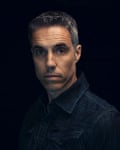
Todd Antony’s CV
Born: New Zealand, 1975
High point: The Sony World Photography Awards. But in terms of shooting, there was both a literal and metaphorical high point when I was in Bolivia shooting at high altitude on Huayna Potosi mountain with the incredible Cholitas Escalaodras.
Top tip: Before you pick up the camera, ask yourself one question: what is this actually about? Not what does it look like, but what does it mean? That’s something that is often glossed over, especially now, when the tools are so good and the temptation to chase aesthetics is everywhere. Story-led work doesn’t mean ignoring craft. It means using craft in service of something. Write one sentence about what the work is about before you shoot. Not a description, an intention. That sentence assists your edit, your light, your lens choice.


 English (US)