
 1 hour ago
3
1 hour ago
3

I’m curious how you found out you could sing, how you developed your voice and what singing means to you? VladimirS
I found out I could sing while I was doing experimental theatre in 1989 – it was a cultural crossover between Ukraine and the UK. My biggest fear was singing in public and I wanted to do something I was afraid of, so I turned a Rimbaud poem into what I imagined was a blues song. And I loved it. Afterwards, I met this producer, William Orbit – I was 19 and he was 37 – through one of the women in the play whose husband was the manager of the Pogues. William decided: “She can sing. I will make a star of her.” He hooked me up with a wonderful singing teacher. But I probably will never see myself as a singer. Even last week I was like: “Oh yeah, I guess I am a musician, that’s ended up being what I do.” I still can’t quite get my head around that.
When making a new song up, do you have a job to do, or are you inspired? And in which order do the songs come, regarding melody, chords, words? gin007
I get inspired and that’s why I write. I could be walking in nature or having a conversation and it’ll spark something in my head and I’ll make notes. Then I’ll go to the piano or guitar and often if I’ve got something percolating, that will find its way into the chords. So, melody, words and chords often come together at once. Then I do the work, which is the filling it in. The easy part is the la la la, here’s the idea, here’s the shape, here’s the form, and then it’s like: this all came unconsciously, how do I write to that standard consciously? That can be really, really challenging. It can make your skin crawl because it’s hard to write a good song.
Could you tell us something about your earliest musical memory? AlfBlanch
One of my earliest musical memories is my brother playing Oh! You Pretty Things by David Bowie. I was probably about nine and we lived in this two-up, two-down in Norwich. Anything he played was fucking loud. Mostly it was raging punk rock, but this one morning that track woke me up – he must have been up all night – and I heard something that made me feel excited for life. I was like: “Wow, what the hell is that? I wanna find that.”
How big an influence on you musically was John Martyn and did you ever meet him? Guardianlover
He was a huge influence. And then I met him and he wasn’t that into me. I don’t even know if I really spoke to him, but he didn’t want me covering his songs, I don’t think. It didn’t put me off – I still love his music.
I remember reading an article about you being on the London Underground and the whole carriage singing one of your songs when they saw you. Which song was it and did you join in? frattie
It was She Cries Your Name. And I didn’t join in. It was probably 1997 or 1998, I think I’d either come on the train after finishing my own gig or I’d supported someone. I can’t remember the exact details, but I was with my friend and it was really sweet – I was really chuffed and happy.
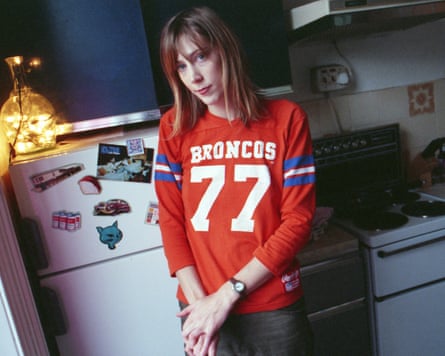
Your collaboration with the Chemical Brothers, Where Do I Begin, is for me the song that perfectly sums up the chaos of the mid-90s. A mix of confusion, hedonism and thoughts turning to the next big night out. Was that a reflection of your life at that time? CraigThePaig
Yes. Definitely. I mean, you know, on the whole, it’s hard to remember … but what I do remember was really fun.
More than a decade ago, I read that you didn’t have entirely positive feelings about 1999’s Central Reservation, and that you had been somewhat pressured into the overall sound of it. In 2026, how do you feel about the album, which I think is one of the best albums of its time? PaulDavisTheFirst
I had conflicting feelings because when I made [1996 album] Trailer Park it was very organic in terms of working with Andrew Weatherall and picking my own band. Then around the time [of Central Reservation] it was like: “Oh, she likes to be remixed. Let’s get her remixed up the wazoo and that’ll make this work and make it successful.” There were certain things that didn’t feel like they were coming from me and at times I was a little bit uncomfortable. I did have a thing with Central Reservation where I was like: “I want to make this better, and this better.” But what happens now is I sing these songs live and I am still reimagining them.
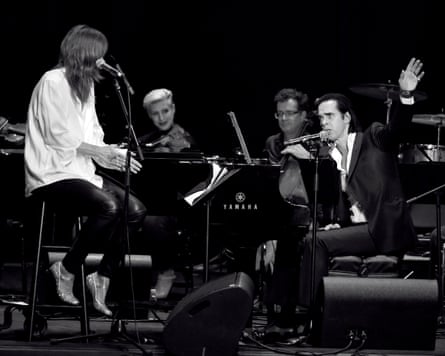
Can you still make a wage, a yearly living, from original music being outside the “mainstream”? barrycreed
It is not easy. I think the lucky break is if you can make music for TV or films. That didn’t happen for me and I have had to support a family. There’s always the debate – should I just get a real job? – but at a certain point it was like, well, there’s no going back because I’m not good at anything. I’m useless at everything, but I can make music so I’ll just keep doing that and hope for the best. And I love what I do – it started to become its own kind of fuel in a way.
Are you concerned about AI having a negative impact on music? lotusblue
Yes. It’s pretty depressing. I still live in the hope that the real deal is the real deal and that only humans can make art the way humans can. And I think that’s really important, spiritually and emotionally and energetically. I sound really hippy, I don’t care. If you make music you feel maybe it can have an energetic influence in a powerful, positive way and I just can’t see that AI is going to have any beneficial influence on humans.
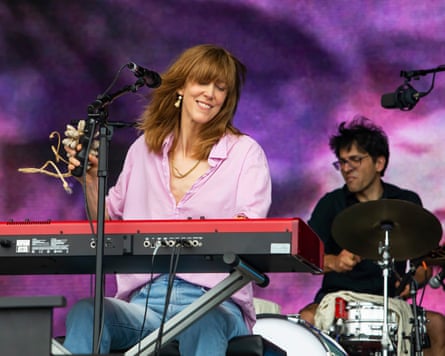
What happened to your Lost Leaves record label idea? You started it when you released a long-lost (and great) cover of Tim Buckley’s I Never Asked to Be Your Mountain as a platform for publishing more unreleased tracks, but I haven’t heard about anything that followed. Should we expect more lost gems like this? Coopertapes
I started making new music and I was like: “I’m not looking back, I’m looking forward.” I do still have these “lost gems”, but the new music I’m making is much more exciting to me. At some point I probably will explore that again.
I’ve always been hooked on the acoustics of Feel to Believe [from Central Reservation], and how your voice seems to be fighting against the limits of the recording. What is going on here and did you immediately know that was how it had to sound (rather than polishing it up)? RoryDollard
It’s a really sweet story. I was a huge fan of David Roback from Mazzy Star and I approached him and asked: “Will you produce me, will you play on my record?” I flew out to Oslo to meet him and mainly the session was drinking a lot of red wine and watching an Elizabeth Cotten documentary – I was very shy about my guitar playing and he just wanted to encourage me. Finally, he put on a microphone and I played Feel to Believe as what I thought was a demo for him. And then he refused to play on it or do more. He was like, my production is to teach you that you don’t need to collaborate with anyone else. To this day, if I could capture live what he captured, I would.
I discovered your music at a very difficult time. Hearing your voice, the music, I suddenly felt that everything was going to be fine. What music do you listen to when troubled? FlowerBlue
Often when I feel very blue, I can’t bear to listen to music because it hurts too much. I get very affected by words and music. So my own music has become a source of [comfort]. In the last few years, it’s been quite hard for me to find books or music that speak to my experience. And so with the music I’ve been making, it’s almost like I’ve wanted to make the sounds I most wanted to hear and write the songs that mean something that I don’t find anywhere else.



 English (US)