
 2 hours ago
2
2 hours ago
2

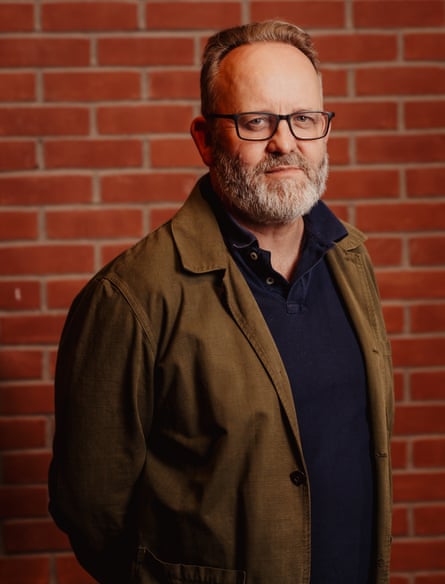
‘The Lyric gives voice to everyone in Northern Ireland,” says the theatre’s boss, Jimmy Fay. “It’s a beacon.” Fay views the 2026 programme, celebrating 75 years of the Lyric, as an opportunity to showcase current creative talent, as well as honouring the theatre’s past.
One of the plays from the repertoire that Fay was keen to revive is Christina Reid’s Tea in a China Cup, from 1983. With a cast including Marie Jones, the new production – which runs in May – is directed by Dan Gordon, who performed in the original. Reid’s play traces the daily lives of Protestant working-class women in Belfast across three decades, from the second world war to the Troubles, with humour and poignancy.
“Reid’s is an important political voice from the 1980s, articulating the idea that working-class people across the sectarian divide had more in common with each other than was often assumed,” Fay says. In that way, she was very much in tune with the socialist outlook of the Lyric’s tenacious founder-director, Mary O’Malley, who moved to Belfast from Dublin in 1947 and founded Belfast Lyric Players theatre in 1951. “Mary O’Malley was a force,” Fay says. “She surrounded herself with pioneering colleagues who helped bring her singular vision to life. Not only for the Lyric Players theatre, but also the art gallery, music academy and then the drama school.”
An anniversary exhibition, A House of Play, curated by Kim Mawhinney, shows work by artists associated with the New Gallery, which O’Malley established in 1963. Paintings by Jack B Yeats, Louis Le Brocquy and Basil Blackshaw are included, along with new works commissioned from Colin Davidson and Neil Shawcross.
An upstairs gallery is devoted to the cover designs, correspondence and manuscripts from Threshold, the influential literary journal founded by O’Malley, which ran from 1957 to 1990. Initially edited by O’Malley herself, it later had rotating guest editors such as Seamus Heaney, John Montague and Seamus Deane, publishing fiction, reviews, play scripts and poetry. Fay is currently making final edits to an anniversary issue of Threshold, to be published in August, and aims to revive it as an annual journal of arts criticism and essays.
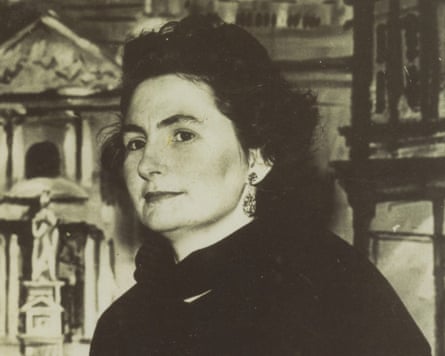
The New Gallery’s first curator, Alice Berger Hammerschlag, was an Austrian artist who created many of the theatre’s set designs. Together with Czech choreographer Helen Lewis, she brought a European influence to the early Lyric productions. These were initially staged in O’Malley and her husband Pearse’s home. In 1951 O’Malley formed a 50-seat studio theatre above their stables, producing more than 100 plays on the 10-foot wide stage.
In 1968, the company moved to a 300-seat theatre on Ridgeway Street, and just about managed to remain open during the Troubles, often playing to a tiny audience. Following an £18m fundraising campaign, supported by its patron, Liam Neeson, the Lyric’s new home, designed by O’Donnell + Tuomey, was opened in 2011. The award-winning building with generous, light-filled public spaces incorporating brick, timber and stone, overlooks the River Lagan.
Twelve years since he moved to the Lyric from Dublin, where he ran his own company, Bedrock, and directed at the Abbey theatre, Fay continues to combine the roles of CEO, executive producer and artistic director. “I’m not in favour of keeping those aspects separate, if possible. I continue to direct shows myself, as you need to have that creative heartbeat,” he says. “It would be very easy to sit back as executive producer and say it’s someone else’s fault if something goes wrong. Of course, in order to do this, I have to rely on great people around me.”
Asked what he is proud of in recent years, Fay mentions Agreement, Owen McCafferty’s dramatisation of the final days of negotiation of the Good Friday agreement. “I would love that to have a further life, to go to the Edinburgh fringe, and to London. It’s such an important piece of work about the peace process – and a study of misogyny in politics too, the way we see Mo Mowlam being edged out of the discussions.”
Plans for later in the year include a new production of Brian Friel’s Faith Healer, starring Conleth Hill, staged by Prime Cut’s artistic director, Emma Jordan, and a version of Aristophanes’ The Frogs by Paul Muldoon, with music by the US composer Stew. This “music-theatre pub gig” will open first in New York’s Public theatre. Further ahead, there will be a new play by Clare Dwyer Hogg, a version of Crime and Punishment by McCafferty and an adaptation by Oisín Kearney of the epic Irish language poem The Táin.
As Fay and I talk, the building is humming, with Paines Plough on stage in the main auditorium, a schools’ workshop in progress upstairs and Conor Mitchell and the Belfast Ensemble rehearsing in the studio. “Supporting and commissioning adventurous artists like Conor Mitchell, with Abomination: A DUP Opera and Propaganda, is central to what we do,” Fay says. “And in our drama studio, we’re bringing young actors through, who then cross over into television and film; it’s possible for them to combine those careers now. There’s so much talent, energy and vitality in Northern Ireland at the moment, despite the difficult funding environment.”







 English (US)