
 4 hours ago
2
4 hours ago
2

For people living and working in Enfield, the current measles outbreak is a shock – but not a surprise. The borough has struggled with low vaccine uptake for years, fighting against vaccine hesitancy, online misinformation and health inequalities.
Working closely with communities to persuade them to come forward for vaccinations is an “ongoing public health challenge”, which Enfield – like many boroughs – is grappling with, Enfield council’s director of public health, Dudu Sher-Arami said.
“This has not come as a surprise to us. We’ve been trying to work to increase vaccination uptake for many years. And so we do reach into various communities,” she said, citing Edmonton, the focal point of the measles outbreak.
Similar to other areas with low vaccine uptake, Edmonton has high levels of deprivation. “We can all understand that if people are in a position where they have three jobs, low income, insecure housing, then vaccination is not going to be on the top of their to do list,” said Sher-Arami, adding that the “churn of the population” was another factor.
The most effective interventions are school-based immunisation programmes, though “having faith leaders and community leaders on board with accurate positive information also works”, she said.
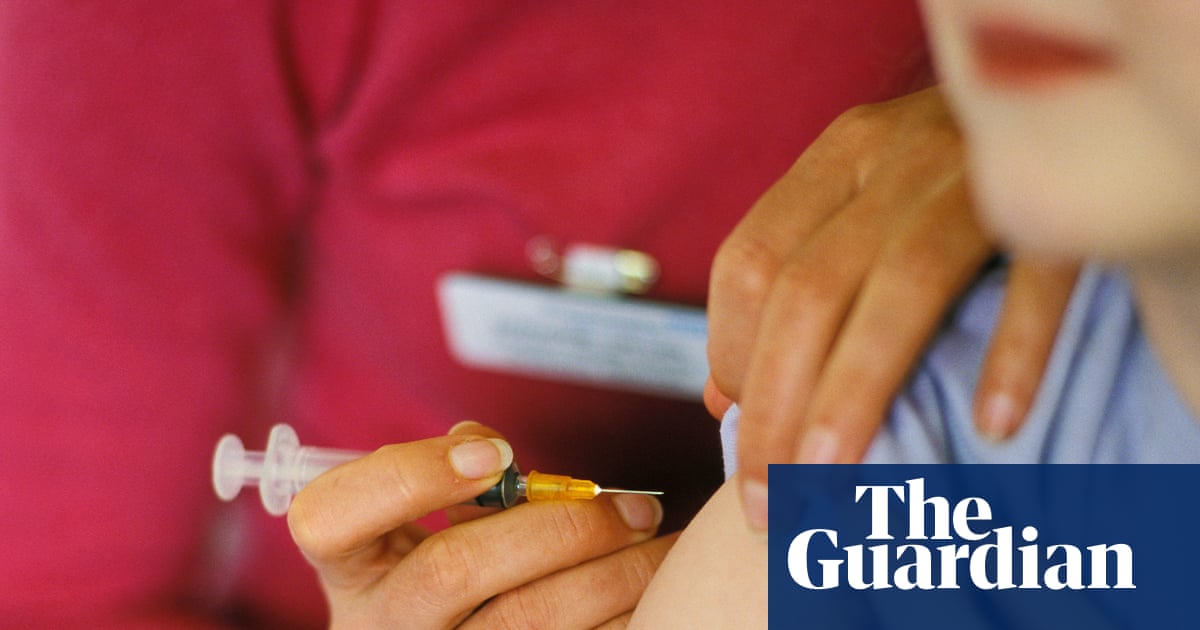
At present, Enfield is “working very hard” scouring its database to find children who have missed one of their jabs and calling up their parents, said Sher-Arami. A special vaccination clinic has been set up in the school with the most cases, along with increased capacity across the borough, including additional slots at GP surgeries.
She added that it can be a challenge to persuade people to come. “In the UK, there’s a huge amount of misinformation about vaccination. Over many years there’s been a bit of a reduction in trust of scientific information, the NHS, certainly local authorities, our state bodies, with regard to vaccination.”
Sher-Arami said the borough has tried many different approaches to get into hard-to-reach communities, and evaluates which are having an impact. “It’s clear we can’t just continue doing the same thing,” she said, noting that she is hoping that an upcoming government-funded pilot project to look into opportunities for health visitors to provide vaccination will improve the situation.
Philippa Vincent, a GP at Carlton House Surgery, which was running the vaccine catchup clinic in Enfield on Monday, had seen figures showing that one in four measles cases in the borough had been hospitalised, and that the cases were all among children who have not been vaccinated.
Following the news reports at the weekend, the clinic has started to see an increase in demand for the vaccine, including among adults, though numbers remained low. The surgery is not permitting any child who is not vaccinated and has possible symptoms to be in the waiting room.
She has seen “a lot of vaccine hesitancy” in the community, exacerbated by Covid. “I don’t think it’s about the autism stuff any more,” she said. Instead, people are “genuinely afraid about the contents of vaccines”, and “believe the nonsense put out there by non-scientific pressure groups” on social media.
Parents who spoke to the Guardian outside Carlton House Surgery said they had been contacted about measles by their children’s nurseries and primary schools.
One parent said he had asked the doctor if his preschool children could have their third jab expedited due to the outbreak. “They said ‘no, don’t worry about it’, wait until they’re three years.”
Another parent, Pan, said: “My children are both vaccinated so I’m not too concerned about my kids, we’ve done the right thing. I’m just thinking why the uptake is so low to be honest. Our group we mix with are all pro-vaccines.”
Prof Azeem Majeed, the head of primary care and public health at Imperial College London, said the makeup of the local population was most likely to affect vaccine uptake, and that all the main factors were present in Enfield, including the prevalence of people from ethnic minorities who also have lower levels of education, deprivation, and how often residents move between different address and countries.

All these factors intersect with online misinformation and distrust of local authorities, he added. “Certain communities have distrust of authority because of bad experiences with councils, in health, education, welfare or housing.”
He noted that vaccine uptake has been steadily falling since 2012, which he linked to overstretched GP surgeries having less time to spend on preventive work, along with the rise of social media misinformation.
However, he noted that media coverage of outbreaks drives more people to come forward for vaccination. “I wouldn’t expect vast numbers of cases,” he said, while noting that official numbers are “likely underestimates”.
Ronny Cheung, of the Royal College of Paediatrics and Child Health, said solutions included expanding who can deliver vaccines, such as the “really promising” health visitor pilots, as well as engaging local communities through targeted messaging and trusted voices – which at present is too “patchy” despite its effectiveness.
He has found that many people have struggled to access appointments, and haven’t been given the information needed to prioritise them, something he felt health professionals needed more training to address.
“Most conversations I have with parents who are labelled as vaccine hesitant actually are very positive and at the end of it, are happy to go get the vaccines. It’s not the deep-seated scepticism people think of,” he said.






 English (US)